Screen and score job candidates with GPT-4o, Gmail and Google Calendar
Workflow preview


 Early Deal
DISCOUNT 20%

Overview
How It Works
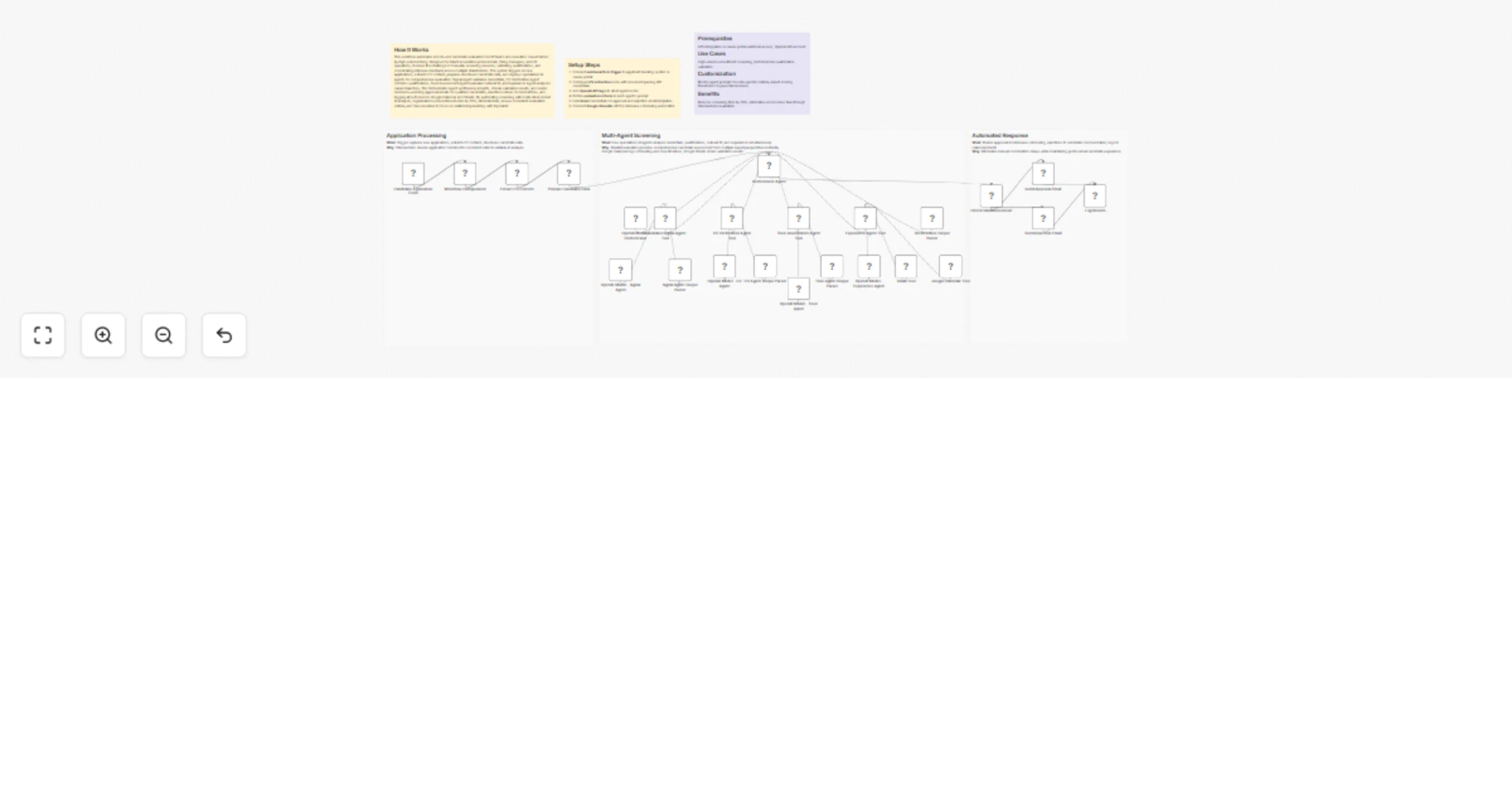
This workflow automates end-to-end candidate evaluation for HR teams and recruiters overwhelmed by high-volume hiring. Designed for talent acquisition professionals, hiring managers, and HR operations, it solves the challenge of manually screening resumes, validating qualifications, and coordinating interview feedback across multiple stakeholders. The system triggers on new applications, extracts CV content, prepares structured candidate data, and deploys specialized AI agents for comprehensive evaluation: Signal Agent validates credentials, CV Verification Agent confirms qualifications, Trust Assessment Agent evaluates cultural fit, and Experience Agent analyzes career trajectory. The Orchestrator Agent synthesizes insights, checks validation results, and routes decisions—sending approval emails for qualified candidates, rejection notices for mismatches, and logging all outcomes to Google Calendar and Sheets. By automating screening with multi-dimensional AI analysis, organizations reduce time-to-hire by 70%, eliminate bias, ensure consistent evaluation criteria, and free recruiters to focus on relationship-building with top talent.
Setup Steps
- Connect webhook/form trigger to applicant tracking system or career portal
- Configure CV extraction node with document parsing API credentials
- Add OpenAI API keys to all AI agent nodes
- Define evaluation criteria in each agent's prompt
- Link Gmail credentials for approval and rejection email templates
- Connect Google Calendar API for interview scheduling automation
Prerequisites
ATS integration or career portal webhook access, OpenAI API account
Use Cases
High-volume recruitment screening, technical role qualification validation
Customization
Modify agent prompts for role-specific criteria, adjust scoring thresholds for pass/fail decisions
Benefits
Reduces screening time by 70%, eliminates unconscious bias through standardized evaluation