SSL/TLS certificate expiry monitor with Slack alert
Workflow preview


 Early Deal
DISCOUNT 20%

Important notice
This workflow is provided as-is. Please review and test before using in production.
Overview
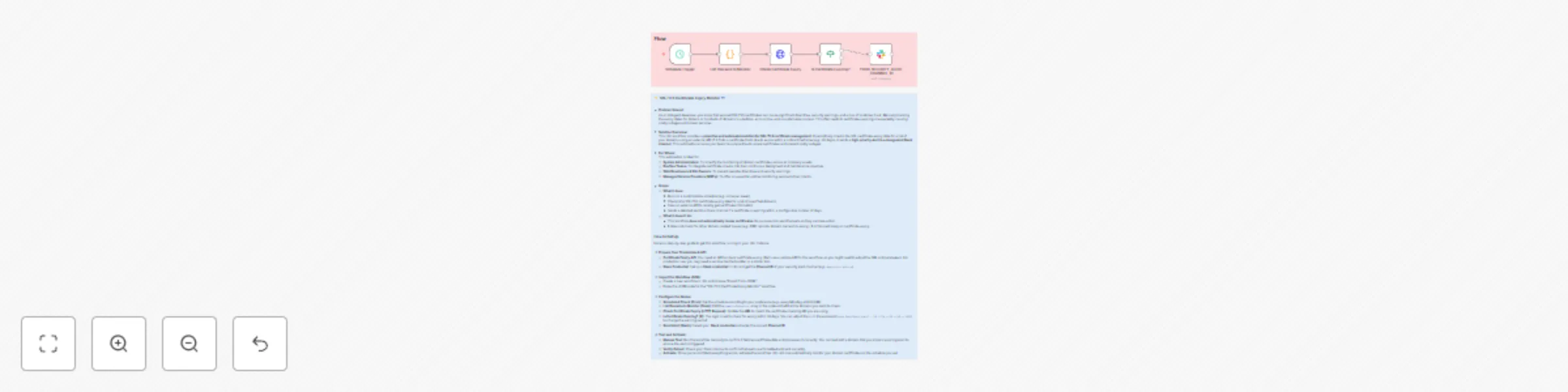
How It Works: The 5-Node Certificate Management Flow 🗓️
This workflow efficiently monitors your domains for certificate expiry.
Scheduled Check (Cron Node): This is the workflow's trigger. It's configured to run on a regular schedule, such as every Monday morning, ensuring certificate checks are automated and consistent.
List Domains to Monitor (Code Node): This node acts as a static database, storing a list of all the domains you need to track.
Check Certificate Expiry (HTTP Request Node): For each domain in your list, this node makes a request to a certificate checking API. The API returns details about the certificate, including its expiry date.
Is Certificate Expiring? (If Node): This is the core logic. It compares the expiry date from the API response with the current date. If the certificate is set to expire within a critical timeframe (e.g., less than 30 days), the workflow proceeds to the next step.
Send Alert (Slack Node): If the
Ifnode determines a certificate is expiring, this node sends a high-priority alert to your team's Slack channel. The message includes the domain name and the exact expiry date, providing all the necessary information for a quick response.
How to Set Up
Here's a step-by-step guide to get this workflow running in your n8n instance.
Prepare Your Credentials & API:
- Certificate Expiry API: You need an API to check certificate expiry. The workflow uses a sample API, so you may need to adjust the URL and parameters. For production use, you might use a service like Certspotter or a similar tool.
- Slack Credential: Set up a Slack credential in n8n and get the Channel ID of your security alert channel (e.g.,
#security-alerts).
Import the Workflow JSON:
- Create a new workflow in n8n and choose "Import from JSON."
- Paste the JSON code for the "SSL/TLS Certificate Expiry Monitor" workflow.
Configure the Nodes:
- Scheduled Check (Cron): Set the schedule according to your preference (e.g., every Monday at 8:00 AM).
- List Domains to Monitor (Code): Edit the
domainsToMonitorarray in the code and add all the domains you want to check. - Check Certificate Expiry (HTTP Request): Update the URL to match the certificate checking API you are using.
- Is Certificate Expiring? (If): The logic is set to check for expiry within 30 days. You can adjust the
30in the expressionnew Date(Date.now() + 30 * 24 * 60 * 60 * 1000)to change the warning period. - Send Alert (Slack): Select your Slack credential and enter the correct Channel ID.
Test and Activate:
- Manual Test: Run the workflow manually to confirm it fetches certificate data and processes it correctly. You can test with a domain that you know is expiring soon to ensure the alert is triggered.
- Verify Output: Check your Slack channel to confirm that alerts are formatted and sent correctly.
- Activate: Once you're confident everything works, activate the workflow. n8n will now automatically monitor your domain certificates on the schedule you set.