Sitemap page extractor: Discover, clean, and save website URLs to Google Sheets
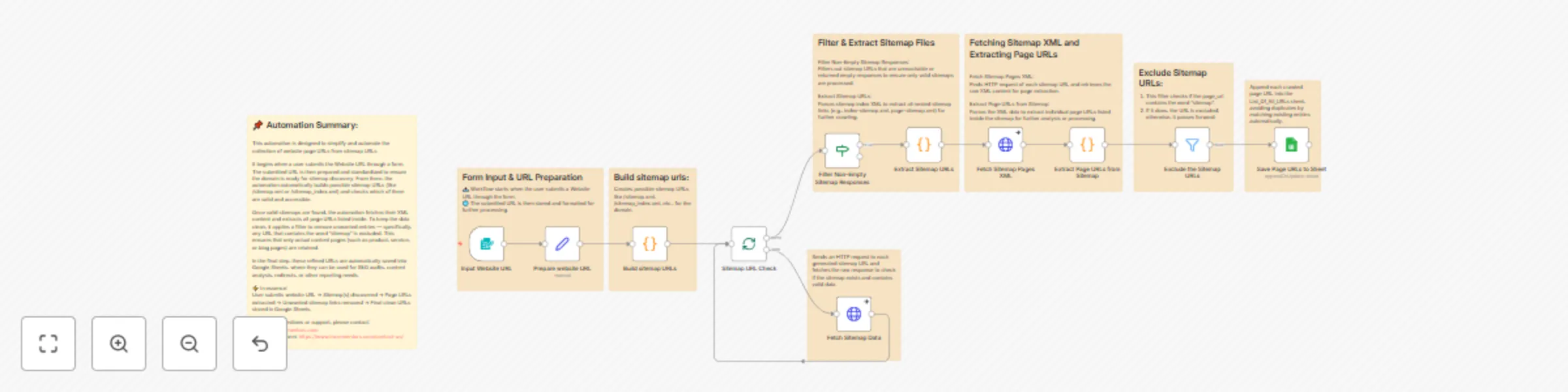
Workflow preview


 Early Deal
DISCOUNT 20%

Important notice
This workflow is provided as-is. Please review and test before using in production.
Overview
Description:
Automatically extracts all page URLs from website sitemaps, filters out unwanted sitemap links, and saves clean URLs to Google Sheets for SEO analysis and reporting.
How It Works:
This workflow automates the process of discovering and extracting all page URLs from a website's sitemap structure. Here's how it works step-by-step:
Step 1: URL Input The workflow starts when you submit a website URL through a simple form interface.
Step 2: Sitemap Discovery The system automatically generates and tests multiple possible sitemap URLs including /sitemap.xml, /sitemap_index.xml, /robots.txt, and other common variations.
Step 3: Valid Sitemap Identification It sends HTTP requests to each potential sitemap URL and filters out empty or invalid responses, keeping only accessible sitemaps.
Step 4: Nested Sitemap Processing For sitemap index files, the workflow extracts all nested sitemap URLs and processes each one individually to ensure complete coverage.
Step 5: Page URL Extraction From each valid sitemap, it parses the XML content and extracts all individual page URLs using both XML <loc> tags and HTML links.
Step 6: URL Filtering The system removes any URLs containing "sitemap" to ensure only actual content pages (like product, service, or blog pages) are retained.
Step 7: Google Sheets Integration Finally, all clean page URLs are automatically saved to a Google Sheets document with duplicate prevention for easy analysis and reporting.
Setup Steps:
Estimated Setup Time: 10-15 minutes
1. Import the Workflow: Import the provided JSON file into your n8n instance.
2. Configure Google Sheets Integration:
- Set up Google Sheets OAuth2 credentials in n8n
- Create a new Google Sheet or use an existing one
- Update the "Save Page URLs to Sheet" node with your Google Sheet URL
- Ensure your sheet has a tab named "Your sheet tab name" with a column header "Column name"
3. Test the Workflow:
- Activate the workflow in n8n
- Use the form trigger URL to submit a test website URL
- Verify that URLs are being extracted and saved to your Google Sheet
4. Customize (Optional):
- Modify the sitemap URL patterns in the "Build sitemap URLs" node if needed
- Adjust the filtering criteria in the "Exclude the Sitemap URLs" node
- Update the Google Sheets column mapping as required
Important Notes:
- Ensure your Google Sheets credentials have proper read/write permissions
- The workflow handles both XML sitemaps and robots.txt sitemap references
- Duplicate URLs are automatically prevented when saving to Google Sheets
- The workflow continues processing even if some sitemap URLs are inaccessible
Need Help?
For technical support or questions about this workflow:
✉️ [email protected]
or
fill out this form: Contact Us