Generate SEO content with Claude AI & competitor analysis using Apify
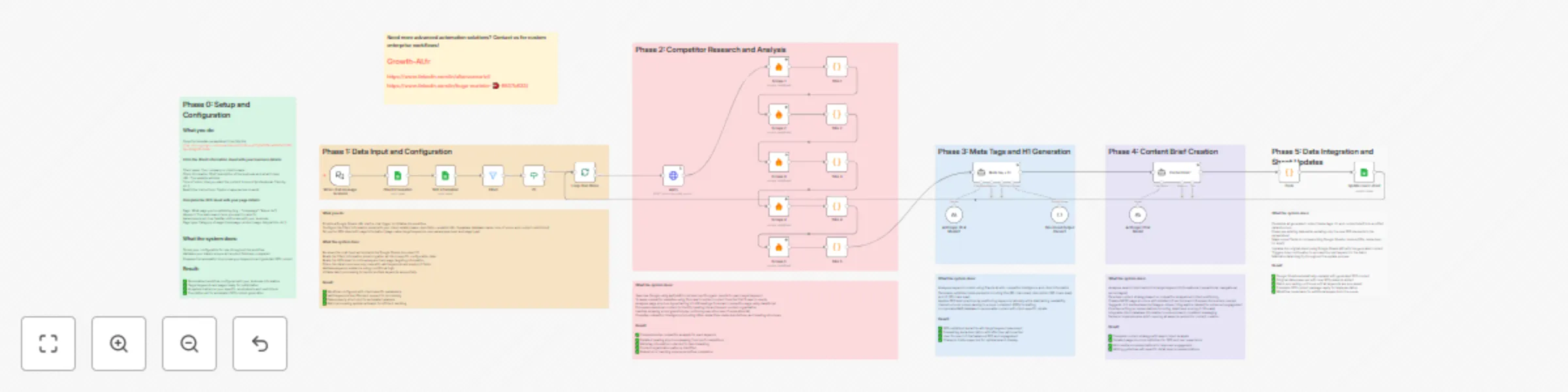
Workflow preview


 Early Deal
DISCOUNT 20%

Important notice
This workflow is provided as-is. Please review and test before using in production.
Overview
SEO Content Generation Workflow (Basic Version) - n8n Template Instructions
Who's it for
This workflow is designed for SEO professionals, content marketers, digital agencies, and businesses who need to generate optimized meta tags, H1 headings, and content briefs at scale. Perfect for teams managing multiple clients or large keyword lists who want to automate competitor analysis and SEO content creation without the complexity of vector databases.
How it works
The workflow automates the entire SEO content creation process by analyzing your target keywords against top competitors, then generating optimized meta elements and comprehensive content briefs. It uses AI-powered analysis combined with real competitor data to create SEO-friendly content that's tailored to your specific business context.
The system processes keywords in batches, performs Google searches, scrapes competitor content, analyzes heading structures, and generates personalized SEO content using your company information for maximum relevance.
Requirements
Required Services and Credentials
- Google Sheets API: For reading configuration and updating results
- Anthropic API: For AI content generation (Claude Sonnet 4)
- Apify API: For Google search results
- Firecrawl API: For competitor website scraping
Template Spreadsheet
Copy this template spreadsheet and configure it with your information: Template Link
How to set up
Step 1: Copy and Configure Template
Make a copy of the template spreadsheet
Fill in the Client Information sheet:
- Client name: Your company or client's name
- Client information: Brief business description
- URL: Website address
- Tone of voice: Content style preferences
- Restrictive instructions: Topics or approaches to avoid
Complete the SEO sheet with your target pages:
- Page: Page you're optimizing (e.g., "Homepage", "Product Page")
- Keyword: Main search term to target
- Awareness level: User familiarity with your business
- Page type: Category (homepage, blog, product page, etc.)
Step 2: Import Workflow
- Import the n8n workflow JSON file
- Configure all required API credentials in n8n:
- Google Sheets OAuth2
- Anthropic API key
- Apify API key
- Firecrawl API key
Step 3: Test Configuration
- Activate the workflow
- Send your Google Sheets URL to the chat trigger
- Verify that all sheets are readable and credentials work
- Test with a single keyword row first
Workflow Process Overview
Phase 0: Setup and Configuration
- Copy template spreadsheet
- Configure client information and SEO parameters
- Set up API credentials in n8n
Phase 1: Data Input and Processing
- Chat trigger receives Google Sheets URL
- System reads client configuration and SEO data
- Filters valid keywords and empty H1 fields
- Initiates batch processing
Phase 2: Competitor Research and Analysis
- Searches Google for top 10 results per keyword using Apify
- Scrapes first 5 competitor websites using Firecrawl
- Extracts heading structures (H1-H6) from competitor pages
- Analyzes competitor meta tags and content organization
- Processes markdown content to identify heading hierarchies
Phase 3: Meta Tags and H1 Generation
- AI analyzes keyword context and competitor data using Claude
- Incorporates client information for personalization
- Generates optimized meta title (65 characters maximum)
- Creates compelling meta description (165 characters maximum)
- Produces user-focused H1 (70 characters maximum)
- Uses structured output parsing for consistent formatting
Phase 4: Content Brief Creation
- Analyzes search intent percentages (informational, transactional, navigational)
- Develops content strategy based on competitor analysis
- Creates detailed MECE page structure with H2 and H3 sections
- Suggests rich media elements (images, videos, infographics, tables)
- Provides writing recommendations and detail level scoring (1-10 scale)
- Ensures SEO optimization while maintaining user relevance
Phase 5: Data Integration and Updates
- Combines all generated content into unified structure
- Updates Google Sheets with new SEO elements
- Preserves existing data while adding new content
- Continues batch processing for remaining keywords
Key Differences from Advanced Version
This basic version focuses on core SEO functionality without additional complexity:
- No Vector Database: Removes Supabase integration for simpler setup
- Streamlined Architecture: Fewer dependencies and configuration steps
- Essential Features Only: Core competitor analysis and content generation
- Faster Setup: Reduced time to deployment
- Lower Costs: Fewer API services required
How to customize the workflow
Adjusting AI Models
- Replace Anthropic Claude with other LLM providers in the agent nodes
- Modify system prompts for different content styles or languages
- Adjust character limits for meta elements in the structured output parser
Modifying Competitor Analysis
- Change number of competitors analyzed (currently 5) by adding/removing Scrape nodes
- Adjust scraping parameters in Firecrawl nodes for different content types
- Modify heading extraction logic in JavaScript Code nodes
Customizing Output Format
- Update Google Sheets column mapping in the final Code node
- Modify structured output parser schema for different data structures
- Change batch processing size in Split in Batches node
Adding Quality Controls
- Insert validation nodes between workflow phases
- Add error handling and retry logic to critical nodes
- Implement content quality scoring mechanisms
Extending Functionality
- Add keyword research capabilities with additional APIs
- Include image optimization suggestions
- Integrate social media content generation
- Connect to CMS platforms for direct publishing
Best Practices
Setup and Testing
- Always test with small batches before processing large keyword lists
- Monitor API usage and costs across all services
- Regularly update system prompts based on output quality
- Maintain clean data in your Google Sheets template
Content Quality
- Review generated content before publishing
- Customize system prompts to match your brand voice
- Use descriptive node names for easier workflow maintenance
- Keep competitor analysis current by running regularly
Performance Optimization
- Process keywords in small batches to avoid timeouts
- Set appropriate retry policies for external API calls
- Monitor workflow execution times and optimize bottlenecks
Troubleshooting
Common Issues and Solutions
API Errors
- Check credential configuration in n8n settings
- Verify API usage limits and billing status
- Ensure proper authentication for each service
Scraping Failures
- Firecrawl nodes have error handling enabled to continue on failures
- Some websites may block scraping - this is normal behavior
- Check if competitor URLs are accessible and valid
Empty Results
- Verify keyword formatting in Google Sheets
- Ensure competitor websites contain the expected content structure
- Check if meta tags are properly formatted in system prompts
Sheet Update Errors
- Ensure proper column mapping in final Code node
- Verify Google Sheets permissions and sharing settings
- Check that target sheet names match exactly
Processing Stops
- Review batch processing limits and timeout settings
- Check for errors in individual nodes using execution logs
- Verify all required fields are populated in input data
Template Structure
Required Sheets
- Client Information: Business details and configuration
- SEO: Target keywords and page information
- Results Sheet: Where generated content will be written
Expected Columns
- Keywords: Target search terms
- Description: Brief page description
- Type de page: Page category
- Awareness level: User familiarity level
- title, meta-desc, h1, brief: Generated output columns
This streamlined version provides all essential SEO content generation capabilities while being easier to set up and maintain than the advanced version with vector database integration.