Cyberpulse AI GRC: Automate security questionnaire responses
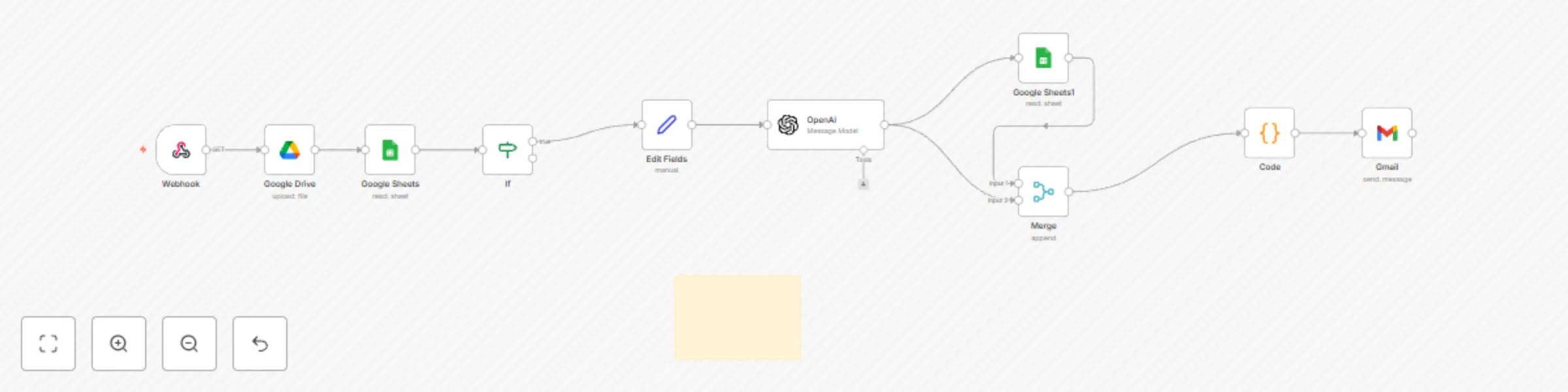
Workflow preview


 Early Deal
DISCOUNT 20%

Important notice
This workflow is provided as-is. Please review and test before using in production.
Overview
Description
Automates vendor/customer security questionnaire responses. It ingests a questionnaire (Sheet/CSV/XLSX), matches each question to your approved answers and evidence, and writes a clean “Auto-Fill” sheet ready to review and send back. Optional alerts nudge reviewers and track progress to completion.
Who’s It For
GRC / Compliance teams responding to customer security reviews
Security engineers and sales engineers supporting questionnaires
Startups that need fast, consistent, audit-ready answers
How It Works
Trigger
Run manually, on a schedule, or when a questionnaire file/row is added.
Ingest & Normalize
Reads questions from Google Sheets/CSV/XLSX.
Normalizes columns (e.g., question, category, customer_notes) and de-duplicates.
Classify
Detects question type (Yes/No, multi-select, free text).
Tags topics (encryption, access control, incident response, privacy, HR, etc.).
Answer Retrieval
Looks up approved answers from your Answer Library sheet (mapped by keywords/category/control).
Falls back to templates (short form/long form) when no exact match exists.
Evidence Linking
Inserts Drive links for policies, diagrams, SOC2/ISO docs (from your evidence folder).
Adds version/date so reviewers can verify what was sent.
Auto-Fill Output
Writes a new sheet with columns like: question, proposed_answer, rationale/notes, evidence_link, control_ref, owner, status, confidence, last_updated.
Review & Notifications
Emails the reviewer/owner with a link to the output sheet for quick approval edits.
Status can move from draft → reviewed → ready to send.
Export
Optional export to CSV/XLSX to match customer’s template.
Optional PDF of responses for audit trail.
Requirements
Google Sheets & Drive credentials
Destination Sheet & Evidence folder (env vars used in the template):
GSHEET_ID, GSHEET_SHEET
DRIVE_FOLDER_ID (or keep SANITIZED and set after import)
Alert email: GRC_ALERT_EMAIL
File Templates
GRC_SQ_AutoFill_Template.xlsx – target sheet with the output columns above
Answer_Library.xlsx / Sheet tab – key-value pairs: keywords/category → approved answers
Control_Mapping.xlsx / Sheet tab – optional mapping to ISO 27001, SOC2, NIST CSF
Output
A populated Auto-Fill sheet ready to review/share
Evidence links with versioning
Email notification to the reviewer with next steps
Customization Tips
Add your framework tags (ISO/SOC2/NIST) to enable quick mapping in the output.
Set owners per topic (e.g., “Encryption → Security Eng”, “Privacy → Legal”).
Add a confidence score threshold to flag answers needing human review.
Enable “strict mode” to prevent sending answers without evidence links.
Schedule a weekly run to pre-fill common questionnaires and keep answers fresh.