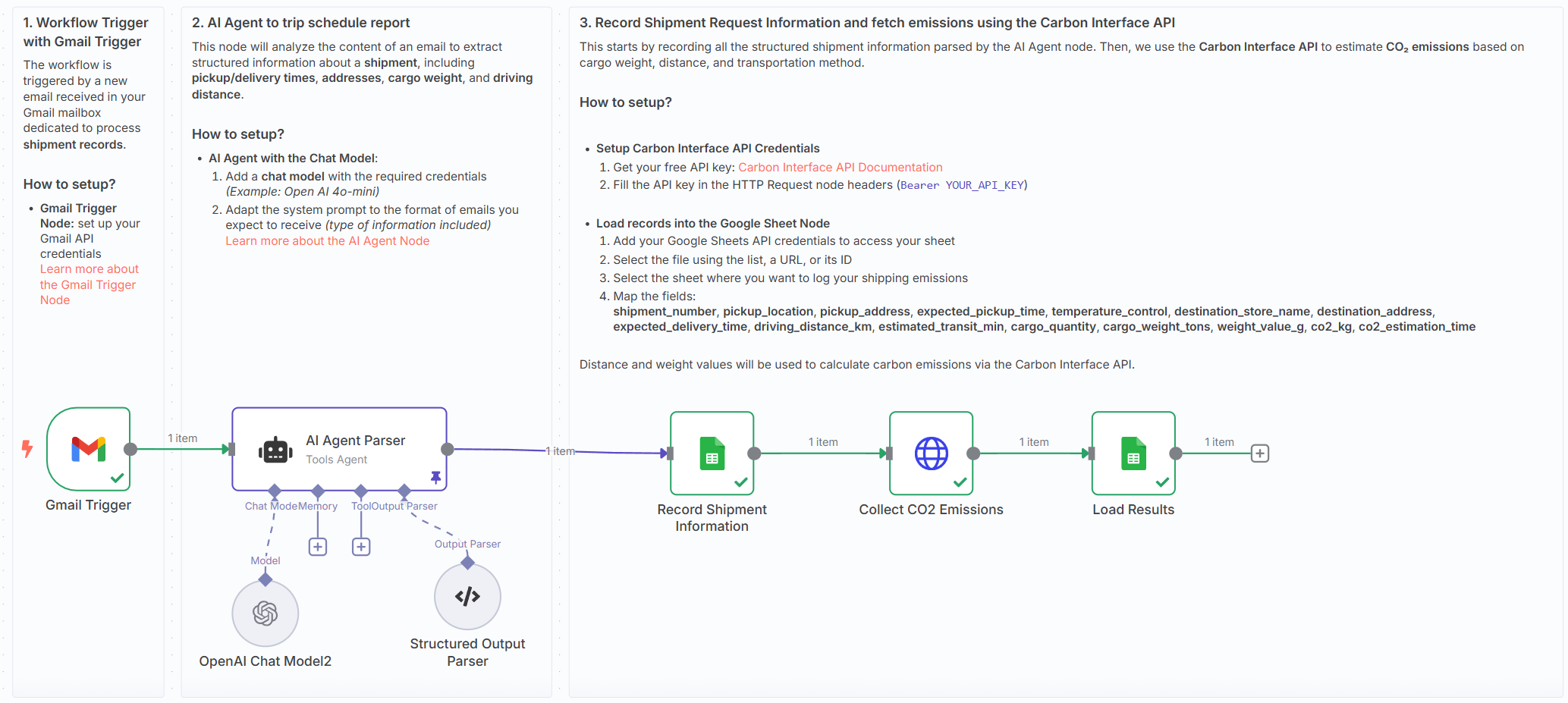
🚚 CO2 emissions of freight shipments with Carbon Interface API and GPT-4o

Workflow preview

Workflow preview
100%
🚚 CO2 emissions of freight shipments with Carbon Interface API and GPT-4o preview
Open on n8n.io

Important notice

This workflow is provided as-is. Please review and test before using in production.

1. Workflow Overview

Tags : Sustainability, Supply Chain, AI Agent, CO2 Emissions, Carbon Interface API, Logistics, Automation Context Hi! I’m Samir β€” a Supply Chain Engineer and Data Scientist...

Best for

  • Document Extraction automation workflows
  • AI Summarization automation workflows
  • intermediate n8n builders looking for reusable templates

Tools used

n8n-nodes-base.gmailtrigger, @n8n/n8n-nodes-langchain.outputparserstructured, @n8n/n8n-nodes-langchain.agent, @n8n/n8n-nodes-langchain.lmchatopenai, n8n-nodes-base.httprequest, n8n-nodes-base.googlesheets, n8n-nodes-base.stickynote

Source and attribution

This workflow is cataloged by N8N Workflows and links back to its original n8n.io source page by Samir Saci.

Original n8n.io source

1.1 Workflow description

Title
🚚 CO2 emissions of freight shipments with Carbon Interface API and GPT-4o
Workflow name
🚚 CO2 emissions of freight shipments with Carbon Interface API and GPT-4o

Tags: Sustainability, Supply Chain, AI Agent, CO2 Emissions, Carbon Interface API, Logistics, Automation

Context

Hi! I’m Samir β€” a Supply Chain Engineer and Data Scientist based in Paris, and founder of LogiGreen Consulting.

I help logistics teams reduce their environmental footprint by combining AI automation and carbon estimation APIs.

This workflow is part of our green logistics initiative, allowing businesses to track the COβ‚‚ emissions of last-mile or regional shipments.

> Automate carbon tracking for shipping operations with n8n!

πŸ“¬ For business inquiries, feel free to connect with me on LinkedIn

Who is this template for?

This workflow is designed for logistics coordinators, transportation planners, or sustainability officers who want to estimate and record emissions for B2B shipments.

Let’s imagine your carrier sends a shipment confirmation email after a pickup is scheduled:
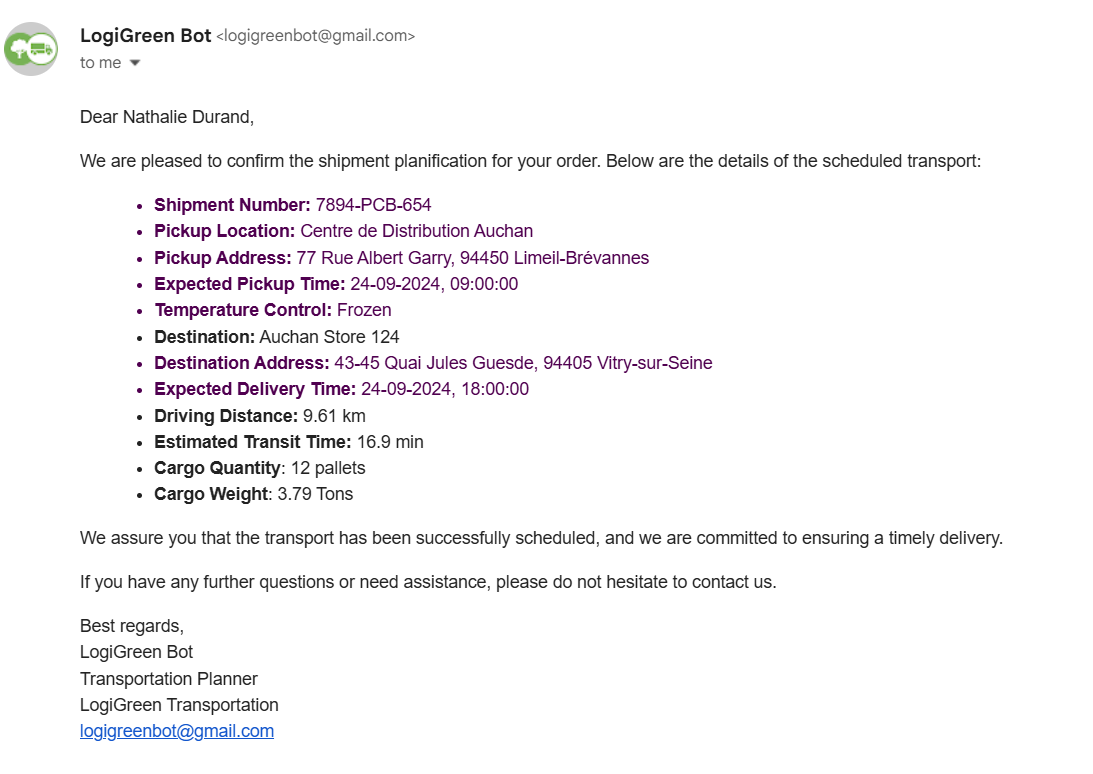
An AI Agent reads the email and extracts structured data: addresses, distance, cargo weight, and delivery time.

The Carbon Interface API is then called to calculate COβ‚‚ emissions based on weight and distance, and the results are stored in a Google Sheet.
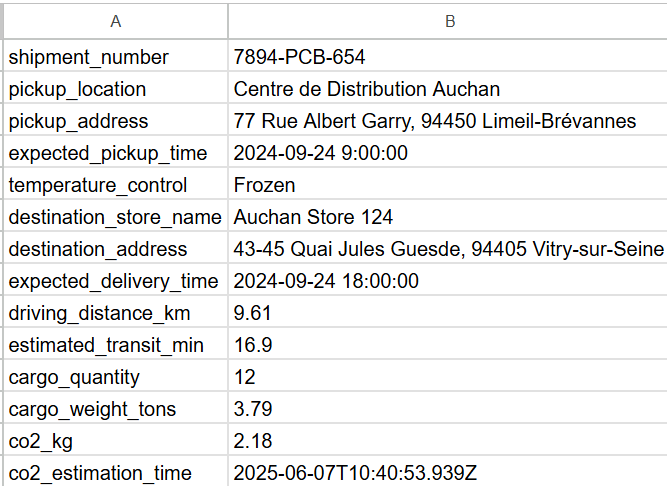
How does it work?

This workflow automates the process of tracking COβ‚‚ emissions for scheduled shipments:

  • πŸ“¨ Gmail Trigger captures shipment confirmation emails
  • 🧠 AI Agent parses the shipment info (pickup, delivery, weight, distance)
  • 🚚 Carbon Interface API estimates COβ‚‚ emissions
  • πŸ“Š Google Sheets is used to store shipment metadata and carbon results

Steps:

  1. πŸ’Œ Trigger on new shipment confirmation email
  2. 🧠 Extract structured shipment info with AI Agent
  3. πŸ“‹ Store metadata in Google Sheets
  4. βš™οΈ Call Carbon Interface API with weight and distance
  5. πŸ“₯ Append estimated COβ‚‚ emissions to the shipment row

What do I need to get started?

You’ll need:

  • A Gmail account to receive shipment confirmation emails
  • A Google Sheet to track shipment data and COβ‚‚
  • A free Carbon Interface API key
  • OpenAI access for using the AI Agent parser
  • A few sample emails from your logistics provider to test

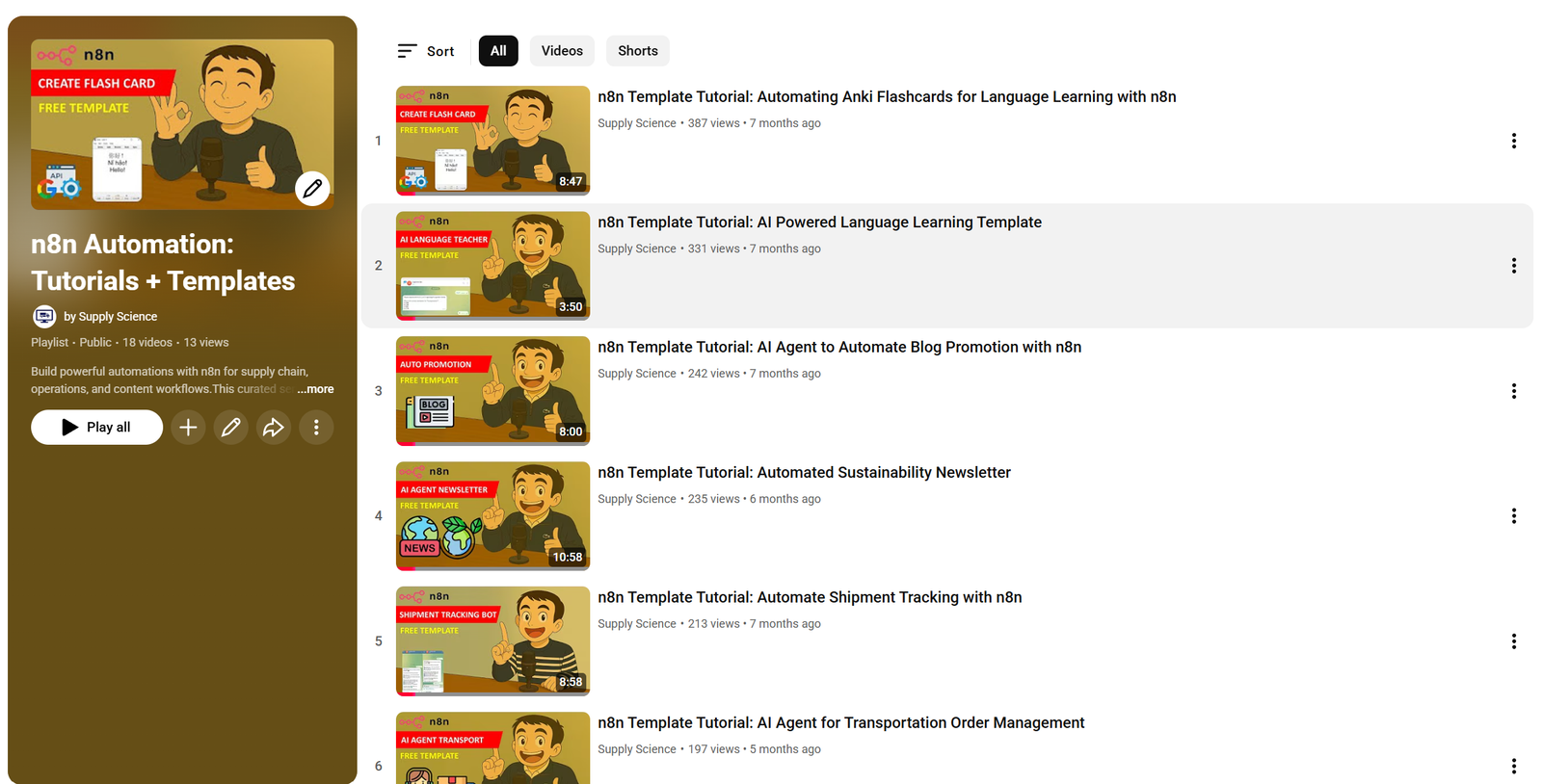
πŸ“Ί Learn More with n8n Tutorials

Get hands-on experience with automation through my comprehensive n8n tutorial playlist, featuring 18+ complete, step-by-step videos and ready-to-use templates.
Next Steps

πŸ—’οΈ Use the sticky notes in the n8n canvas to:

  • Add your Gmail and Carbon Interface credentials
  • Try with a sample shipment confirmation email
  • Check your Google Sheet to verify emissions and timestamps

This template was built using n8n v1.93.0
Submitted: June 7, 2025

1.2 Logical Blocks

This catalog entry is organized from the workflow JSON. The node-level section below shows the executable blocks available for review before importing the template.

2. Block-by-Block Analysis

Block 1 - Gmail Trigger

Type / Role
n8n-nodes-base.gmailTrigger - gmailTrigger
Config choices
Version 1.2

Block 2 - Structured Output Parser

Type / Role
@n8n/n8n-nodes-langchain.outputParserStructured - outputParserStructured
Config choices
Version 1.2

Block 3 - AI Agent Parser

Type / Role
@n8n/n8n-nodes-langchain.agent - agent
Config choices
Version 1.9

Block 4 - OpenAI Chat Model2

Type / Role
@n8n/n8n-nodes-langchain.lmChatOpenAi - lmChatOpenAi
Config choices
Version 1.2

Block 5 - Collect CO2 Emissions

Type / Role
n8n-nodes-base.httpRequest - httpRequest
Config choices
Version 4.2

Block 6 - Load Results

Type / Role
n8n-nodes-base.googleSheets - googleSheets
Config choices
Version 4.6

Block 7 - Sticky Note1

Type / Role
n8n-nodes-base.stickyNote - stickyNote
Config choices
Version 1

Block 8 - Sticky Note2

Type / Role
n8n-nodes-base.stickyNote - stickyNote
Config choices
Version 1

Block 9 - Sticky Note

Type / Role
n8n-nodes-base.stickyNote - stickyNote
Config choices
Version 1

Block 10 - Record Shipment Information

Type / Role
n8n-nodes-base.googleSheets - googleSheets
Config choices
Version 4.6

3. Summary Table

Workflow 🚚 CO2 emissions of freight shipments with Carbon Interface API and GPT-4o
Complexity intermediate
Nodes 10
Categories Document Extraction, AI Summarization
Author Samir Saci
Published 07 Jun 2025

4. Reproducing the Workflow from Scratch

  1. 1. Download the workflow JSON

    Use the JSON export at /data/workflows/4757/4757.json as the source template for this automation.

  2. 2. Import the template into n8n

    Open n8n, import the downloaded JSON, and review each node before activating the workflow.

  3. 3. Configure credentials and variables

    Replace placeholder credentials, API keys, webhook URLs, account IDs, and environment-specific values with your own settings.

  4. 4. Test with sample data

    Run the workflow manually or in a staging workspace, inspect node output, and confirm downstream systems receive the expected data.

  5. 5. Activate and monitor

    Enable the workflow only after testing, then monitor executions, errors, and rate limits during the first production runs.

5. General Notes & Resources

Review imported nodes carefully before activation. This catalog entry is intended to help you inspect the workflow structure, understand required services, and find related templates faster.

Node names, credentials, schedules, webhook paths, and external service limits may need adjustment for your workspace.

Frequently asked questions

What does 🚚 CO2 emissions of freight shipments with Carbon Interface API and GPT-4o do?

Tags : Sustainability, Supply Chain, AI Agent, CO2 Emissions, Carbon Interface API, Logistics, Automation Context Hi! I’m Samir β€” a Supply Chain Engineer and Data Scientist...

What do I need before importing this workflow?

Review the workflow JSON, configure any required credentials in n8n, and test the automation in a safe workspace before using it in production.

Can I customize this workflow?

Yes. Use the block-by-block analysis and the downloadable JSON to inspect each node, then adjust credentials, prompts, schedules, filters, or destinations for your Document Extraction, AI Summarization use case.