Auto-post Dev.to articles to LinkedIn with Airtable tracking & Telegram alerts
Workflow preview


 Early Deal
DISCOUNT 20%

Important notice
This workflow is provided as-is. Please review and test before using in production.
Overview
🧠 Problem This Solves: For developers and creators, consistently posting quality content on LinkedIn can be time-consuming. This workflow automates the process by:
Fetching the latest Dev.to articles
Posting them to LinkedIn twice daily
Preventing duplicates using Airtable
Sending success alerts to Telegram
This ensures you're always active on LinkedIn, with zero manual effort.
👥 Who This Template Is For Developers who want to build their presence on LinkedIn
Tech creators or solo founders looking to grow an audience
Community/page managers who want regular, curated content
Busy professionals aiming for consistent LinkedIn engagement without doing it manually
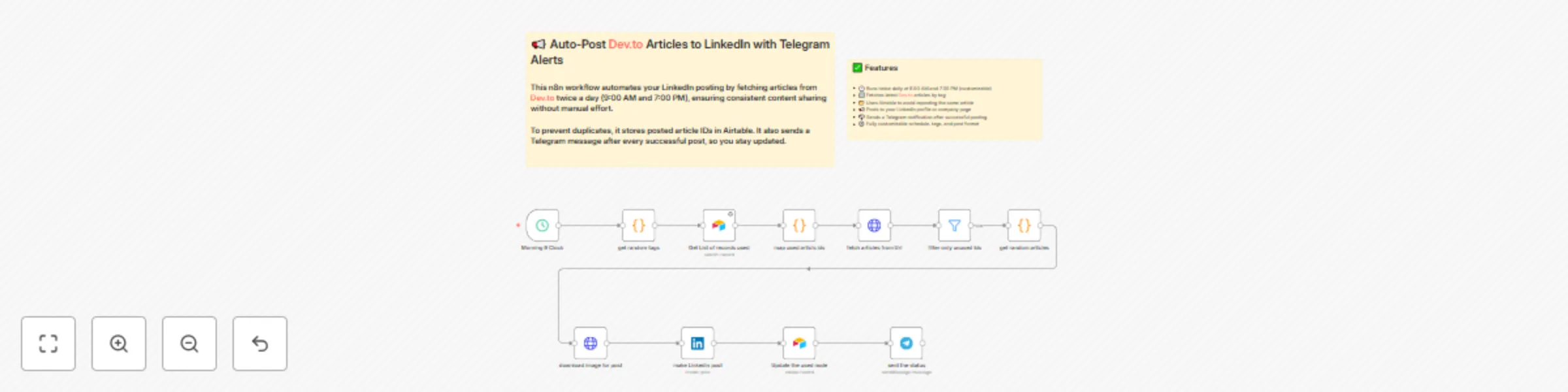
⚙️ Workflow Breakdown This automation runs twice a day (9:00 AM and 7:00 PM) and performs the following steps:
Fetches Dev.to articles based on a tag
Checks Airtable to avoid reposting the same article
Posts to LinkedIn if it’s new
Sends a Telegram message after posting successfully
🧩 Step-by-Step Setup Instructions ✅ 1. Airtable Configuration Create a new base in Airtable with just one table and one column:
Table Name: PostedArticles
Column:
ArticleID (Single line text – stores the unique ID of each Dev.to article posted)
This column is used to track posted articles and prevent duplicates.
🔗 2. Dev.to API Setup Use the following endpoint in the HTTP Request node:
arduino Copy Edit https://dev.to/api/articles?tag=YOUR_TAG_HERE&per_page=10 Replace YOUR_TAG_HERE with a tag like android, webdev, ai, etc.
💬 3. Telegram Bot Setup Open @BotFather in Telegram and create a new bot
Save the bot token
Get your chat ID using @userinfobot or via Telegram API
Add a Telegram node in n8n using this token and chat ID
This will notify you when a post is successfully published.
🧾 4. LinkedIn Setup Create a LinkedIn Developer App
Use OAuth2 to connect it in n8n
Choose to post on either a user profile or a company page
🧱 5. n8n Workflow Structure Here’s the basic structure of the workflow:
Cron Node – Triggers at 9:00 AM and 7:00 PM daily
HTTP Request – Fetches latest articles from Dev.to
Airtable Search – Checks if ArticleID already exists
IF Node – Filters new vs. already-posted articles
LinkedIn Post – Publishes new article
Airtable Create – Saves the new ArticleID
Telegram Message – Sends success confirmation
🛠️ Customization Tips Change the Dev.to tag in the API URL
Modify LinkedIn post format (add hashtags, emojis, personal notes)
Adjust posting times in the Cron node
Use additional filters (e.g., only post articles with a cover image or certain word count)