
Abandoned cart recovery functionality using Gmail and Google Sheets for analytics

Workflow preview
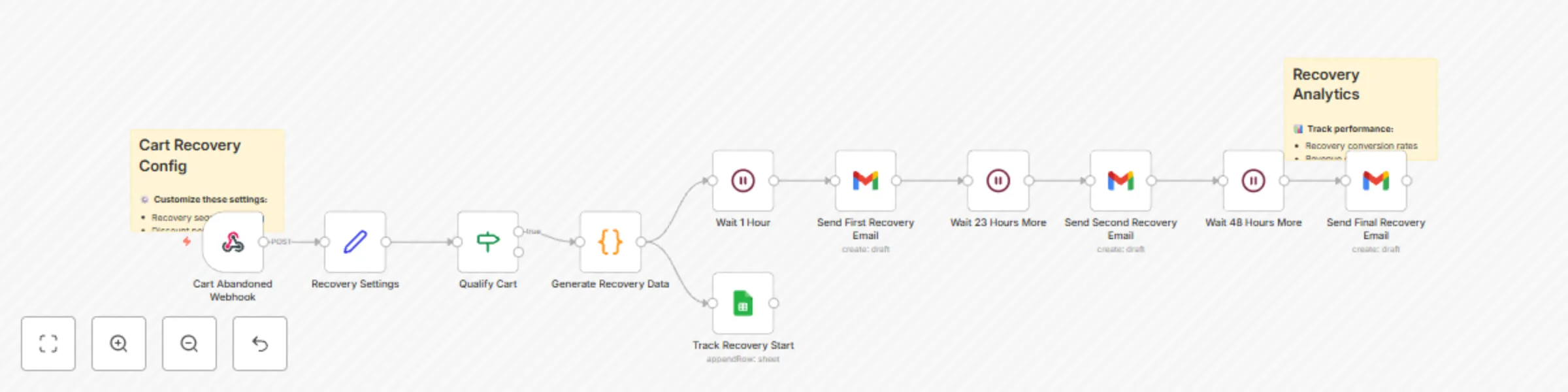
Workflow preview
100%
Abandoned cart recovery functionality using Gmail and Google Sheets for analytics preview
Open on n8n.io

Important notice

This workflow is provided as-is. Please review and test before using in production.

1. Workflow Overview

How it works Automatic Detection : Instantly identifies abandoned carts via webhook from your e commerce store. Progressive Sequence : Automatically sends 3 recovery emails over 7 days with increas...

Best for

  • Social Media automation workflows
  • intermediate n8n builders looking for reusable templates

Tools used

n8n-nodes-base.webhook, n8n-nodes-base.stickynote, n8n-nodes-base.set, n8n-nodes-base.if, n8n-nodes-base.code, n8n-nodes-base.wait, n8n-nodes-base.gmail, n8n-nodes-base.googlesheets

Source and attribution

This workflow is cataloged by N8N Workflows and links back to its original n8n.io source page by Rodrigue Gbadou.

Original n8n.io source

1.1 Workflow description

Title
Abandoned cart recovery functionality using Gmail and Google Sheets for analytics
Workflow name
Abandoned cart recovery functionality using Gmail and Google Sheets for analytics

How it works

Automatic Detection: Instantly identifies abandoned carts via webhook from your e-commerce store.

Progressive Sequence: Automatically sends 3 recovery emails over 7 days with increasing incentives.

Dynamic Personalization: Inserts abandoned products, customer name, and unique promo codes.

Performance Tracking: Analyzes conversion rates and recovered revenue.


Set up steps

  1. Configure the webhook: Connect your e-commerce platform (Shopify, WooCommerce, Magento) to trigger the workflow when a cart is abandoned.

  2. Email service: Set up your email sending service (Gmail, SendGrid, Mailgun) with proper credentials.

  3. Customization: Adapt email templates with your brand guidelines, logo, and tone of voice.

  4. Promo codes: Integrate your discount code system (10%, 15%, 20%).

  5. Analytics tracking: Connect a Google Sheet to track recovery performance.

  6. Testing: Validate the workflow with test data before activation.


Key Features

🎯 Smart targeting: Automatically filters qualified carts (minimum value, valid email)

Optimized timing: Scientifically timed sequence (1h, 24h, 72h) to maximize conversions

💰 Progressive incentives: Increasing discounts (10% → 15% → 20%) to create urgency

📱 Responsive design: Email templates optimized for all devices

🔄 Unique codes: Automatically generates personalized promo codes for each customer

📊 Built-in analytics: Real-time tracking of open rates, clicks, and conversions

🛡️ Error handling: Robust system with notifications in case of technical issues

🎨 Professional templates: Modern email designs with optimized call-to-actions


Advanced Features

  • Customer segmentation: Differentiates between new and returning customers
  • Automatic exclusions: Avoids sending to customers who already purchased
  • Multi-language: Supports different languages based on location
  • A/B Testing: Tests different email versions to optimize performance
  • CRM integration: Syncs data with your customer management system

Metrics Tracked

  • Recovery rate per email in the sequence
  • Real-time recovered revenue
  • Open and click-through rates for each email
  • Promo codes used and their effectiveness
  • Average delay between abandonment and conversion

Customization Options

  • Flexible timing: Adjust sending delays to fit your industry
  • Variable incentives: Change discount percentages as needed
  • Dynamic content: Adjust messages based on product types
  • Configurable thresholds: Set your own qualification criteria
  • Full branding: Integrate your complete visual identity

> This workflow automatically turns abandoned carts into sales opportunities with a scientific and personalized approach, generating measurable ROI for your e-commerce.

1.2 Logical Blocks

This catalog entry is organized from the workflow JSON. The node-level section below shows the executable blocks available for review before importing the template.

2. Block-by-Block Analysis

Block 1 - Cart Abandoned Webhook

Type / Role
n8n-nodes-base.webhook - webhook
Config choices
Version 1

Block 2 - Sticky Note

Type / Role
n8n-nodes-base.stickyNote - stickyNote
Config choices
Version 1

Block 3 - Recovery Settings

Type / Role
n8n-nodes-base.set - set
Config choices
Version 1

Block 4 - Qualify Cart

Type / Role
n8n-nodes-base.if - if
Config choices
Version 2

Block 5 - Generate Recovery Data

Type / Role
n8n-nodes-base.code - code
Config choices
Version 1

Block 6 - Wait 1 Hour

Type / Role
n8n-nodes-base.wait - wait
Config choices
Version 1

Block 7 - Send First Recovery Email

Type / Role
n8n-nodes-base.gmail - gmail
Config choices
Version 1

Block 8 - Wait 23 Hours More

Type / Role
n8n-nodes-base.wait - wait
Config choices
Version 1

Block 9 - Send Second Recovery Email

Type / Role
n8n-nodes-base.gmail - gmail
Config choices
Version 1

Block 10 - Wait 48 Hours More

Type / Role
n8n-nodes-base.wait - wait
Config choices
Version 1

Block 11 - Send Final Recovery Email

Type / Role
n8n-nodes-base.gmail - gmail
Config choices
Version 1

Block 12 - Sticky Note1

Type / Role
n8n-nodes-base.stickyNote - stickyNote
Config choices
Version 1

Block 13 - Track Recovery Start

Type / Role
n8n-nodes-base.googleSheets - googleSheets
Config choices
Version 1

3. Summary Table

Workflow Abandoned cart recovery functionality using Gmail and Google Sheets for analytics
Complexity intermediate
Nodes 13
Categories Social Media
Author Rodrigue Gbadou
Published 16 Jul 2025

4. Reproducing the Workflow from Scratch

  1. 1. Download the workflow JSON

    Use the JSON export at /data/workflows/6045/6045.json as the source template for this automation.

  2. 2. Import the template into n8n

    Open n8n, import the downloaded JSON, and review each node before activating the workflow.

  3. 3. Configure credentials and variables

    Replace placeholder credentials, API keys, webhook URLs, account IDs, and environment-specific values with your own settings.

  4. 4. Test with sample data

    Run the workflow manually or in a staging workspace, inspect node output, and confirm downstream systems receive the expected data.

  5. 5. Activate and monitor

    Enable the workflow only after testing, then monitor executions, errors, and rate limits during the first production runs.

5. General Notes & Resources

Review imported nodes carefully before activation. This catalog entry is intended to help you inspect the workflow structure, understand required services, and find related templates faster.

Node names, credentials, schedules, webhook paths, and external service limits may need adjustment for your workspace.

Frequently asked questions

What does Abandoned cart recovery functionality using Gmail and Google Sheets for analytics do?

How it works Automatic Detection : Instantly identifies abandoned carts via webhook from your e commerce store. Progressive Sequence : Automatically sends 3 recovery emails over 7 days with increas...

What do I need before importing this workflow?

Review the workflow JSON, configure any required credentials in n8n, and test the automation in a safe workspace before using it in production.

Can I customize this workflow?

Yes. Use the block-by-block analysis and the downloadable JSON to inspect each node, then adjust credentials, prompts, schedules, filters, or destinations for your Social Media use case.



