
Voice activated multi-agent demo for Vagent.io using Notion and Google Calendar

Workflow preview

Workflow preview
100%
Voice activated multi-agent demo for Vagent.io using Notion and Google Calendar preview
Open on n8n.io

Important notice

This workflow is provided as-is. Please review and test before using in production.

1. Workflow Overview

Purpose Use a lightweight Voice Interface, for you and your entire organization, to interact with an AI Supervisor, a personal AI Assistant, which has access to your custom workflows. You can also ...

Best for

  • Personal Productivity automation workflows
  • AI Chatbot automation workflows
  • advanced n8n builders looking for reusable templates

Tools used

@n8n/n8n-nodes-langchain.lmchatopenai, n8n-nodes-base.respondtowebhook, @n8n/n8n-nodes-langchain.toolworkflow, @n8n/n8n-nodes-langchain.chattrigger, @n8n/n8n-nodes-langchain.memorybufferwindow, n8n-nodes-base.set, @n8n/n8n-nodes-langchain.agent, @n8n/n8n-nodes-langchain.toolhttprequest

Source and attribution

This workflow is cataloged by N8N Workflows and links back to its original n8n.io source page by Mario.

Original n8n.io source

1.1 Workflow description

Title
Voice activated multi-agent demo for Vagent.io using Notion and Google Calendar
Workflow name
Voice activated multi-agent demo for Vagent.io using Notion and Google Calendar

Purpose

Use a lightweight Voice Interface, for you and your entire organization, to interact with an AI Supervisor, a personal AI Assistant, which has access to your custom workflows. You can also connect the supervisor to your already existing Agents.

Demo & Explanation
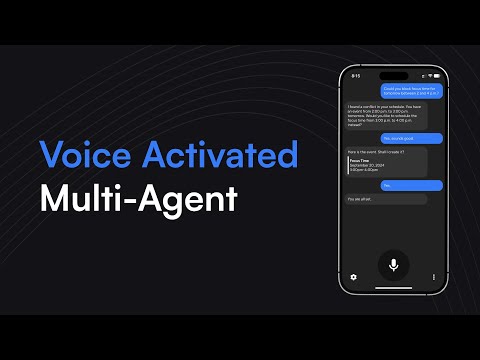
How it works

  • After recording a message in the Vagent App, it gets transcribed and sent in combination with a session ID to the registered webhook
  • The Main Agent acts as a router. I interprets the message while using the stored chat history (bound to the session ID) and chooses which tool to use to perform the required action and. Tools on this level are workflows, which contain subordinated Agents. Since the Main Agent interprets the original message, the raw input is passed to the Tools/Sub-Agents as a separate parameter
  • Within the Sub-Agents the actual processing takes place. Each of those has it’s separate chat memory (with a suffix to the main session ID), to achieve a clear separation of concerns
  • Depending on the required action an HTTP Request Tool is called. The result is being formatted in Markdown and returned to the Main Agent with an additional short prompt, so it does not get interpreted by the Main Agent.
  • Drafts are separated from a short message by added indentation (angle brackets). If some information is missing, no tool is called just yet, instead a message is returned back to the user
  • The Main Agent then outputs the result from the called Sub-Agent. If a draft is included, it gets separated from the spoken output
  • Finally the formatted output is returned as response to the webhook. The message is split into a spoken and a text version, which enables the App to read out loud unnecessary information like drafts in this example

See the full documentation of Vagent: https://vagent.io/docs

Setup

  • Import this workflow into your n8n instance
  • Follow the instructions given in the sticky notes on the canvas
  • Setup your credentials. OpenAI can be replaced by another LLM in the workflow, but is required for the App to work. Google Calendar and Notion are required for all scenarios to work
  • Copy the Webhook URL from the Webhook node of the main workflow
  • Download the Vagent App from https://vagent.io
  • In the settings paste your OpenAI API Token, the Webhook URL and the password defined for Header Auth
  • Now you can use the App to interact with the Multi-Agent using your Voice by tapping the Mic symbol in the App to record your message.

To use the chat trigger (for testing) properly, temporarily disable the nodes after the Tools Agent.

1.2 Logical Blocks

This catalog entry is organized from the workflow JSON. The node-level section below shows the executable blocks available for review before importing the template.

2. Block-by-Block Analysis

Block 1 - OpenAI Chat Model2

Type / Role
@n8n/n8n-nodes-langchain.lmChatOpenAi - lmChatOpenAi
Config choices
Version 1

Block 2 - Respond to Webhook

Type / Role
n8n-nodes-base.respondToWebhook - respondToWebhook
Config choices
Version 1.1

Block 3 - calendarAgent

Type / Role
@n8n/n8n-nodes-langchain.toolWorkflow - toolWorkflow
Config choices
Version 1.2

Block 4 - When chat message received

Type / Role
@n8n/n8n-nodes-langchain.chatTrigger - chatTrigger
Config choices
Version 1.1

Block 5 - taskAgent

Type / Role
@n8n/n8n-nodes-langchain.toolWorkflow - toolWorkflow
Config choices
Version 1.2

Block 6 - Window Buffer Memory

Type / Role
@n8n/n8n-nodes-langchain.memoryBufferWindow - memoryBufferWindow
Config choices
Version 1.2

Block 7 - Map Fields

Type / Role
n8n-nodes-base.set - set
Config choices
Version 3.4

Block 8 - Map Fields1

Type / Role
n8n-nodes-base.set - set
Config choices
Version 3.4

Block 9 - Exclude Previews from Speech

Type / Role
n8n-nodes-base.set - set
Config choices
Version 3.4

Block 10 - Main Agent

Type / Role
@n8n/n8n-nodes-langchain.agent - agent
Config choices
Version 1.6

Block 11 - OpenAI Chat Model

Type / Role
@n8n/n8n-nodes-langchain.lmChatOpenAi - lmChatOpenAi
Config choices
Version 1

Block 12 - HTTP Request

Type / Role
@n8n/n8n-nodes-langchain.toolHttpRequest - toolHttpRequest
Config choices
Version 1.1

Block 13 - Settings

Type / Role
n8n-nodes-base.set - set
Config choices
Version 3.4

Block 14 - Format output

Type / Role
n8n-nodes-base.set - set
Config choices
Version 3.4

Block 15 - Notion Task Agent

Type / Role
@n8n/n8n-nodes-langchain.agent - agent
Config choices
Version 1.6

Block 16 - Window Buffer Memory1

Type / Role
@n8n/n8n-nodes-langchain.memoryBufferWindow - memoryBufferWindow
Config choices
Version 1.2

Block 17 - Get calendar availability

Type / Role
@n8n/n8n-nodes-langchain.toolHttpRequest - toolHttpRequest
Config choices
Version 1

Block 18 - Book appointment

Type / Role
@n8n/n8n-nodes-langchain.toolHttpRequest - toolHttpRequest
Config choices
Version 1

Block 19 - Google Calendar Agent

Type / Role
@n8n/n8n-nodes-langchain.agent - agent
Config choices
Version 1.6

Block 20 - OpenAI Chat Model1

Type / Role
@n8n/n8n-nodes-langchain.lmChatOpenAi - lmChatOpenAi
Config choices
Version 1

Block 21 - Settings1

Type / Role
n8n-nodes-base.set - set
Config choices
Version 3.4

Block 22 - Format output1

Type / Role
n8n-nodes-base.set - set
Config choices
Version 3.4

Block 23 - Window Buffer Memory2

Type / Role
@n8n/n8n-nodes-langchain.memoryBufferWindow - memoryBufferWindow
Config choices
Version 1.2

Block 24 - Sticky Note

Type / Role
n8n-nodes-base.stickyNote - stickyNote
Config choices
Version 1

Showing the first 24 of 28 workflow blocks. Download the JSON for the full node graph.

3. Summary Table

Workflow Voice activated multi-agent demo for Vagent.io using Notion and Google Calendar
Complexity advanced
Nodes 28
Categories Personal Productivity, AI Chatbot
Author Mario
Published 30 Sept 2024

4. Reproducing the Workflow from Scratch

  1. 1. Download the workflow JSON

    Use the JSON export at /data/workflows/2446/2446.json as the source template for this automation.

  2. 2. Import the template into n8n

    Open n8n, import the downloaded JSON, and review each node before activating the workflow.

  3. 3. Configure credentials and variables

    Replace placeholder credentials, API keys, webhook URLs, account IDs, and environment-specific values with your own settings.

  4. 4. Test with sample data

    Run the workflow manually or in a staging workspace, inspect node output, and confirm downstream systems receive the expected data.

  5. 5. Activate and monitor

    Enable the workflow only after testing, then monitor executions, errors, and rate limits during the first production runs.

5. General Notes & Resources

Review imported nodes carefully before activation. This catalog entry is intended to help you inspect the workflow structure, understand required services, and find related templates faster.

Node names, credentials, schedules, webhook paths, and external service limits may need adjustment for your workspace.

Frequently asked questions

What does Voice activated multi-agent demo for Vagent.io using Notion and Google Calendar do?

Purpose Use a lightweight Voice Interface, for you and your entire organization, to interact with an AI Supervisor, a personal AI Assistant, which has access to your custom workflows. You can also ...

What do I need before importing this workflow?

Review the workflow JSON, configure any required credentials in n8n, and test the automation in a safe workspace before using it in production.

Can I customize this workflow?

Yes. Use the block-by-block analysis and the downloadable JSON to inspect each node, then adjust credentials, prompts, schedules, filters, or destinations for your Personal Productivity, AI Chatbot use case.



