Segment players and predict churn with GPT-4o and reward pricing simulations
Workflow preview


 Early Deal
DISCOUNT 20%

Overview
How It Works
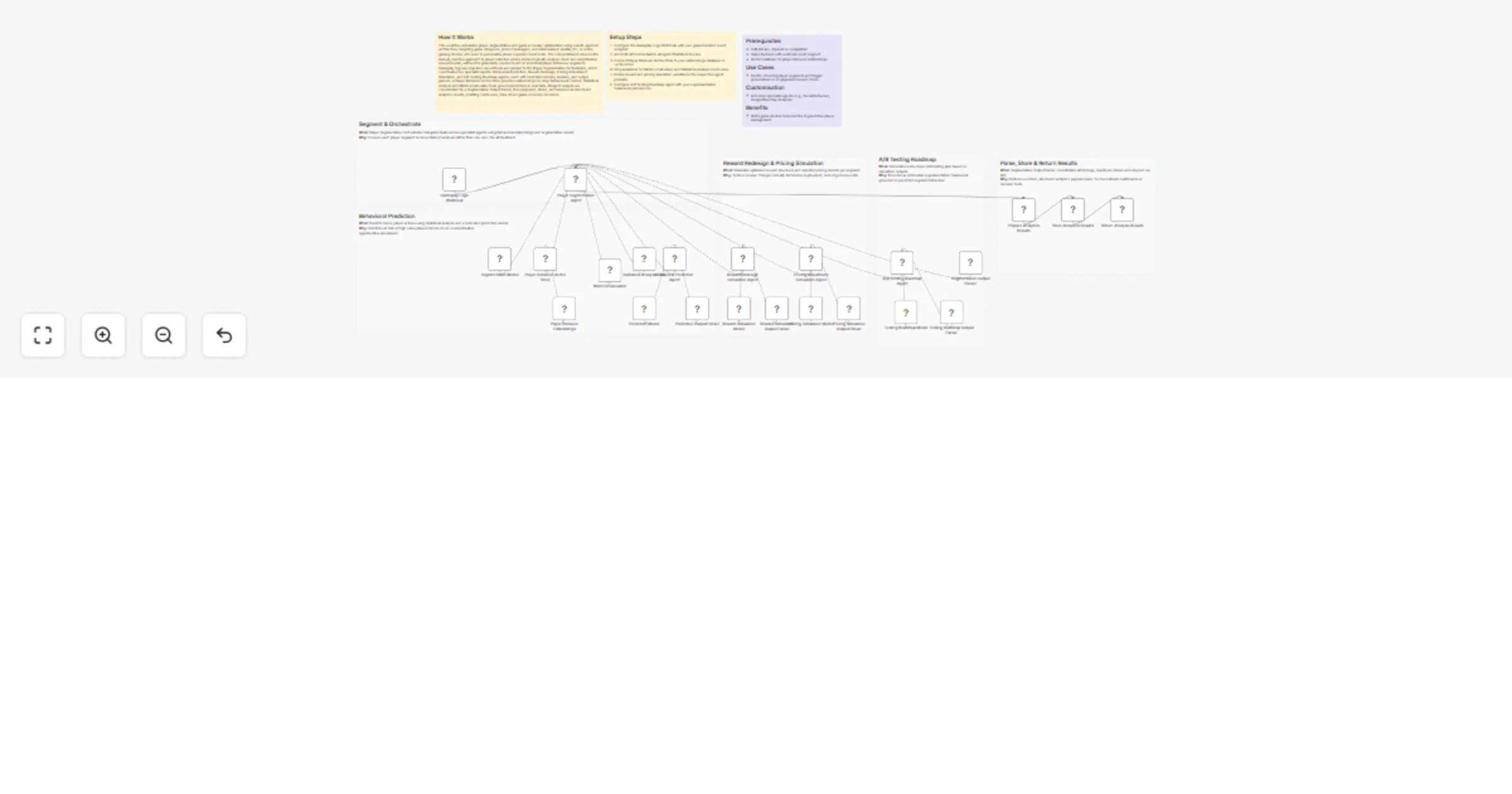
This workflow automates player segmentation and game economy optimisation using a multi-agent AI architecture, targeting game designers, product managers, and data teams in mobile, PC, or online gaming studios who need to personalise player experiences at scale. The core problem it solves is the manual, reactive approach to player retention where studios typically analyse churn and monetisation issues too late, without the granularity needed to act on individual player behaviour segments. Gameplay logs are ingested via webhook and passed to the Player Segmentation Orchestrator, which coordinates five specialist agents: Behavioral Prediction, Reward Redesign, Pricing Adjustment Simulation, and A/B Testing Roadmap agents, each with dedicated models, memory, and output parsers. A Player Behavior Vector Store provides embeddings for deep behavioural context. Statistical Analysis and Metrics Calculator tools ground predictions in real data. All agent outputs are consolidated by a Segmentation Output Parser, then prepared, stored, and returned as structured analytics results, enabling continuous, data-driven game economy decisions.
Setup Steps
- Configure the Gameplay Logs Webhook with your game backend event endpoint.
- Add LLM API credentials to all agent Chat Model nodes.
- Connect Player Behavior Vector Store to your embeddings database or vector index.
- Set parameters for Metrics Calculator and Statistical Analysis Tool nodes.
- Define reward and pricing simulation variables in the respective agent prompts.
- Configure A/B Testing Roadmap agent with your experimentation framework preferences.
Prerequisites
- LLM API key (OpenAI or compatible)
- Game backend with webhook event support
- Vector database for player behavior embeddings
Use Cases
- Identify churning player segments and trigger personalised re-engagement reward offers.
Customisation
- Add more specialist agents (e.g., Social Behaviour, Competitive Play Analysis).
Benefits
- Shifts game studios from reactive to predictive player management.