
Research paper analysis system with PDF vector, OCR, GPT-4, and Google Drive

Workflow preview
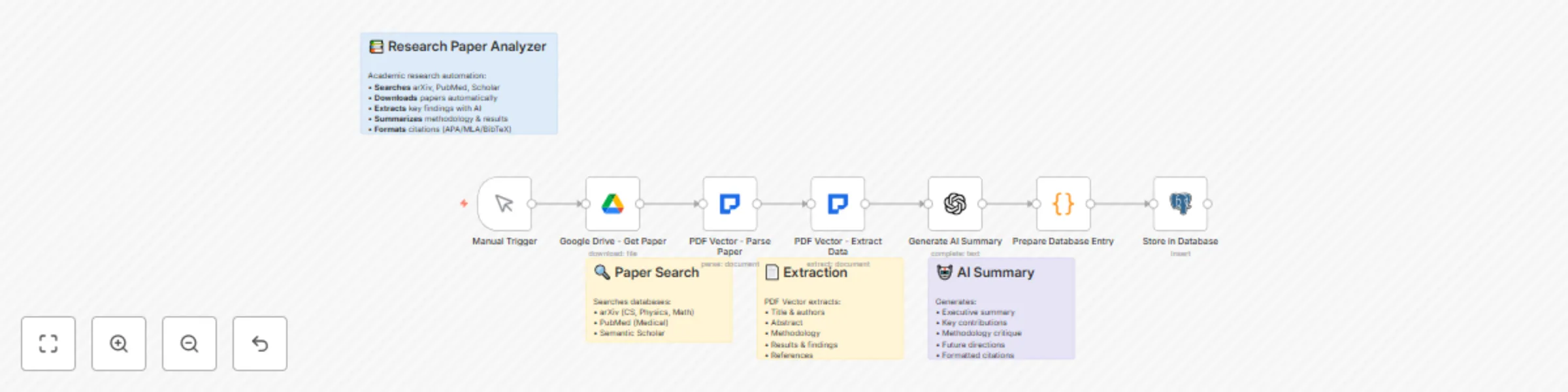
Workflow preview
100%
Research paper analysis system with PDF vector, OCR, GPT-4, and Google Drive preview
Open on n8n.io

Important notice

This workflow is provided as-is. Please review and test before using in production.

1. Workflow Overview

Researchers and academic institutions need efficient ways to process and analyze large volumes of research papers and academic documents, including scanned PDFs and image based materials (JPG, PNG)...

Best for

  • Document Extraction automation workflows
  • AI RAG automation workflows
  • intermediate n8n builders looking for reusable templates

Tools used

n8n-nodes-base.stickynote, n8n-nodes-base.manualtrigger, n8n-nodes-base.googledrive, n8n-nodes-pdfvector.pdfvector, n8n-nodes-base.openai, n8n-nodes-base.code, n8n-nodes-base.postgres

Source and attribution

This workflow is cataloged by N8N Workflows and links back to its original n8n.io source page by PDF Vector.

Original n8n.io source

1.1 Workflow description

Title
Research paper analysis system with PDF vector, OCR, GPT-4, and Google Drive
Workflow name
Research paper analysis system with PDF vector, OCR, GPT-4, and Google Drive

Overview

Researchers and academic institutions need efficient ways to process and analyze large volumes of research papers and academic documents, including scanned PDFs and image-based materials (JPG, PNG). Manual review of academic literature is time-consuming and makes it difficult to identify trends, track citations, and synthesize findings across multiple papers. This workflow automates the extraction and analysis of research papers and scanned documents using OCR technology, creating a searchable knowledge base of academic insights from both digital and image-based sources.

What You Can Do

  • Extract key information from research papers automatically, including methodologies, findings, and citations
  • Build a searchable database of academic insights from both digital and image-based sources
  • Track citations and identify research trends across multiple papers
  • Synthesize findings from large volumes of academic literature efficiently

Who It's For

Research institutions, university libraries, R&D departments, academic researchers, literature review teams, and organizations tracking scientific developments in their field.

The Problem It Solves

Literature reviews require reading hundreds of papers to identify relevant findings and methodologies. This template automates the extraction of key information from research papers, including methodologies, findings, and citations. It builds a searchable database that helps researchers quickly find relevant studies and identify research gaps.

Setup Instructions:

  1. Install the PDF Vector community node with academic features
  2. Configure PDF Vector API with academic search enabled
  3. Configure Google Drive credentials for document access
  4. Set up database for storing extracted research data
  5. Configure citation tracking preferences
  6. Set up automated paper ingestion from sources
  7. Configure summary generation parameters

Key Features:

  • Google Drive integration for research paper retrieval (PDFs, JPGs, PNGs)
  • OCR processing for scanned documents and images
  • Automatic extraction of paper metadata and structure from any format
  • Methodology and findings summarization from PDFs and images
  • Citation network analysis and metrics
  • Multi-paper trend identification
  • Searchable research database creation
  • Integration with academic search engines

Customization Options:

  • Add field-specific extraction templates
  • Configure automated paper discovery from arXiv, PubMed, etc.
  • Implement citation alert systems
  • Create research trend visualizations
  • Add collaboration features for research teams
  • Build API endpoints for research queries
  • Integrate with reference management tools

Implementation Details: The workflow uses PDF Vector's academic features to understand research paper structure and extract meaningful insights. It processes papers from various sources, identifies key contributions, and creates structured summaries. The system tracks citations to measure impact and identifies emerging research trends by analyzing multiple papers in a field.

Note: This workflow uses the PDF Vector community node. Make sure to install it from the n8n community nodes collection before using this template.

1.2 Logical Blocks

This catalog entry is organized from the workflow JSON. The node-level section below shows the executable blocks available for review before importing the template.

2. Block-by-Block Analysis

Block 1 - Research Overview

Type / Role
n8n-nodes-base.stickyNote - stickyNote
Config choices
Version 1

Block 2 - Academic Search

Type / Role
n8n-nodes-base.stickyNote - stickyNote
Config choices
Version 1

Block 3 - Paper Extraction

Type / Role
n8n-nodes-base.stickyNote - stickyNote
Config choices
Version 1

Block 4 - AI Analysis

Type / Role
n8n-nodes-base.stickyNote - stickyNote
Config choices
Version 1

Block 5 - Manual Trigger

Type / Role
n8n-nodes-base.manualTrigger - manualTrigger
Config choices
Version 1

Block 6 - Google Drive - Get Paper

Type / Role
n8n-nodes-base.googleDrive - googleDrive
Config choices
Version 3

Block 7 - PDF Vector - Parse Paper

Type / Role
n8n-nodes-pdfvector.pdfVector - pdfVector
Config choices
Version 1

Block 8 - PDF Vector - Extract Data

Type / Role
n8n-nodes-pdfvector.pdfVector - pdfVector
Config choices
Version 1

Block 9 - Generate AI Summary

Type / Role
n8n-nodes-base.openAi - openAi
Config choices
Version 1

Block 10 - Prepare Database Entry

Type / Role
n8n-nodes-base.code - code
Config choices
Version 2

Block 11 - Store in Database

Type / Role
n8n-nodes-base.postgres - postgres
Config choices
Version 1

3. Summary Table

Workflow Research paper analysis system with PDF vector, OCR, GPT-4, and Google Drive
Complexity intermediate
Nodes 11
Categories Document Extraction, AI RAG
Author PDF Vector
Published 12 Sept 2025

4. Reproducing the Workflow from Scratch

  1. 1. Download the workflow JSON

    Use the JSON export at /data/workflows/8499/8499.json as the source template for this automation.

  2. 2. Import the template into n8n

    Open n8n, import the downloaded JSON, and review each node before activating the workflow.

  3. 3. Configure credentials and variables

    Replace placeholder credentials, API keys, webhook URLs, account IDs, and environment-specific values with your own settings.

  4. 4. Test with sample data

    Run the workflow manually or in a staging workspace, inspect node output, and confirm downstream systems receive the expected data.

  5. 5. Activate and monitor

    Enable the workflow only after testing, then monitor executions, errors, and rate limits during the first production runs.

5. General Notes & Resources

Review imported nodes carefully before activation. This catalog entry is intended to help you inspect the workflow structure, understand required services, and find related templates faster.

Node names, credentials, schedules, webhook paths, and external service limits may need adjustment for your workspace.

Frequently asked questions

What does Research paper analysis system with PDF vector, OCR, GPT-4, and Google Drive do?

Researchers and academic institutions need efficient ways to process and analyze large volumes of research papers and academic documents, including scanned PDFs and image based materials (JPG, PNG)...

What do I need before importing this workflow?

Review the workflow JSON, configure any required credentials in n8n, and test the automation in a safe workspace before using it in production.

Can I customize this workflow?

Yes. Use the block-by-block analysis and the downloadable JSON to inspect each node, then adjust credentials, prompts, schedules, filters, or destinations for your Document Extraction, AI RAG use case.



