
Integrate Google Workspace with ChatGPT & OpenAI Agent Builder using MCP Bridge

Workflow preview
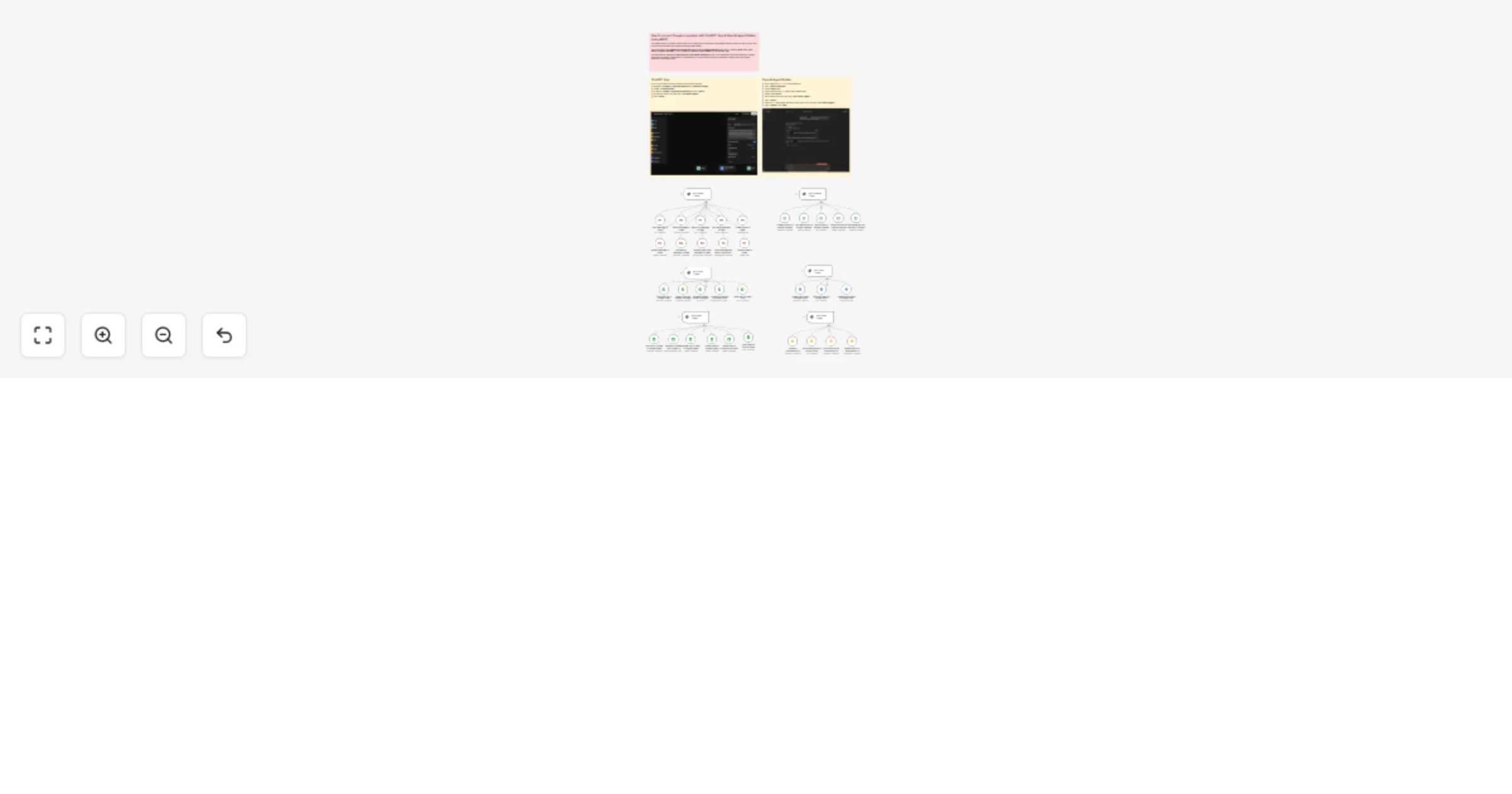
Workflow preview
100%
Integrate Google Workspace with ChatGPT & OpenAI Agent Builder using MCP Bridge preview
Open on n8n.io

Important notice

This workflow is provided as-is. Please review and test before using in production.

1. Workflow Overview

The official ChatGPT connector doesn’t allow you to interact directly with Google Workspace apps from within the app. Let’s see how to overcome this limitation by creating a dedicated MCP server . ...

Best for

  • Engineering automation workflows
  • AI RAG automation workflows
  • advanced n8n builders looking for reusable templates

Tools used

n8n-nodes-base.gmailtool, @n8n/n8n-nodes-langchain.mcptrigger, n8n-nodes-base.stickynote, n8n-nodes-base.googlecalendartool, n8n-nodes-base.googledrivetool, n8n-nodes-base.googledocstool, n8n-nodes-base.googlesheetstool, n8n-nodes-base.googleslidestool

Source and attribution

This workflow is cataloged by N8N Workflows and links back to its original n8n.io source page by Davide.

Original n8n.io source

1.1 Workflow description

Title
Integrate Google Workspace with ChatGPT & OpenAI Agent Builder using MCP Bridge
Workflow name
Integrate Google Workspace with ChatGPT & OpenAI Agent Builder using MCP Bridge

The official ChatGPT connector doesn’t allow you to interact directly with Google Workspace apps from within the app. Let’s see how to overcome this limitation by creating a dedicated MCP server.

This workflow acts as a Middleware Control Point (MCP) between Google Workspace services — including Gmail, Drive, Docs, Sheets, Calendar, and Slides — and AI agents like OpenAI’s Agent Builder and the ChatGPT App.

It enables these AI assistants to directly interact with Google Workspace tools — from managing emails and calendars to creating and editing documents, spreadsheets, or presentations — through secure automation endpoints, a feature that is not natively supported in the ChatGPT app.


Key Advantages

  • Unified AI–Google Workspace Integration Allows large language models (LLMs) to manage Gmail, Drive, Docs, Sheets, Calendar, and Slides directly, enabling AI-driven workflows like email automation, document creation, meeting scheduling, and data analysis.

  • Full Control Across Google Apps Supports key actions across multiple services:

    • Gmail: Read, send, reply, search, and draft emails.
    • Drive: Search, upload, organize, and share files.
    • Docs: Create, edit, and retrieve Google Docs.
    • Sheets: Create or update spreadsheets, analyze data, and read cell values.
    • Calendar: List, create, update, or delete events.
    • Slides: Generate or modify presentations.
  • Plug-and-Play with OpenAI Agent Builder & ChatGPT Easily connect to MCP-compatible AI platforms like Claude Desktop or OpenAI Agent Builder, with minimal configuration.

  • Scalable and Extensible The modular structure allows you to expand to additional Google APIs or custom automations (e.g., CRM syncing, sentiment analysis, or reporting).

  • No-Code/Low-Code Configuration Fully built in n8n, allowing easy customization and maintenance without deep programming skills.


How It Works

  1. MCP Trigger: The “MCP Google Workspace Trigger” node acts as the server endpoint, waiting for incoming requests from an AI application.

  2. Tool Execution: When the AI needs to interact with a Google app (e.g., Gmail or Drive), it sends a command to this trigger. The workflow routes the request to the appropriate tool node.

  3. Available Actions (Examples):

    • Gmail: Get, send, reply, search, or draft messages.
    • Drive: Upload or retrieve files.
    • Docs: Create or edit documents.
    • Sheets: Read or update cell data.
    • Calendar: Manage events.
    • Slides: Generate or modify presentations.
  4. Data Return: The result (email content, document link, file metadata, event details, etc.) is returned to the MCP server and then to the AI, which can use it to continue the workflow or conversation.


Setup Steps

  1. Configure Google Workspace Credentials in n8n: Authenticate each Google service (Gmail, Drive, Docs, Sheets, Calendar, Slides) via OAuth2 using the correct account credentials.

  2. Activate the Workflow: The workflow must be active in n8n. The MCP Trigger node provides a unique URL that serves as the server endpoint.

  3. Connect to an AI Application (Choose one method):

    • ChatGPT App:

      • Open the ChatGPT App (Plus plan required).
      • Enable Dev Mode → Add new connector.
      • Add an “MCP Server” as a tool and provide the URL from the “MCP Google Workspace Trigger” node.
    • OpenAI Agent Builder:

      • Visit OpenAI Agent Builder.
      • Create a new workflow or agent.
      • Add an “MCP Server” as a tool and provide the MCP URL from n8n.

Once connected, the AI can intelligently manage Google Workspace tasks based on natural language requests such as:

> “Schedule a meeting with Sarah tomorrow at 3 PM,” > “Create a new Google Doc titled ‘Marketing Plan’ and share it with the team,” > or “Find the latest report in Drive and summarize it.”


Need help customizing?

Contact me for consulting and support or add me on Linkedin.

1.2 Logical Blocks

This catalog entry is organized from the workflow JSON. The node-level section below shows the executable blocks available for review before importing the template.

2. Block-by-Block Analysis

Block 1 - Get a message in Gmail

Type / Role
n8n-nodes-base.gmailTool - gmailTool
Config choices
Version 2.1

Block 2 - Send a message in Gmail

Type / Role
n8n-nodes-base.gmailTool - gmailTool
Config choices
Version 2.1

Block 3 - Get many messages in Gmail

Type / Role
n8n-nodes-base.gmailTool - gmailTool
Config choices
Version 2.1

Block 4 - Reply to a message in Gmail

Type / Role
n8n-nodes-base.gmailTool - gmailTool
Config choices
Version 2.1

Block 5 - Create a draft in Gmail

Type / Role
n8n-nodes-base.gmailTool - gmailTool
Config choices
Version 2.1

Block 6 - MCP Gmail Trigger

Type / Role
@n8n/n8n-nodes-langchain.mcpTrigger - mcpTrigger
Config choices
Version 2

Block 7 - Sticky Note

Type / Role
n8n-nodes-base.stickyNote - stickyNote
Config choices
Version 1

Block 8 - Sticky Note1

Type / Role
n8n-nodes-base.stickyNote - stickyNote
Config choices
Version 1

Block 9 - Sticky Note2

Type / Role
n8n-nodes-base.stickyNote - stickyNote
Config choices
Version 1

Block 10 - MCP Calendar Trigger

Type / Role
@n8n/n8n-nodes-langchain.mcpTrigger - mcpTrigger
Config choices
Version 2

Block 11 - Create an event in Google Calendar

Type / Role
n8n-nodes-base.googleCalendarTool - googleCalendarTool
Config choices
Version 1.3

Block 12 - Get many events in Google Calendar

Type / Role
n8n-nodes-base.googleCalendarTool - googleCalendarTool
Config choices
Version 1.3

Block 13 - Get an event in Google Calendar

Type / Role
n8n-nodes-base.googleCalendarTool - googleCalendarTool
Config choices
Version 1.3

Block 14 - Delete an event in Google Calendar

Type / Role
n8n-nodes-base.googleCalendarTool - googleCalendarTool
Config choices
Version 1.3

Block 15 - Get availability in a calendar in Google Calendar

Type / Role
n8n-nodes-base.googleCalendarTool - googleCalendarTool
Config choices
Version 1.3

Block 16 - Download file in Google Drive

Type / Role
n8n-nodes-base.googleDriveTool - googleDriveTool
Config choices
Version 3

Block 17 - Search files and folders in Google Drive

Type / Role
n8n-nodes-base.googleDriveTool - googleDriveTool
Config choices
Version 3

Block 18 - Get many shared drives in Google Drive

Type / Role
n8n-nodes-base.googleDriveTool - googleDriveTool
Config choices
Version 3

Block 19 - Create file from text in Google Drive

Type / Role
n8n-nodes-base.googleDriveTool - googleDriveTool
Config choices
Version 3

Block 20 - Move file in Google Drive

Type / Role
n8n-nodes-base.googleDriveTool - googleDriveTool
Config choices
Version 3

Block 21 - Create a document in Google Docs

Type / Role
n8n-nodes-base.googleDocsTool - googleDocsTool
Config choices
Version 2

Block 22 - Get a document in Google Docs

Type / Role
n8n-nodes-base.googleDocsTool - googleDocsTool
Config choices
Version 2

Block 23 - Update a document in Google Docs

Type / Role
n8n-nodes-base.googleDocsTool - googleDocsTool
Config choices
Version 2

Block 24 - MCP Docs Trigger

Type / Role
@n8n/n8n-nodes-langchain.mcpTrigger - mcpTrigger
Config choices
Version 2

Showing the first 24 of 42 workflow blocks. Download the JSON for the full node graph.

3. Summary Table

Workflow Integrate Google Workspace with ChatGPT & OpenAI Agent Builder using MCP Bridge
Complexity advanced
Nodes 42
Categories Engineering, AI RAG
Author Davide
Published 14 Oct 2025

4. Reproducing the Workflow from Scratch

  1. 1. Download the workflow JSON

    Use the JSON export at /data/workflows/9635/9635.json as the source template for this automation.

  2. 2. Import the template into n8n

    Open n8n, import the downloaded JSON, and review each node before activating the workflow.

  3. 3. Configure credentials and variables

    Replace placeholder credentials, API keys, webhook URLs, account IDs, and environment-specific values with your own settings.

  4. 4. Test with sample data

    Run the workflow manually or in a staging workspace, inspect node output, and confirm downstream systems receive the expected data.

  5. 5. Activate and monitor

    Enable the workflow only after testing, then monitor executions, errors, and rate limits during the first production runs.

5. General Notes & Resources

Review imported nodes carefully before activation. This catalog entry is intended to help you inspect the workflow structure, understand required services, and find related templates faster.

Node names, credentials, schedules, webhook paths, and external service limits may need adjustment for your workspace.

Frequently asked questions

What does Integrate Google Workspace with ChatGPT & OpenAI Agent Builder using MCP Bridge do?

The official ChatGPT connector doesn’t allow you to interact directly with Google Workspace apps from within the app. Let’s see how to overcome this limitation by creating a dedicated MCP server . ...

What do I need before importing this workflow?

Review the workflow JSON, configure any required credentials in n8n, and test the automation in a safe workspace before using it in production.

Can I customize this workflow?

Yes. Use the block-by-block analysis and the downloadable JSON to inspect each node, then adjust credentials, prompts, schedules, filters, or destinations for your Engineering, AI RAG use case.



