
Convert URL-encoded webhook data from amoCRM to structured array

Workflow preview
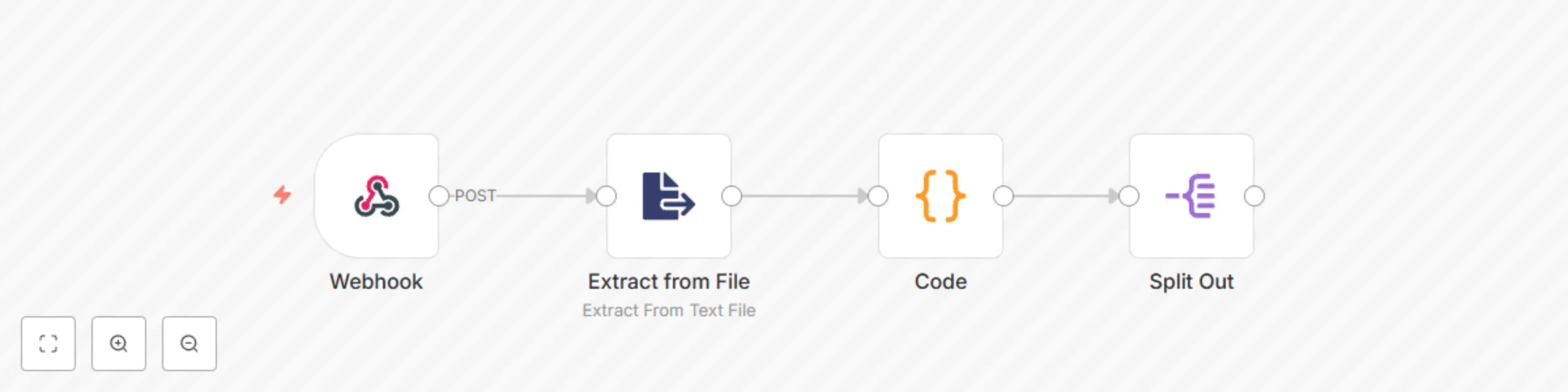
Workflow preview
100%
Convert URL-encoded webhook data from amoCRM to structured array preview
Open on n8n.io

Important notice

This workflow is provided as-is. Please review and test before using in production.

1. Workflow Overview

This template processes webhooks received from amoCRM in a URL encoded format and transforms the data into a structured array that n8n can easily interpret. By default, n8n does not automatically p...

Best for

  • Personal Productivity automation workflows
  • beginner n8n builders looking for reusable templates

Tools used

n8n-nodes-base.webhook, n8n-nodes-base.extractfromfile, n8n-nodes-base.code, n8n-nodes-base.splitout

Source and attribution

This workflow is cataloged by N8N Workflows and links back to its original n8n.io source page by Aleksandr.

Original n8n.io source

1.1 Workflow description

Title
Convert URL-encoded webhook data from amoCRM to structured array
Workflow name
Convert URL-encoded webhook data from amoCRM to structured array

This template processes webhooks received from amoCRM in a URL-encoded format and transforms the data into a structured array that n8n can easily interpret. By default, n8n does not automatically parse URL-encoded webhook payloads into usable JSON. This template bridges that gap, enabling seamless data manipulation and integration with subsequent processing nodes.

Key Features:

  • Input Handling: Processes URL-encoded data received from amoCRM webhooks.
  • Data Transformation: Converts complex, nested keys into a structured JSON array.
  • Ease of Use: Simplifies access to specific fields for further workflow automation.

Setup Guide:

  • Webhook Trigger Node: Configure the Webhook Trigger node to receive data from amoCRM.
  • URL-Encoding Parsing: Use the provided nodes to transform the input URL-encoded data into a structured array.
  • Access Transformed Data: Use the resulting JSON structure for subsequent nodes in your workflow, such as filtering, updating records, or triggering external systems.

Example Data Transformation:

  • Sample Input (URL-Encoded): The following input format is typically received from amoCRM: $json.body['leads[update][0][custom_fields][0][id]']

  • Output (Structured JSON): After processing, the data is transformed into an easily accessible JSON array format: {{ $json.leads.update[‘0’].id }}

This output allows you to work with clean, structured JSON, simplifying field extraction and workflow continuation.

Code Explanation: This workflow parses URL-encoded key-value pairs using n8n nodes to restructure the data into a nested JSON object. By doing so, the template improves transparency, ensures data integrity, and makes further automation tasks straightforward.

1.2 Logical Blocks

This catalog entry is organized from the workflow JSON. The node-level section below shows the executable blocks available for review before importing the template.

2. Block-by-Block Analysis

Block 1 - Webhook

Type / Role
n8n-nodes-base.webhook - webhook
Config choices
Version 2

Block 2 - Extract from File

Type / Role
n8n-nodes-base.extractFromFile - extractFromFile
Config choices
Version 1

Block 3 - Code

Type / Role
n8n-nodes-base.code - code
Config choices
Version 2

Block 4 - Split Out

Type / Role
n8n-nodes-base.splitOut - splitOut
Config choices
Version 1

3. Summary Table

Workflow Convert URL-encoded webhook data from amoCRM to structured array
Complexity beginner
Nodes 4
Categories Personal Productivity
Author Aleksandr
Published 14 Nov 2024

4. Reproducing the Workflow from Scratch

  1. 1. Download the workflow JSON

    Use the JSON export at /data/workflows/2548/2548.json as the source template for this automation.

  2. 2. Import the template into n8n

    Open n8n, import the downloaded JSON, and review each node before activating the workflow.

  3. 3. Configure credentials and variables

    Replace placeholder credentials, API keys, webhook URLs, account IDs, and environment-specific values with your own settings.

  4. 4. Test with sample data

    Run the workflow manually or in a staging workspace, inspect node output, and confirm downstream systems receive the expected data.

  5. 5. Activate and monitor

    Enable the workflow only after testing, then monitor executions, errors, and rate limits during the first production runs.

5. General Notes & Resources

Review imported nodes carefully before activation. This catalog entry is intended to help you inspect the workflow structure, understand required services, and find related templates faster.

Node names, credentials, schedules, webhook paths, and external service limits may need adjustment for your workspace.

Frequently asked questions

What does Convert URL-encoded webhook data from amoCRM to structured array do?

This template processes webhooks received from amoCRM in a URL encoded format and transforms the data into a structured array that n8n can easily interpret. By default, n8n does not automatically p...

What do I need before importing this workflow?

Review the workflow JSON, configure any required credentials in n8n, and test the automation in a safe workspace before using it in production.

Can I customize this workflow?

Yes. Use the block-by-block analysis and the downloadable JSON to inspect each node, then adjust credentials, prompts, schedules, filters, or destinations for your Personal Productivity use case.



