Consolidate data from 5 sources for automated reporting with SQL, MongoDB & Google tools
Workflow preview

$20/month : Unlimited workflows
2500 executions/month

THE #1 IN WEB SCRAPING
Scrape any website without limits
HOSTINGER  Early Deal
DISCOUNT 20% Try free
Early DealDISCOUNT 20%
Self-hosted n8n
Unlimited workflows - from $4.99/mo

#1 hub for scraping, AI & automation
6000+ actors - $5 credits/mo
Important notice
This workflow is provided as-is. Please review and test before using in production.
Overview
How it works
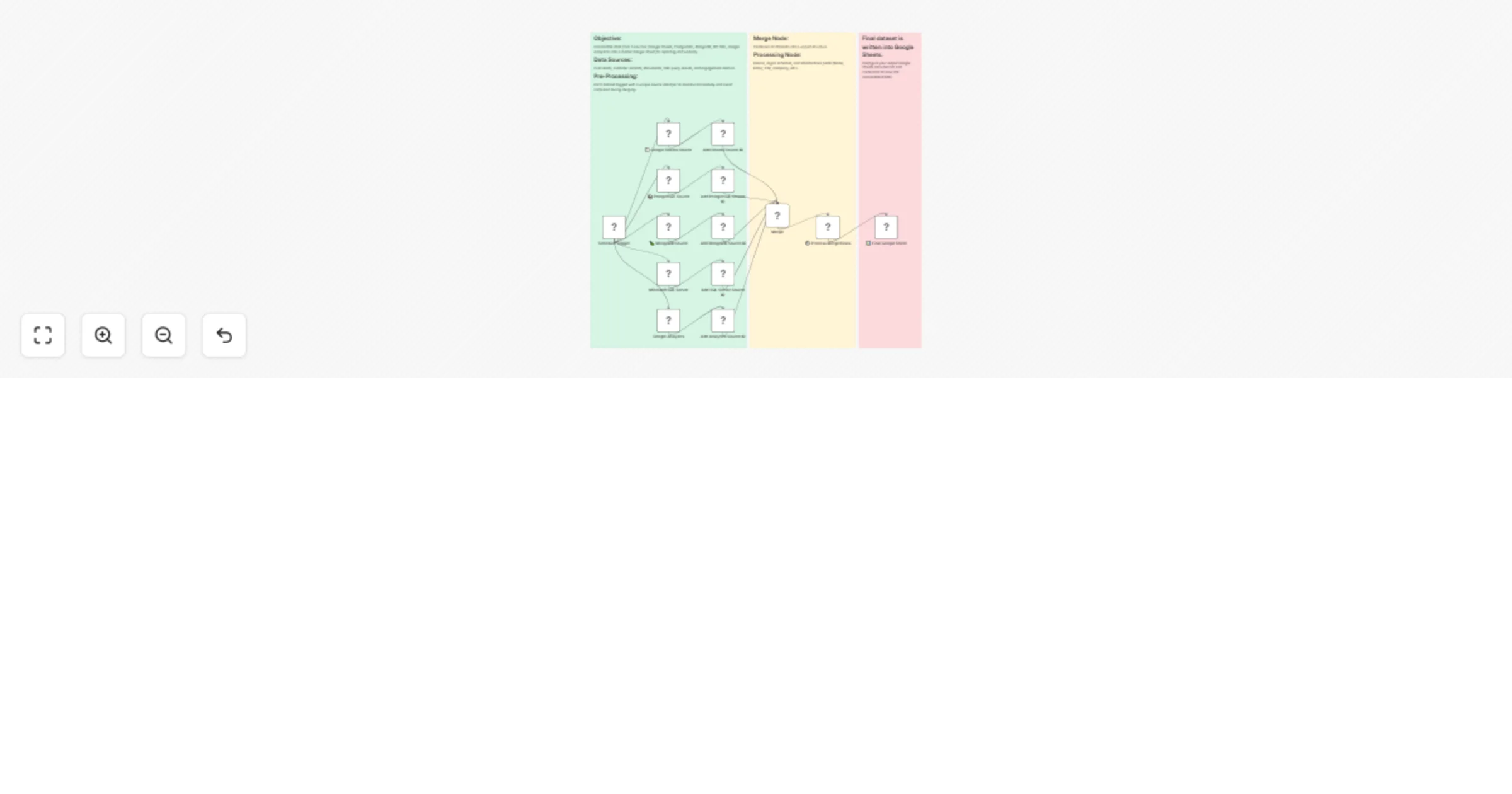
This workflow consolidates data from five different systems — Google Sheets, PostgreSQL, MongoDB, Microsoft SQL Server, and Google Analytics — into a single master Google Sheet. It runs on a scheduled trigger three times a week. Each dataset is tagged with a unique source identifier before merging, ensuring data traceability. Finally, the merged dataset is cleaned, standardized, and written into the output Google Sheet for reporting and analysis.
Step-by-step
1. Trigger the workflow
- Schedule Trigger – Runs the workflow at set weekly intervals.
2. Collect data from sources
- Google Sheets Source – Retrieves records from a specific sheet.
- PostgreSQL Source – Extracts customer data from the database.
- MongoDB Source – Pulls documents from the defined collection.
- Microsoft SQL Server – Executes a SQL query and returns results.
- Google Analytics – Captures user activity and engagement metrics.
3. Tag each dataset
- Add Sheets Source ID – Marks data from Google Sheets.
- Add PostgreSQL Source ID – Marks data from PostgreSQL.
- Add MongoDB Source ID – Marks data from MongoDB.
- Add SQL Server Source ID – Marks data from SQL Server.
- Add Analytics Source ID – Marks data from Google Analytics.
4. Merge and process
- Merge – Combines all tagged datasets into a single structure.
- Process Merged Data – Cleans, aligns schemas, and standardizes key fields.
5. Store consolidated output
- Final Google Sheet – Appends or updates the master sheet with the processed data.
Why use this?
- Centralizes multiple data sources into a single, consistent dataset.
- Ensures data traceability by tagging each source.
- Reduces manual effort in data cleaning and consolidation.
- Provides a reliable reporting hub for business analysis.
- Enables scheduled, automated updates for up-to-date visibility.