Automated Kubernetes testing with Robot Framework, ArgoCD & with KinD lifecycle
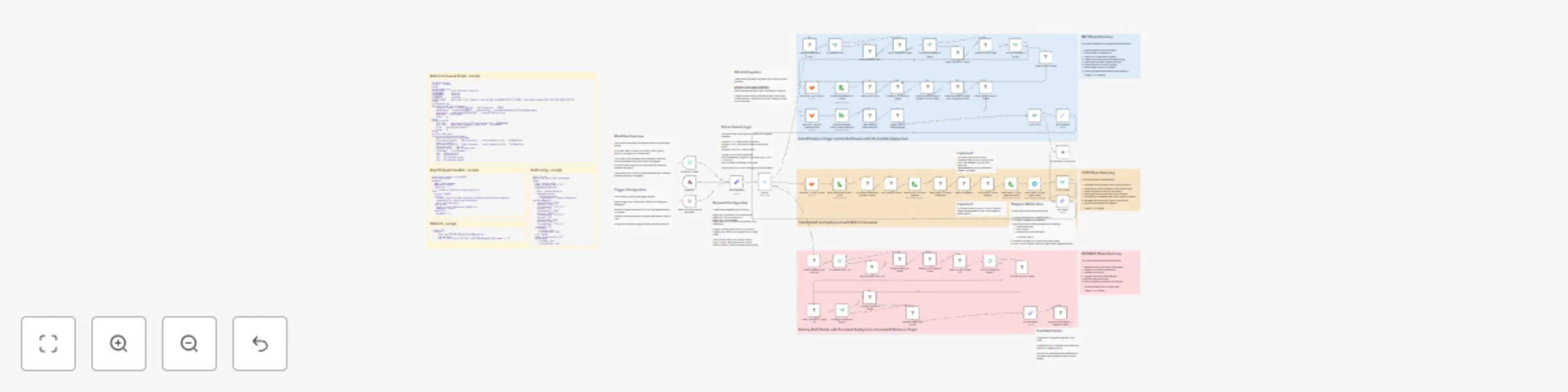
Workflow preview


 Early Deal
DISCOUNT 20%

Important notice
This workflow is provided as-is. Please review and test before using in production.
Overview
Overview
This n8n workflow provides automated CI/CD testing for Kubernetes applications using KinD (Kubernetes in Docker). It creates temporary infrastructure, runs tests, and cleans up everything automatically.
Three-Phase Lifecycle
INIT Phase - Infrastructure Setup
- Installs dependencies (sshpass, Docker, KinD)
- Creates KinD cluster
- Installs Helm and Nginx Ingress
- Installs HAProxy for port forwarding
- Deploys ArgoCD
- Applies ApplicationSet
TEST Phase - Automated Testing
- Downloads Robot Framework test script from GitLab
- Installs Robot Framework and Browser library
- Executes automated browser tests
- Packages test results
- Sends results via Telegram
DESTROY Phase - Complete Cleanup
- Removes HAProxy
- Deletes KinD cluster
- Uninstalls KinD
- Uninstalls Docker
- Sends completion notification
Execution Modes
Full Pipeline Mode (progress_only = false)
> Automatically progresses through all phases: INIT → TEST → DESTROY
Single Phase Mode (progress_only = true)
> Executes only the specified phase and stops
Prerequisites
Local Environment (n8n Host)
- n8n instance version 1.0 or higher
- Community node
n8n-nodes-robotframeworkinstalled - Network access to target host and GitLab
- Minimum 4 GB RAM, 20 GB disk space
Remote Target Host
- Linux server (Ubuntu, Debian, CentOS, Fedora, or Alpine)
- SSH access with sudo privileges
- Minimum 8 GB RAM (16 GB recommended)
- 20 GB free disk space
- Open ports:
22,80,60080,60443,56443
External Services
- GitLab account with OAuth2 application
- Repository with test files (
test.robot,config.yaml,demo-applicationSet.yaml) - Telegram Bot for notifications
- Telegram Chat ID
Setup Instructions
Step 1: Install Community Node
- In n8n web interface, navigate to Settings → Community Nodes
- Install
n8n-nodes-robotframework - Restart n8n if prompted
Step 2: Configure GitLab OAuth2
Create GitLab OAuth2 Application
- Log in to GitLab
- Navigate to User Settings → Applications
- Create new application with redirect URI:
https://your-n8n-instance.com/rest/oauth2-credential/callback - Grant scopes:
read_api,read_repository,read_user - Copy Application ID and Secret
Configure in n8n
- Create new GitLab OAuth2 API credential
- Enter GitLab server URL, Client ID, and Secret
- Connect and authorize
Step 3: Prepare GitLab Repository
Create repository structure:
your-repo/
├── test.robot
├── config.yaml
├── demo-applicationSet.yaml
└── .gitlab-ci.yml
Upload your:
- Robot Framework test script
- KinD cluster configuration
- ArgoCD ApplicationSet manifest
Step 4: Configure Telegram Bot
Create Bot
- Open Telegram, search for @BotFather
- Send
/newbotcommand - Save the API token
Get Chat ID
For personal chat:
- Send message to your bot
- Visit:
https://api.telegram.org/bot<YOUR_TOKEN>/getUpdates - Copy the chat ID (positive number)
For group chat:
- Add bot to group
- Send message mentioning the bot
- Visit getUpdates endpoint
- Copy group chat ID (negative number)
Configure in n8n
- Create Telegram API credential
- Enter bot token
- Save credential
Step 5: Prepare Target Host
Verify SSH access:
- Test connection:
ssh -p <port> <username>@<host_ip> - Verify sudo:
sudo -v
The workflow will automatically install dependencies.
Step 6: Import and Configure Workflow
Import Workflow
- Copy workflow JSON
- In n8n, click Workflows → Import from File/URL
- Import the JSON
Configure Parameters
Open Set Parameters node and update:
| Parameter | Description | Example |
|---|---|---|
target_host |
IP address of remote host | 192.168.1.100 |
target_port |
SSH port | 22 |
target_user |
SSH username | ubuntu |
target_password |
SSH password | your_password |
progress |
Starting phase | INIT, TEST, or DESTROY |
progress_only |
Execution mode | true or false |
KIND_CONFIG |
Path to config.yaml | config.yaml |
ROBOT_SCRIPT |
Path to test.robot | test.robot |
ARGOCD_APPSET |
Path to ApplicationSet | demo-applicationSet.yaml |
> Security: Use n8n credentials or environment variables instead of storing passwords in the workflow.
Configure GitLab Nodes
For each of the three GitLab nodes:
- Set Owner (username or organization)
- Set Repository name
- Set File Path (uses parameter from Set Parameters)
- Set Reference (branch:
mainormaster) - Select Credentials (GitLab OAuth2)
Configure Telegram Nodes
Send ROBOT Script Export Pack node:
- Set Chat ID
- Select Credentials
Process Finish Report node:
- Update chat ID in command
Step 7: Test and Execute
- Test individual components first
- Run full workflow
- Monitor execution (30-60 minutes total)
How to Use
Execution Examples
Complete Testing Pipeline
progress = "INIT"progress_only = "false"- Flow: INIT → TEST → DESTROY
Setup Infrastructure Only
progress = "INIT"progress_only = "true"- Flow: INIT → Stop
Test Existing Infrastructure
progress = "TEST"progress_only = "false"- Flow: TEST → DESTROY
Cleanup Only
progress = "DESTROY"- Flow: DESTROY → Complete
Trigger Methods
1. Manual Execution
- Open workflow in n8n
- Set parameters
- Click Execute Workflow
2. Scheduled Execution
- Open Schedule Trigger node
- Configure time (default: 1 AM daily)
- Ensure workflow is Active
3. Webhook Trigger
- Configure webhook in GitLab repository
- Add webhook URL to GitLab CI
Monitoring Execution
In n8n Interface:
- View progress in Executions tab
- Watch node-by-node execution
- Check output details
Via Telegram:
- Receive test results after TEST phase
- Receive completion notification after DESTROY phase
Execution Timeline:
| Phase | Duration |
|---|---|
| INIT | 15-25 minutes |
| TEST | 5-10 minutes |
| DESTROY | 5-10 minutes |
Understanding Test Results
After TEST phase, receive testing-export-pack.tar.gz via Telegram containing:
log.html- Detailed test execution logreport.html- Test summary reportoutput.xml- Machine-readable resultsscreenshots/- Browser screenshots
To view:
- Download
.tar.gzfrom Telegram - Extract:
tar -xzf testing-export-pack.tar.gz - Open
report.htmlfor summary - Open
log.htmlfor detailed steps
Success indicators:
- All tests marked PASS
- Screenshots show expected UI states
- No error messages in logs
Failure indicators:
- Tests marked FAIL
- Error messages in logs
- Unexpected UI states in screenshots
Configuration Files
test.robot
Robot Framework test script structure:
- Uses Browser library
- Connects to
http://autotest.innersite - Logs in with
autotest/autotest - Takes screenshots
- Runs in headless Chromium
config.yaml
KinD cluster configuration:
- 1 control-plane node
- 1 worker node
- Port mappings:
60080(HTTP),60443(HTTPS),56443(API) - Kubernetes version:
v1.30.2
demo-applicationSet.yaml
ArgoCD Application manifest:
- Points to Git repository
- Automatic sync enabled
- Deploys to default namespace
gitlab-ci.yml
Triggers n8n workflow on commits:
- Installs curl
- Sends POST request to webhook
Troubleshooting
SSH Permission Denied
Symptoms:
Error: Permission denied (publickey,password)
Solutions:
- Verify password is correct
- Check SSH authentication method
- Ensure user has sudo privileges
- Use SSH keys instead of passwords
Docker Installation Fails
Symptoms:
Error: Package docker-ce is not available
Solutions:
- Check OS version compatibility
- Verify network connectivity
- Manually add Docker repository
KinD Cluster Creation Timeout
Symptoms:
Error: Failed to create cluster: timed out
Solutions:
- Check available resources (RAM/CPU/disk)
- Verify Docker daemon status
- Pre-pull images
- Increase timeout
ArgoCD Not Accessible
Symptoms:
Error: Failed to connect to autotest.innersite
Solutions:
- Check HAProxy status:
systemctl status haproxy - Verify
/etc/hostsentry - Check Ingress:
kubectl get ingress -n argocd - Test port forwarding:
curl http://127.0.0.1:60080
Robot Framework Tests Fail
Symptoms:
Error: Chrome failed to start
Solutions:
- Verify Chromium installation
- Check Browser library:
rfbrowser show-trace - Ensure correct
executablePathin test.robot - Install missing dependencies
Telegram Notification Not Received
Symptoms:
- Workflow completes but no message
Solutions:
- Verify Chat ID
- Test Telegram API manually
- Check bot status
- Re-add bot to group
Workflow Hangs
Symptoms:
- Node shows "Executing..." indefinitely
Solutions:
- Check n8n logs
- Test SSH connection manually
- Verify target host status
- Add timeouts to commands
Best Practices
Development Workflow
Test locally first
- Run Robot Framework tests on local machine
- Verify test script syntax
Version control
- Keep all files in Git
- Use branches for experiments
- Tag stable versions
Incremental changes
- Make small testable changes
- Test each change separately
Backup data
- Export workflow regularly
- Save test results
- Store credentials securely
Production Deployment
Separate environments
- Dev: Frequent testing
- Staging: Pre-production validation
- Production: Stable scheduled runs
Monitoring
- Set up execution alerts
- Monitor host resources
- Track success/failure rates
Disaster recovery
- Document cleanup procedures
- Keep backup host ready
- Test restoration process
Security
- Use SSH keys
- Rotate credentials quarterly
- Implement network segmentation
Maintenance Schedule
| Frequency | Tasks |
|---|---|
| Daily | Review logs, check notifications |
| Weekly | Review failures, check disk space |
| Monthly | Update dependencies, test recovery |
| Quarterly | Rotate credentials, security audit |
Advanced Topics
Custom Configurations
Multi-node clusters:
- Add more worker nodes for production-like environments
- Configure resource limits
- Add custom port mappings
Advanced testing:
- Load testing with multiple iterations
- Integration testing for full deployment pipeline
- Chaos engineering with failure injection
Integration with Other Tools
Monitoring:
- Prometheus for metrics collection
- Grafana for visualization
Logging:
- ELK stack for log aggregation
- Custom dashboards
CI/CD Integration:
- Jenkins pipelines
- GitHub Actions
- Custom webhooks
Resource Requirements
Minimum
| Component | CPU | RAM | Disk |
|---|---|---|---|
| n8n Host | 2 | 4 GB | 20 GB |
| Target Host | 4 | 8 GB | 20 GB |
Recommended
| Component | CPU | RAM | Disk |
|---|---|---|---|
| n8n Host | 4 | 8 GB | 50 GB |
| Target Host | 8 | 16 GB | 50 GB |
Useful Commands
KinD
- List clusters:
kind get clusters - Get kubeconfig:
kind get kubeconfig --name automate-tst - Export logs:
kind export logs --name automate-tst
Docker
- List containers:
docker ps -a --filter "name=automate-tst" - Enter control plane:
docker exec -it automate-tst-control-plane bash - View logs:
docker logs automate-tst-control-plane
Kubernetes
- Get all resources:
kubectl get all -A - Describe pod:
kubectl describe pod -n argocd <pod-name> - View logs:
kubectl logs -n argocd <pod-name> --follow - Port forward:
kubectl port-forward -n argocd svc/argocd-server 8080:80
Robot Framework
- Run tests:
robot test.robot - Run specific test:
robot -t "Test Name" test.robot - Generate report:
robot --outputdir results test.robot
Additional Resources
Official Documentation
- n8n: https://docs.n8n.io
- KinD: https://kind.sigs.k8s.io
- ArgoCD: https://argo-cd.readthedocs.io
- Robot Framework: https://robotframework.org
- Browser Library: https://marketsquare.github.io/robotframework-browser
Community
- n8n Community: https://community.n8n.io
- Kubernetes Slack: https://kubernetes.slack.com
- ArgoCD Slack: https://argoproj.github.io/community/join-slack
- Robot Framework Forum: https://forum.robotframework.org
Related Projects
- k3s: Lightweight Kubernetes distribution
- minikube: Local Kubernetes alternative
- Flux CD: Alternative GitOps tool
- Playwright: Alternative browser automation