
Automate website monitoring with GPT-4 Mini, MCP tools & multi-channel alerts

Workflow preview
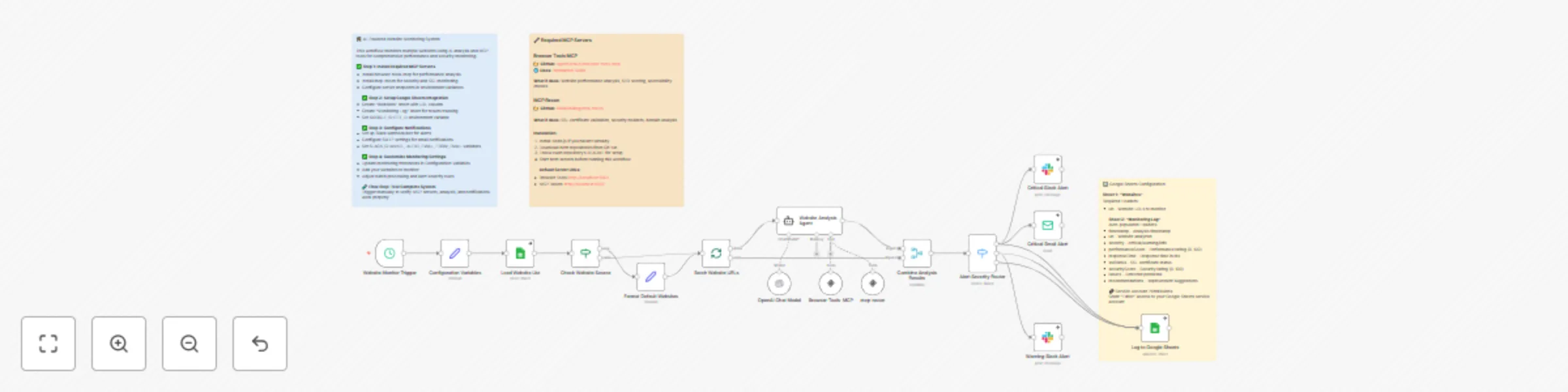
Workflow preview
100%
Automate website monitoring with GPT-4 Mini, MCP tools & multi-channel alerts preview
Open on n8n.io

Important notice

This workflow is provided as-is. Please review and test before using in production.

1. Workflow Overview

How it works This workflow automatically monitors multiple websites using AI powered analysis and MCP (Model Context Protocol) tools. The system runs scheduled checks, analyzes website performance ...

Best for

  • DevOps automation workflows
  • AI Summarization automation workflows
  • advanced n8n builders looking for reusable templates

Tools used

n8n-nodes-base.scheduletrigger, n8n-nodes-base.set, n8n-nodes-base.googlesheets, n8n-nodes-base.merge, n8n-nodes-base.switch, n8n-nodes-base.slack, n8n-nodes-base.emailsend, n8n-nodes-base.if

Source and attribution

This workflow is cataloged by N8N Workflows and links back to its original n8n.io source page by Grace Gbadamosi.

Original n8n.io source

1.1 Workflow description

Title
Automate website monitoring with GPT-4 Mini, MCP tools & multi-channel alerts
Workflow name
Automate website monitoring with GPT-4 Mini, MCP tools & multi-channel alerts

How it works

This workflow automatically monitors multiple websites using AI-powered analysis and MCP (Model Context Protocol) tools. The system runs scheduled checks, analyzes website performance and security using browser-tools-mcp and mcp-recon servers, categorizes issues by severity (critical, warning, info), sends appropriate alerts through Slack and email, and logs all findings to Google Sheets for historical tracking and trend analysis.

Who is this for

DevOps engineers, website administrators, system monitors, digital agencies, and technical teams responsible for maintaining multiple websites. Perfect for organizations that need automated website health monitoring with intelligent analysis, comprehensive security checks, and immediate alerting for critical issues.

Requirements

  • MCP Servers: Browser-tools-mcp and mcp-recon servers running locally or remotely
  • OpenAI API: API key for AI-powered website analysis
  • Google Sheets: Spreadsheet with "Websites" and "Monitoring Log" sheets
  • Slack Integration: Slack workspace with webhook or bot token for alerts
  • Email Configuration: SMTP settings for critical email notifications
  • Environment Variables: Secure storage for all credentials and endpoints

How to set up

  1. Install and Configure MCP Servers - Set up browser-tools-mcp and mcp-recon servers, configure endpoints in environment variables (MCP_BROWSER_TOOLS_URL, MCP_RECON_URL)
  2. Prepare Google Sheets Integration - Create spreadsheet with "Websites" sheet (URL column) and "Monitoring Log" sheet, set GOOGLE_SHEET_ID environment variable
  3. Configure Notification Systems - Set up Slack webhook/bot and email SMTP settings, configure SLACK_CHANNEL, ALERT_EMAIL, FROM_EMAIL variables
  4. Customize Monitoring Parameters - Update Configuration Variables node with your monitoring thresholds, batch sizes, and website lists

How to customize the workflow

Modify the Configuration Variables node to adjust monitoring thresholds (response times, performance scores), change batch processing sizes, update notification preferences, or add additional websites to monitor. Customize alert severity rules in the Alert Severity Router and modify notification templates in the Slack and Email nodes.

1.2 Logical Blocks

This catalog entry is organized from the workflow JSON. The node-level section below shows the executable blocks available for review before importing the template.

2. Block-by-Block Analysis

Block 1 - Website Monitor Trigger

Type / Role
n8n-nodes-base.scheduleTrigger - scheduleTrigger
Config choices
Version 1.2

Block 2 - Configuration Variables

Type / Role
n8n-nodes-base.set - set
Config choices
Version 3.4

Block 3 - Load Website List

Type / Role
n8n-nodes-base.googleSheets - googleSheets
Config choices
Version 4.6

Block 4 - Combine Analysis Results

Type / Role
n8n-nodes-base.merge - merge
Config choices
Version 3

Block 5 - Alert Severity Router

Type / Role
n8n-nodes-base.switch - switch
Config choices
Version 3.2

Block 6 - Critical Slack Alert

Type / Role
n8n-nodes-base.slack - slack
Config choices
Version 2.3

Block 7 - Critical Email Alert

Type / Role
n8n-nodes-base.emailSend - emailSend
Config choices
Version 2.1

Block 8 - Warning Slack Alert

Type / Role
n8n-nodes-base.slack - slack
Config choices
Version 2.3

Block 9 - Log to Google Sheets

Type / Role
n8n-nodes-base.googleSheets - googleSheets
Config choices
Version 4.6

Block 10 - Check Website Source

Type / Role
n8n-nodes-base.if - if
Config choices
Version 2.1

Block 11 - Format Default Websites

Type / Role
n8n-nodes-base.set - set
Config choices
Version 3.4

Block 12 - Batch Website URLs

Type / Role
n8n-nodes-base.splitInBatches - splitInBatches
Config choices
Version 3

Block 13 - Website Analysis Agent

Type / Role
@n8n/n8n-nodes-langchain.agent - agent
Config choices
Version 2.1

Block 14 - Browser-Tools-MCP

Type / Role
@n8n/n8n-nodes-langchain.mcpClientTool - mcpClientTool
Config choices
Version 1

Block 15 - mcp-recon

Type / Role
@n8n/n8n-nodes-langchain.mcpClientTool - mcpClientTool
Config choices
Version 1

Block 16 - OpenAI Chat Model

Type / Role
@n8n/n8n-nodes-langchain.lmChatOpenAi - lmChatOpenAi
Config choices
Version 1.2

Block 17 - Sticky Note1

Type / Role
n8n-nodes-base.stickyNote - stickyNote
Config choices
Version 1

Block 18 - Sticky Note2

Type / Role
n8n-nodes-base.stickyNote - stickyNote
Config choices
Version 1

Block 19 - Sticky Note3

Type / Role
n8n-nodes-base.stickyNote - stickyNote
Config choices
Version 1

3. Summary Table

Workflow Automate website monitoring with GPT-4 Mini, MCP tools & multi-channel alerts
Complexity advanced
Nodes 19
Categories DevOps, AI Summarization
Author Grace Gbadamosi
Published 28 Jul 2025

4. Reproducing the Workflow from Scratch

  1. 1. Download the workflow JSON

    Use the JSON export at /data/workflows/6594/6594.json as the source template for this automation.

  2. 2. Import the template into n8n

    Open n8n, import the downloaded JSON, and review each node before activating the workflow.

  3. 3. Configure credentials and variables

    Replace placeholder credentials, API keys, webhook URLs, account IDs, and environment-specific values with your own settings.

  4. 4. Test with sample data

    Run the workflow manually or in a staging workspace, inspect node output, and confirm downstream systems receive the expected data.

  5. 5. Activate and monitor

    Enable the workflow only after testing, then monitor executions, errors, and rate limits during the first production runs.

5. General Notes & Resources

Review imported nodes carefully before activation. This catalog entry is intended to help you inspect the workflow structure, understand required services, and find related templates faster.

Node names, credentials, schedules, webhook paths, and external service limits may need adjustment for your workspace.

Frequently asked questions

What does Automate website monitoring with GPT-4 Mini, MCP tools & multi-channel alerts do?

How it works This workflow automatically monitors multiple websites using AI powered analysis and MCP (Model Context Protocol) tools. The system runs scheduled checks, analyzes website performance ...

What do I need before importing this workflow?

Review the workflow JSON, configure any required credentials in n8n, and test the automation in a safe workspace before using it in production.

Can I customize this workflow?

Yes. Use the block-by-block analysis and the downloadable JSON to inspect each node, then adjust credentials, prompts, schedules, filters, or destinations for your DevOps, AI Summarization use case.



