
Analyze domain threats via Telegram with VirusTotal, AbuseCH, and Gemini AI

Workflow preview
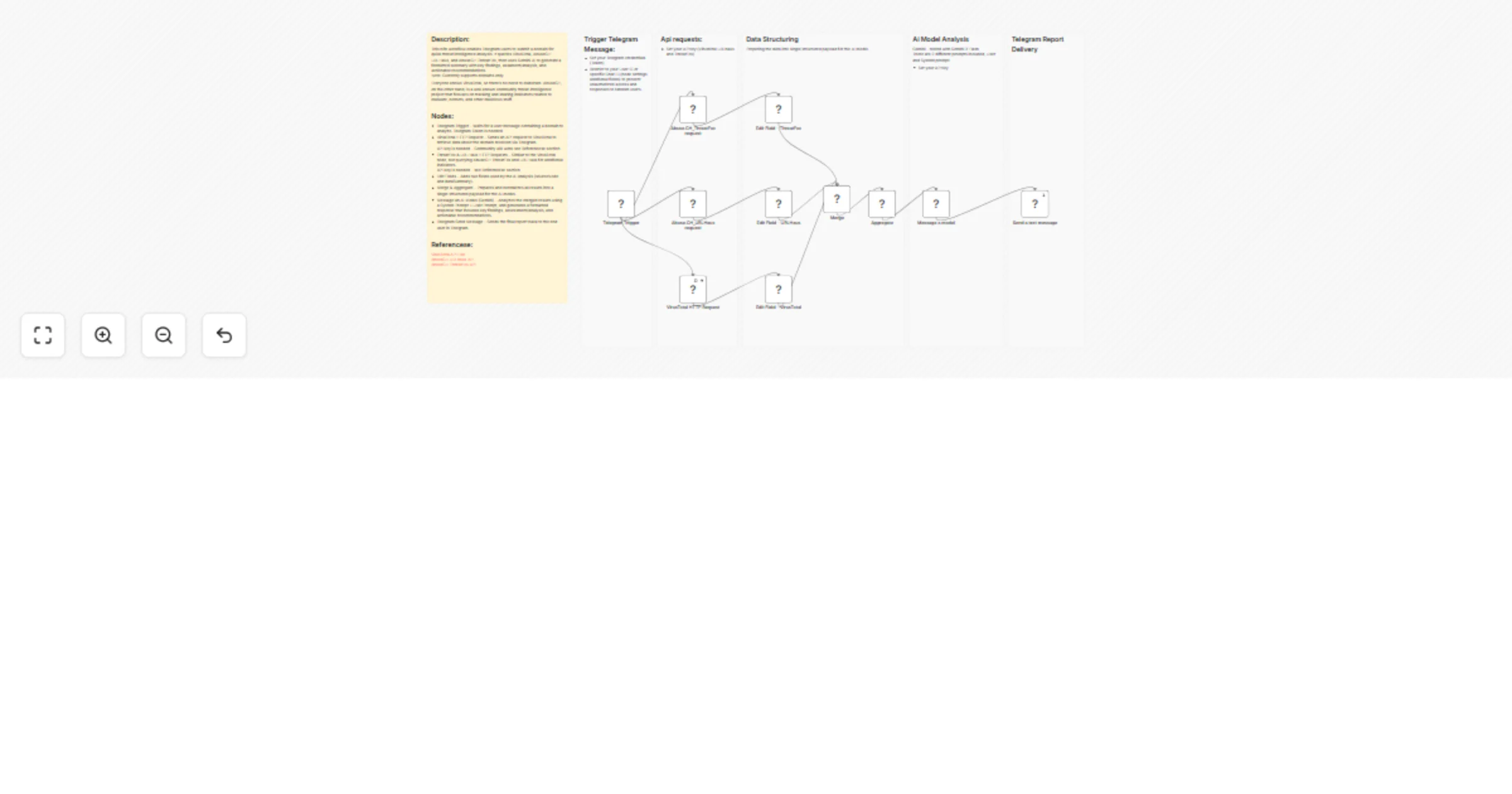
Workflow preview
100%
Analyze domain threats via Telegram with VirusTotal, AbuseCH, and Gemini AI preview
Open on n8n.io

1. Workflow Overview

Domain AI Analysis via Telegram, AbuseCH and VirusTotal Workflow Description This workflow allows Telegram users to submit a domain for quick threat intelligence analys...

Best for

  • SecOps automation workflows
  • AI Chatbot automation workflows
  • advanced n8n builders looking for reusable templates

Tools used

n8n-nodes-base.httprequest, n8n-nodes-base.telegramtrigger, n8n-nodes-base.telegram, n8n-nodes-base.aggregate, @n8n/n8n-nodes-langchain.googlegemini, n8n-nodes-base.merge, n8n-nodes-base.set, n8n-nodes-base.stickynote

Source and attribution

This workflow is cataloged by N8N Workflows and links back to its original n8n.io source page by MaTns.

Original n8n.io source

1.1 Workflow description

Title
Analyze domain threats via Telegram with VirusTotal, AbuseCH, and Gemini AI
Workflow name
Analyze domain threats via Telegram with VirusTotal, AbuseCH, and Gemini AI

Domain AI Analysis via Telegram, AbuseCH and VirusTotal

Workflow Description

This workflow allows Telegram users to submit a domain for quick threat intelligence analysis. It queries VirusTotal, AbuseCH URLHaus, and AbuseCH ThreatFox, then uses Gemini AI to generate a formatted summary with key findings, assessment/analysis, and actionable recommendations. Note: Currently supports domains only.

VirusTotal is widely known, so there’s no need for further explanation. AbuseCH, on the other hand, is a well‐known community threat intelligence project that focuses on tracking and sharing indicators related to malware, botnets, and other malicious activities.

Who is this for?

For SOC analysts, threat hunters, security engineers, or anyone needing instant domain reputation checks via Telegram. Delivers quick IOC validation with AI analysis and recommendations.

Prerequisites:

Telegram: Token and bot are needed Follow the instructions here Telegram Bot Creation

VirusTotal: API Key is needed Community addition is enough VirusTotal API

AbuseCH URLhaus: API Key is needed AbuseCH URLhaus API

AbuseCH ThreatFox: API Key is needed AbuseCH ThreatFox API

Gemini AI: API key is needed Gemini API

Nodes Configuration

Telegram Trigger add your credentials (token)

  • it is recomended to set up the restricted Chat-ID OR/AND User-ID option

VirusTotal, ThreatFox, URLHaus HTTP Requests For each one of the nodes, add your credentials

Message an AI Model (Gemini) Set the model (tested with Gemini 3 Flash) Set your credentials (token)

Referencese:

VirusTotal API AbuseCH URLhaus API AbuseCH ThreatFox API Telegram Bot & Token Creation Gemini API


Disclaimer

  • This was tested and built on self hosted Community node
  • Treat output with caution—always validate independently. False positives/negatives can occur.
  • Tested with Gemini 3 Flash Ai model

1.2 Logical Blocks

This catalog entry is organized from the workflow JSON. The node-level section below shows the executable blocks available for review before importing the template.

2. Block-by-Block Analysis

Block 1 - VirusTotal HTTP Request

Type / Role
n8n-nodes-base.httpRequest - httpRequest
Config choices
Version 4.4

Block 2 - Abuse.CH_URLHaus request

Type / Role
n8n-nodes-base.httpRequest - httpRequest
Config choices
Version 4.4

Block 3 - Abuse.CH_ThreatFox request

Type / Role
n8n-nodes-base.httpRequest - httpRequest
Config choices
Version 4.4

Block 4 - Telegram Trigger

Type / Role
n8n-nodes-base.telegramTrigger - telegramTrigger
Config choices
Version 1.2

Block 5 - Send a text message

Type / Role
n8n-nodes-base.telegram - telegram
Config choices
Version 1.2

Block 6 - Aggregate

Type / Role
n8n-nodes-base.aggregate - aggregate
Config choices
Version 1

Block 7 - Message a model

Type / Role
@n8n/n8n-nodes-langchain.googleGemini - googleGemini
Config choices
Version 1.1

Block 8 - Merge

Type / Role
n8n-nodes-base.merge - merge
Config choices
Version 3.2

Block 9 - Edit Field - ThreatFox

Type / Role
n8n-nodes-base.set - set
Config choices
Version 3.4

Block 10 - Edit Field - URLHaus

Type / Role
n8n-nodes-base.set - set
Config choices
Version 3.4

Block 11 - Edit Field - VirusTotal

Type / Role
n8n-nodes-base.set - set
Config choices
Version 3.4

Block 12 - Sticky Note

Type / Role
n8n-nodes-base.stickyNote - stickyNote
Config choices
Version 1

Block 13 - Sticky Note1

Type / Role
n8n-nodes-base.stickyNote - stickyNote
Config choices
Version 1

Block 14 - Sticky Note2

Type / Role
n8n-nodes-base.stickyNote - stickyNote
Config choices
Version 1

Block 15 - Sticky Note3

Type / Role
n8n-nodes-base.stickyNote - stickyNote
Config choices
Version 1

Block 16 - Sticky Note4

Type / Role
n8n-nodes-base.stickyNote - stickyNote
Config choices
Version 1

Block 17 - Sticky Note5

Type / Role
n8n-nodes-base.stickyNote - stickyNote
Config choices
Version 1

3. Summary Table

Workflow Analyze domain threats via Telegram with VirusTotal, AbuseCH, and Gemini AI
Complexity advanced
Nodes 17
Categories SecOps, AI Chatbot
Author MaTns
Published 24 Feb 2026

4. Reproducing the Workflow from Scratch

  1. 1. Download the workflow JSON

    Use the JSON export at /data/workflows/13656/13656.json as the source template for this automation.

  2. 2. Import the template into n8n

    Open n8n, import the downloaded JSON, and review each node before activating the workflow.

  3. 3. Configure credentials and variables

    Replace placeholder credentials, API keys, webhook URLs, account IDs, and environment-specific values with your own settings.

  4. 4. Test with sample data

    Run the workflow manually or in a staging workspace, inspect node output, and confirm downstream systems receive the expected data.

  5. 5. Activate and monitor

    Enable the workflow only after testing, then monitor executions, errors, and rate limits during the first production runs.

5. General Notes & Resources

Review imported nodes carefully before activation. This catalog entry is intended to help you inspect the workflow structure, understand required services, and find related templates faster.

Node names, credentials, schedules, webhook paths, and external service limits may need adjustment for your workspace.

Frequently asked questions

What does Analyze domain threats via Telegram with VirusTotal, AbuseCH, and Gemini AI do?

Domain AI Analysis via Telegram, AbuseCH and VirusTotal Workflow Description This workflow allows Telegram users to submit a domain for quick threat intelligence analys...

What do I need before importing this workflow?

Review the workflow JSON, configure any required credentials in n8n, and test the automation in a safe workspace before using it in production.

Can I customize this workflow?

Yes. Use the block-by-block analysis and the downloadable JSON to inspect each node, then adjust credentials, prompts, schedules, filters, or destinations for your SecOps, AI Chatbot use case.



