📦 AI-powered damage reporting tool for logistics with Gmail, Telegram and GPT
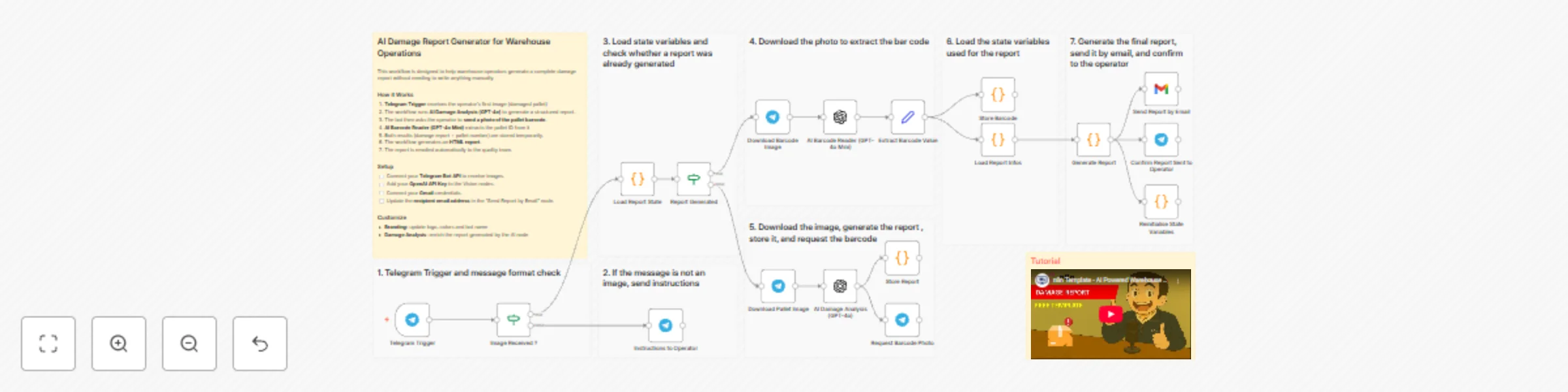
Workflow preview


 Early Deal
DISCOUNT 20%

Important notice
This workflow is provided as-is. Please review and test before using in production.
Overview
Tags: Logistics, Supply Chain, Warehouse Operations, Paperless processes, Quality Management
Context
Hi! I’m Samir — Supply Chain Engineer, Data Scientist based in Paris, and founder of LogiGreen.
> Let us use n8n to help small companies digitalise their logistics and supply chain!
This workflow helps warehouse operators generate a complete damage report without needing to write anything manually.
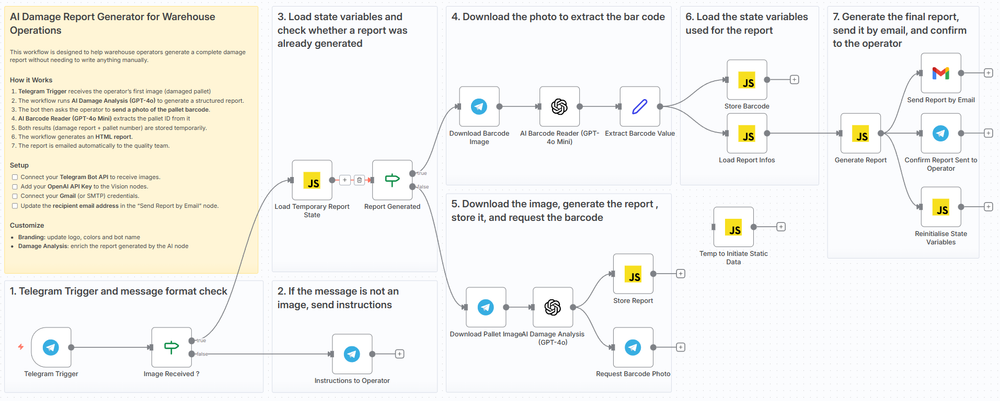
In warehouse operations, damaged pallets must be reported quickly and consistently.
You can automate the entire process using AI to analyse photos of the damages.
📬 For business inquiries, you can find me on LinkedIn
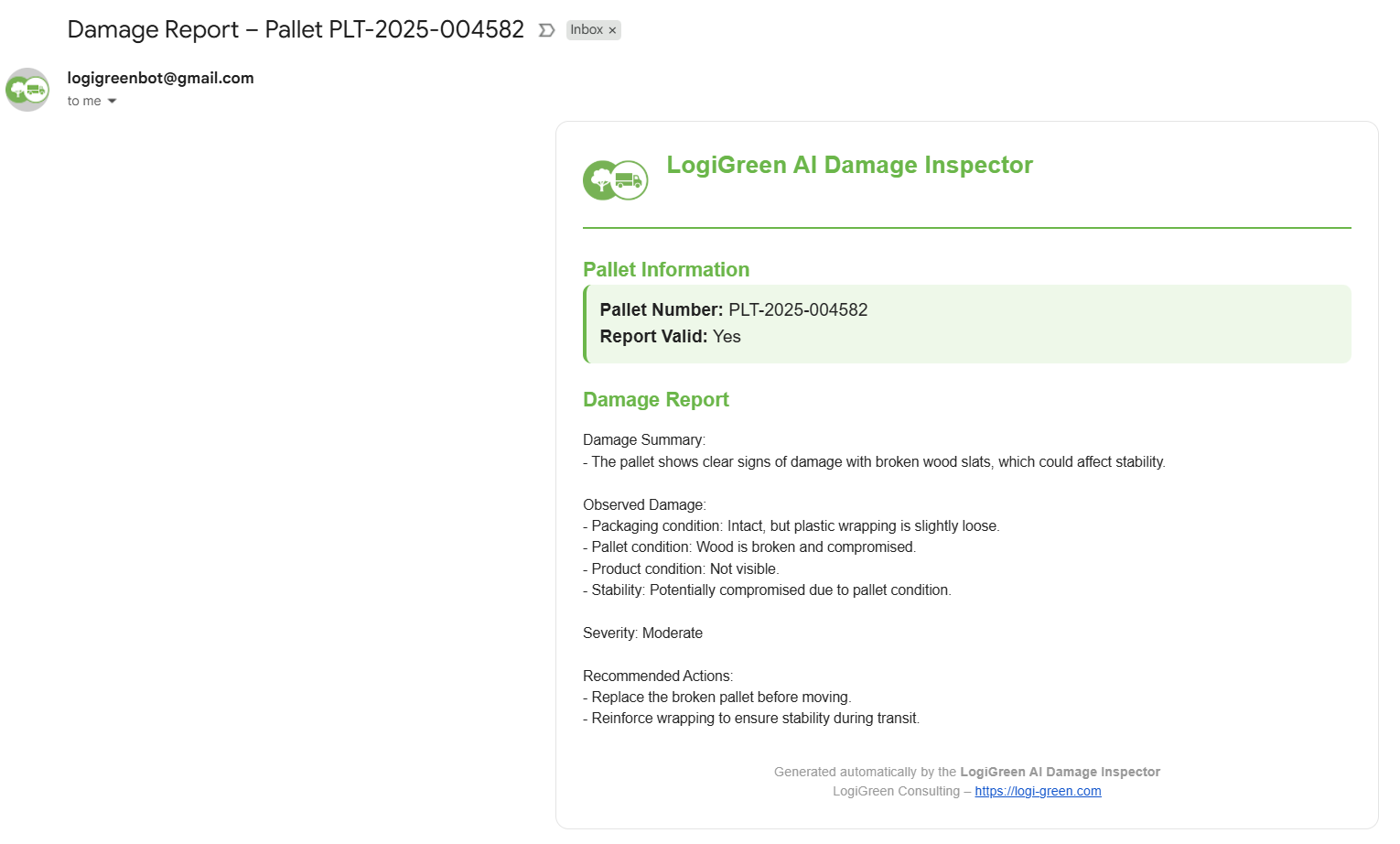
Example of damage report
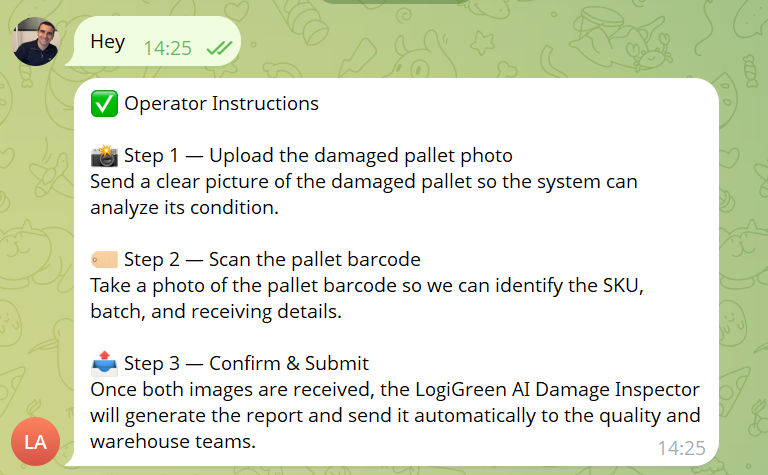
The process starts with instructions sent with the operator:
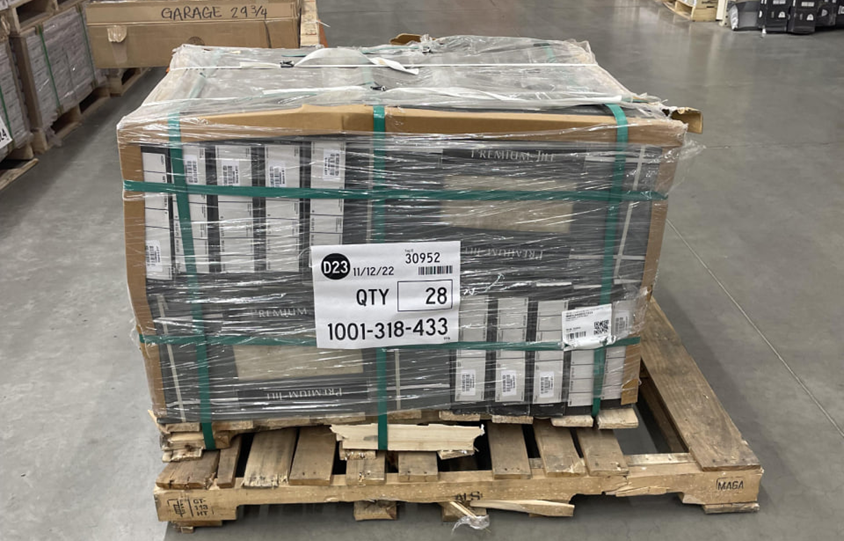
A photo of the damaged pallets is shared with the bot:
A complete report is generated and sent by email:
🎥 Tutorial
A complete tutorial (with explanations of every node) is available on YouTube:
Who is this template for?
This template is ideal for companies with limited IT ressources:
- Warehouse operators who need a fast reporting tool
- Quality teams who want consistent and structured reports
- 3PLs and logistics providers looking to digitalise damage claims
- Manufacturers and retailers with high inbound pallet volumes
- Anyone using Telegram on the warehouse floor for quick interactions
What does this workflow do?
This workflow acts as an AI-powered damaged goods reporting assistant using Telegram, OpenAI Vision and Gmail.
- A operator sends a picture of the damaged pallet via Telegram.
- The workflow downloads the image and sends it to GPT-4o for damage analysis.
- The bot replies and asks for a photo of the pallet barcode.
- The barcode picture is processed by GPT-4o Mini to extract the pallet number.
- The workflow combines both results (damage analysis + pallet ID).
- It generates an HTML email report with: damage summary, observed issues, severity level and recommended actions
- The report is automatically sent via Gmail to the configured recipient.
- The operator receives a confirmation message in Telegram.
The processes does not require any data input form the operator, only to take pictures!
Next Steps
Before running the workflow, follow the sticky notes and configure:
- Connect your Telegram Bot API
- Add your OpenAI API Key in the AI nodes
- Connect your Gmail credentials
- Update the recipient email in the “Send Report by Email” node
Submitted: 20 November 2025
Template designed with n8n version 1.116.2