🌲 AI agent for sustainability report audit with Gmail and GPT-40
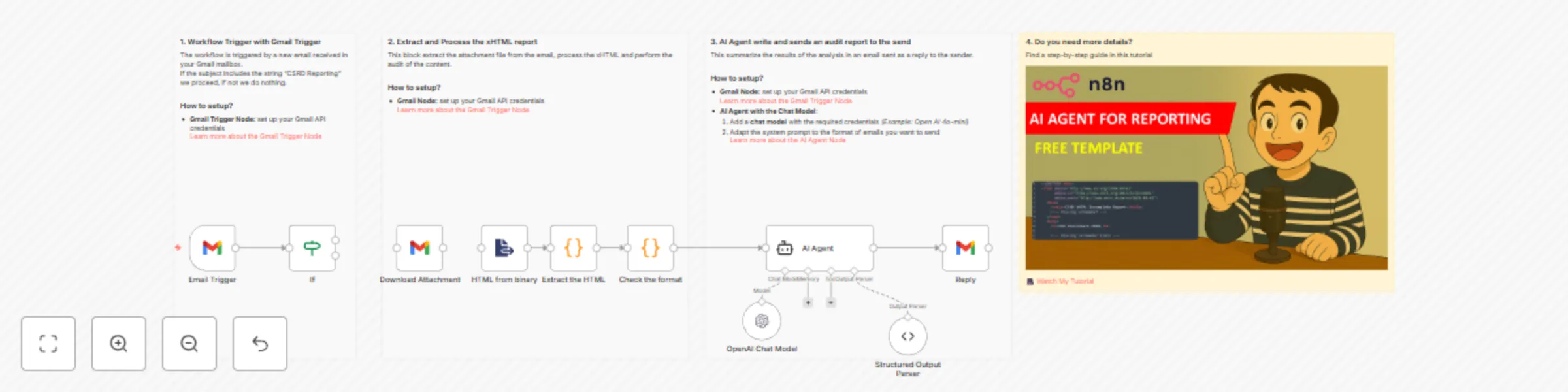
Workflow preview


 Early Deal
DISCOUNT 20%

Important notice
This workflow is provided as-is. Please review and test before using in production.
Overview
Tags: Sustainability, CSRD, Reporting, ESG, Compliance, Automation
Context
Hey! I'm Samir, a Supply Chain Engineer and Data Scientist from Paris, founder of
LogiGreen Consulting
We help companies automate sustainability workflows using AI, Data Analytics, and No-Code tools like N8N.
> Sustainability Reporting meets Automation with n8n!
📬 For business inquiries, you can add me on Here
What is a CSRD XHTML Report?
Under the Corporate Sustainability Reporting Directive (CSRD), companies must publish their ESG disclosures in a machine-readable XHTML format, embedding XBRL tags that make the report structured and standardized.
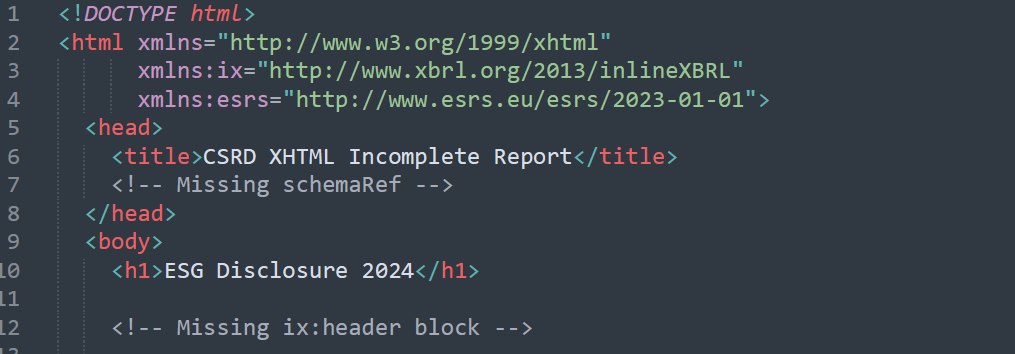
These files must follow strict formatting and tagging rules to ensure compliance, traceability, and accessibility for both regulators and analysts.
Who is this template for?
This workflow is designed for sustainability teams, ESG consultants, or developers who want to automatically check the structure and format of CSRD reports submitted in XHTML.
How does it work?
This N8N workflow automates the audit process:
- 📤 Input Node → Uploads or fetches the XHTML file via URL or Webhook.
- 🧪 Validates Structure → Uses a custom code node to parse HTML and identify required tags (e.g.,
<ix:nonNumeric>, namespaces). - 📋 Outputs a Report → Returns a summary report of errors, warnings, and key metadata (like entity name, reporting period).
- 📤 Export Option → Save the results in Google Sheets or send via email.
Prerequisite
- A sample XHTML file that you can find in my GitHub Repository
- Google Sheets API and OpenAI API credentials
Next Steps
Follow the sticky notes inside each node to adjust parsing rules or extend validation to specific XBRL tags relevant to your sector (e.g., GHG emissions, water usage).
**📺 Check my complete tutorial to understand how to use it: **
🚀 Interested in combining CSRD compliance with automation and analytics? Let’s connect on LinkedIn
Notes
- This workflow includes an example XHTML file to test the validator.
- You can plug this into your internal systems or even extend it with AI to auto-summarize the sustainability report.
This workflow has been created with N8N 1.82.1
Submitted: April 3rd, 2025