WebhookDocs: generate swagger preview of your active workflows
Workflow preview

$20/month : Unlimited workflows
2500 executions/month

THE #1 IN WEB SCRAPING
Scrape any website without limits
HOSTINGER  Early Deal
DISCOUNT 20% Try free
Early DealDISCOUNT 20%
Self-hosted n8n
Unlimited workflows - from $4.99/mo

#1 hub for scraping, AI & automation
6000+ actors - $5 credits/mo
Important notice
This workflow is provided as-is. Please review and test before using in production.
Overview
How it Works
This meta-workflow is designed to intelligently scan all your active workflows in n8n, identify those that contain Webhook nodes, and automatically generate a Swagger (OpenAPI) specification based on them.
The output Swagger document reflects all accessible endpoints from your Webhook nodes, making it easier to:
- Visualize your API structure
- Share your endpoints
- Integrate with tools like Postman or Swagger UI
Enhanced Parameter Support
If you want the Swagger to reflect request parameters (e.g., query or body fields), you can annotate your Webhook nodes using the Note section. When configured properly, these annotations enrich your Swagger documentation with parameter names, types, and descriptions.
Setup Steps
- Add the WebhookDocs to n8n Import the WebhookDocs JSON file into your n8n instance.
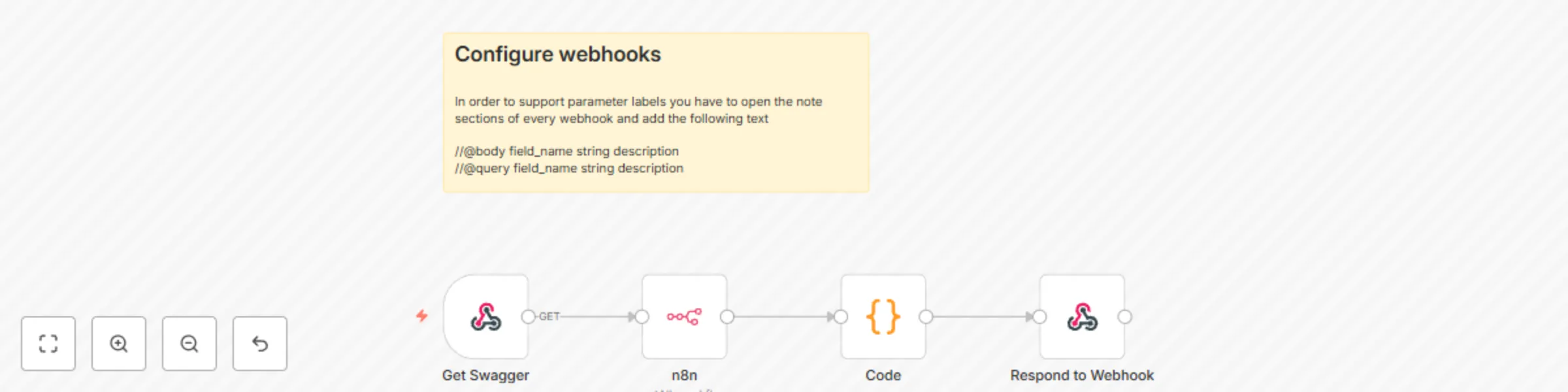
- Activate the WebhookDocs (you can also use the test-endpoint) Annotate Webhook Nodes (Optional but Recommended) To enable parameter documentation, open the Note section of each Webhook node and add annotations in the following format:
//@body field_name string description
//@query field_name string description
- Open the page https://n8n.youristance.com/webhook/swagger