Triage fleet telemetry and route safety compliance with GPT-4o, Gmail and Sheets
Workflow preview


 Early Deal
DISCOUNT 20%

Overview
How It Works
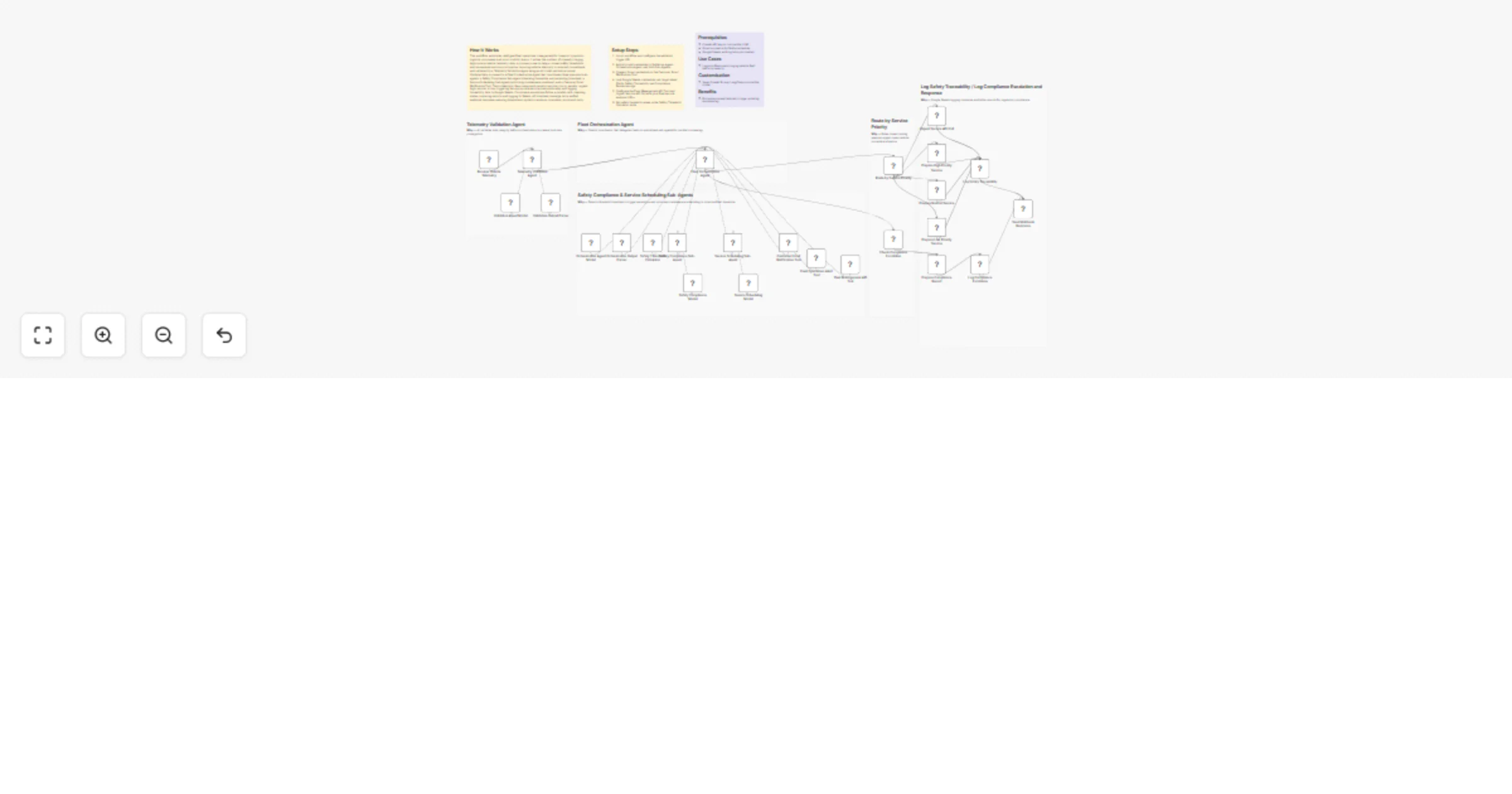
This workflow automates intelligent fleet operations management for transport operators, logistics companies, and smart mobility teams. It solves the problem of manually triaging high-volume vehicle telemetry data, a process prone to delays, missed safety thresholds, and inconsistent service prioritisation. Incoming vehicle telemetry is received via webhook and validated by a Telemetry Validation Agent using an AI model and output parser. Validated data is passed to a Fleet Orchestration Agent that coordinates three specialist sub-agents: a Safety Compliance Sub-Agent (checking thresholds and escalating breaches), a Service Scheduling Sub-Agent (optimising maintenance windows), and a Customer Email Notification Tool. The orchestrator then routes each case by service priority, namely: urgent, high, normal, or low, triggering the appropriate service preparation step and logging traceability data to Google Sheets. Compliance escalations follow a parallel path: checking status, preparing reports, and logging to Sheets. All branches converge into a unified webhook response, ensuring downstream systems receive a consistent, structured reply.
Setup Steps
- Import workflow and configure the webhook trigger URL.
- Add AI model credentials to Validation Agent, Orchestration Agent, and both Sub-Agents.
- Connect Gmail credentials to the Customer Email Notification Tool.
- Link Google Sheets credentials; set target sheet IDs for Safety Traceability and Compliance Escalation logs.
- Configure the Fleet Management API Tool and Urgent Service API Call with your fleet service endpoint URLs.
- Set safety threshold values in the Safety Threshold Calculator node.
Prerequisites
- OpenAI API key (or compatible LLM)
- Gmail account with OAuth credentials
- Google Sheets with log tabs pre-created
Use Cases
- Logistics fleets auto-triaging vehicle fault alerts by severity
Customisation
- Swap OpenAI for any LangChain-compatible model
Benefits
- Eliminates manual telemetry triage, reducing response lag