Review GitHub pull requests with Gemini and post feedback automatically
Workflow preview


 Early Deal
DISCOUNT 20%

Overview
Review GitHub pull requests with Gemini AI and post feedback automatically
Who is this for
Development teams and tech leads who want to maintain consistent code quality without manual review bottlenecks. Perfect for teams handling multiple PRs daily and wanting AI-powered insights on security, bugs, and best practices.
How it works
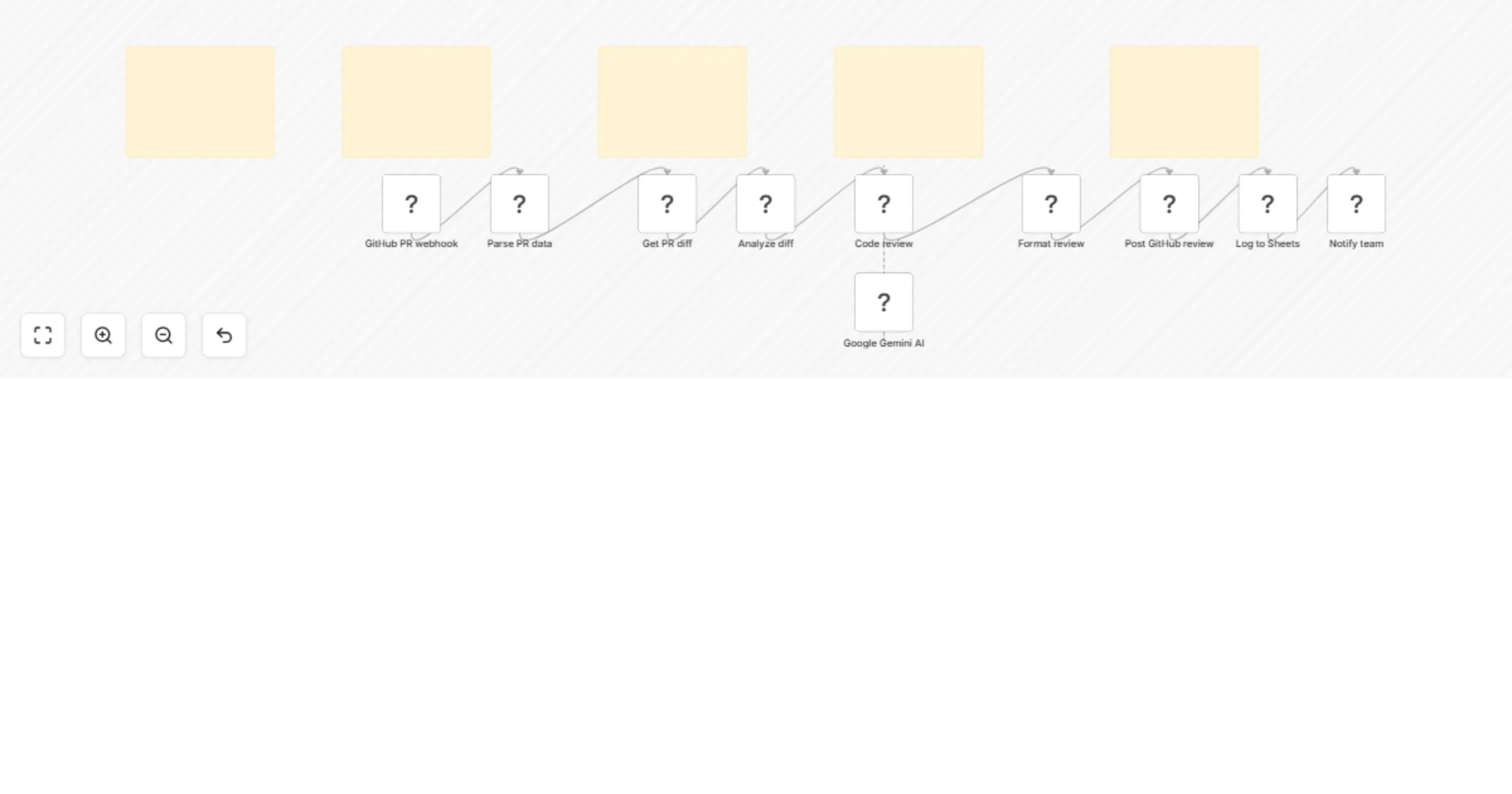
When a GitHub pull request is created or updated, the webhook triggers the workflow. The system fetches the PR diff via GitHub API and analyzes each file's changes. Google Gemini AI reviews the code for potential bugs, security vulnerabilities, performance issues, and style improvements.
The AI generates detailed feedback which gets posted as a GitHub review comment. Every review is logged to Google Sheets for tracking, and the team receives a Slack notification with the PR status and summary.
How to set up
- GitHub webhook: Configure your repository's webhook to send PR events to the n8n webhook URL
- GitHub API: Add a personal access token with repository permissions for API calls
- Google credentials: Connect your Gemini AI API key and Google Sheets OAuth
- Slack integration: Set up a Slack app with chat:write permissions for team notifications
- Sheet setup: Create a Google Sheet and update the document ID in the workflow
Requirements
- GitHub repository with webhook access
- Google Gemini API account
- Google Sheets and Slack workspace
- n8n cloud or self-hosted instance
How to customize
Modify the AI prompt in the "Code review" node to focus on your team's specific coding standards. Adjust the review criteria, change notification channels, or add email alerts. Configure different review templates for different repositories by checking the repo name in the webhook data.