Monitor IP conflicts and governance with GPT-4o, Slack, Gmail and Sheets
Workflow preview


 Early Deal
DISCOUNT 20%

Overview
How It Works
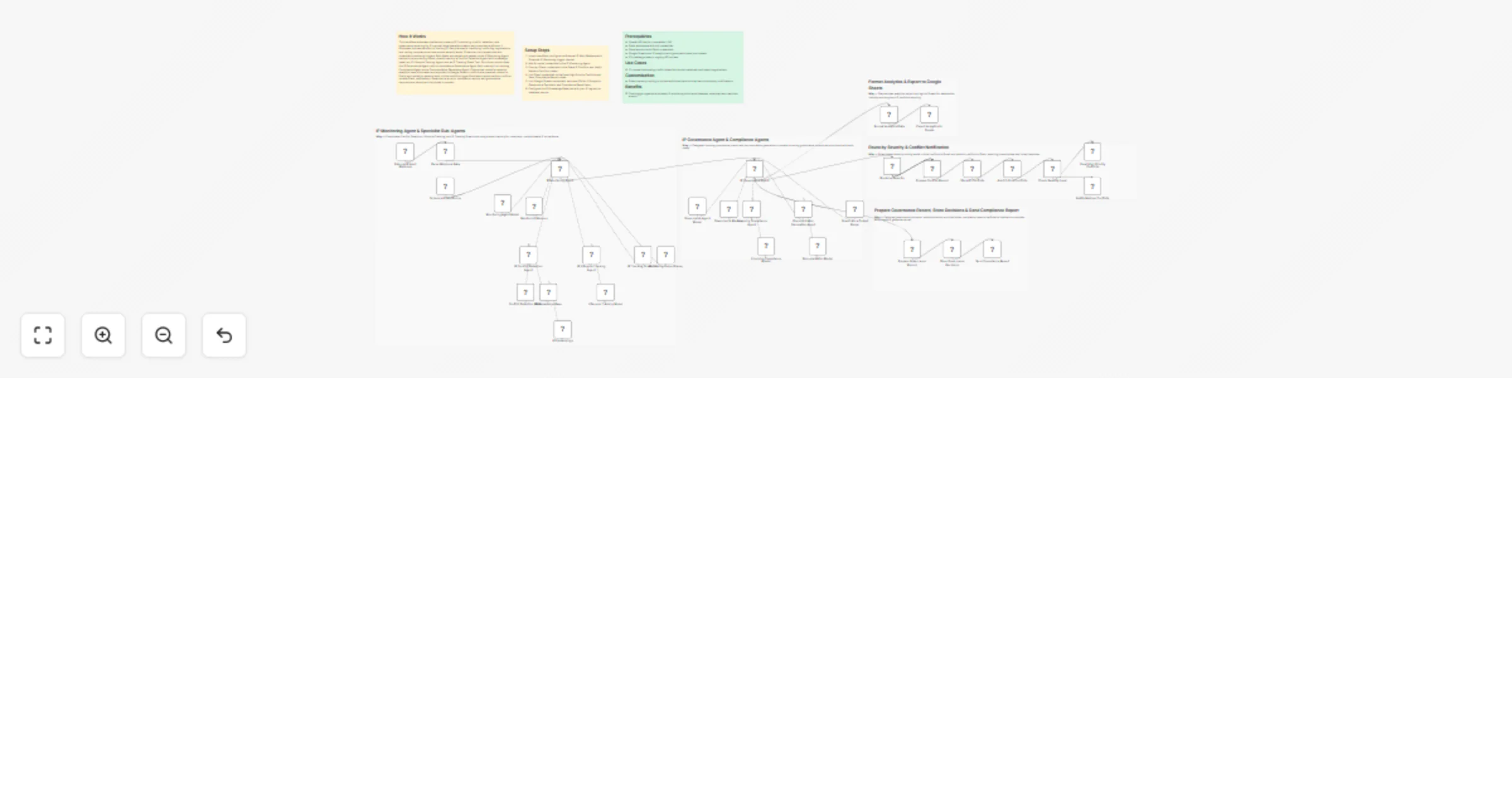
This workflow automates intellectual property (IP) monitoring, conflict detection, and governance reporting for IP counsel, legal operations teams, and compliance officers. It eliminates the manual effort of tracking IP lifecycle events, identifying conflicting registrations, and routing compliance actions across severity levels. IP alerts arrive via webhook and scheduled monitoring triggers. Both feeds are parsed and passed to the IP Monitoring Agent, backed by a monitoring model, shared memory, a Conflict Detection Agent (with knowledge base), an IP Lifecycle Tracking Agent, and an IP Tracking Sheet Tool. Structured outputs feed the IP Governance Agent, which coordinates a Governance Agent (with memory), a Licensing Compliance Agent, and a Documentation Generation Agent. Outputs are routed by severity: analytics data is formatted and exported to Google Sheets; conflicts are prepared, shared to Slack, and routed by severity level, critical conflicts trigger Gmail alerts while medium conflicts receive Slack notifications. Governance records, compliance reports, and governance decisions are stored and distributed in parallel.
Setup Steps
- Import workflow; configure the External IP Alert Webhook and Schedule IP Monitoring trigger interval.
- Add AI model credentials to the IP Monitoring Agent
- Connect Slack credentials to the Share IP Conflicts and Notify Medium Conflicts nodes.
- Link Gmail credentials to the Email High Priority Conflicts and Send Compliance Report nodes.
- Link Google Sheets credentials; set sheet IDs for IP Analytics, Governance Decisions, and Compliance Report tabs.
- Configure the IP Knowledge Base tool with your IP registry or database source.
Prerequisites
- OpenAI API key (or compatible LLM)
- Slack workspace with bot credentials
- Gmail account with OAuth credentials
- Google Sheets with IP analytics and governance tabs pre-created
- IP knowledge base or registry API access
Use Cases
- IP counsel automating conflict detection across trademark and patent registrations
Customisation
- Extend severity routing to include additional tiers such as low-risk advisory notifications
Benefits
- Dual-trigger ingestion eliminates IP monitoring blind spots between scheduled and real-time events