
Manage healthcare resource allocation and conflicts with Anthropic Claude

Workflow preview
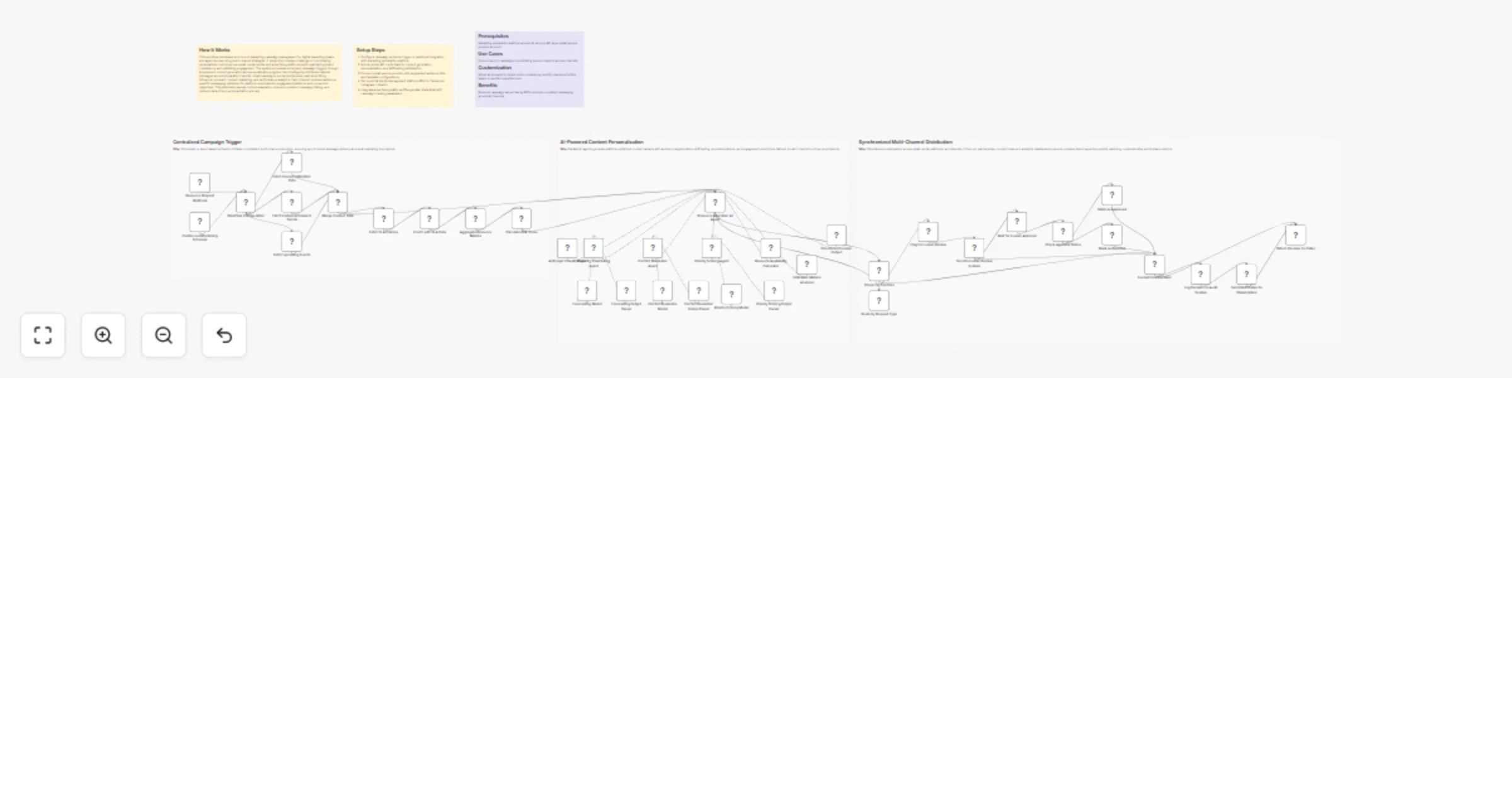
Workflow preview
100%
Manage healthcare resource allocation and conflicts with Anthropic Claude preview
Open on n8n.io

1. Workflow Overview

How It Works This workflow automates end to end marketing campaign management for digital marketing teams and agencies executing multi channel strategies. It solves the complex challenge of coordin...

Best for

  • Engineering automation workflows
  • AI RAG automation workflows
  • advanced n8n builders looking for reusable templates

Tools used

n8n-nodes-base.webhook, n8n-nodes-base.scheduletrigger, n8n-nodes-base.set, n8n-nodes-base.code, @n8n/n8n-nodes-langchain.agent, @n8n/n8n-nodes-langchain.lmchatanthropic, @n8n/n8n-nodes-langchain.outputparserstructured, n8n-nodes-base.if

Source and attribution

This workflow is cataloged by N8N Workflows and links back to its original n8n.io source page by Cheng Siong Chin.

Original n8n.io source

1.1 Workflow description

Title
Manage healthcare resource allocation and conflicts with Anthropic Claude
Workflow name
Manage healthcare resource allocation and conflicts with Anthropic Claude

How It Works

This workflow automates end-to-end marketing campaign management for digital marketing teams and agencies executing multi-channel strategies. It solves the complex challenge of coordinating personalized content across email, social media, and advertising platforms while maintaining brand consistency and optimizing engagement. The system processes scheduled campaign triggers through AI-powered content generation and personalization engines, then intelligently distributes tailored messages across six parallel channels: email campaigns, social media posts, paid advertising, influencer outreach, content marketing, and performance analytics. Each channel receives audience-specific messaging optimized for platform requirements, engagement patterns, and conversion objectives. This eliminates manual content adaptation, ensures consistent campaign timing, and delivers data-driven personalization at scale.

Setup Steps

  1. Configure campaign schedule trigger or webhook integration with marketing automation platform
  2. Add AI model API credentials for content generation, personalization, and A/B testing optimization
  3. Connect email service provider with segmented audience lists and template configurations
  4. Set up social media management platform APIs for Facebook, Instagram, LinkedIn
  5. Integrate advertising platforms (Google Ads, Meta Ads) with campaign tracking parameters

Prerequisites

Marketing automation platform access, AI service API keys, email service provider account

Use Cases

Product launch campaigns coordinating announcements across channels

Customization

Adjust AI prompts for brand voice consistency, modify channel priorities based on audience preferences

Benefits

Reduces campaign setup time by 80%, ensures consistent messaging across all channels

1.2 Logical Blocks

This catalog entry is organized from the workflow JSON. The node-level section below shows the executable blocks available for review before importing the template.

2. Block-by-Block Analysis

Block 1 - Resource Request Webhook

Type / Role
n8n-nodes-base.webhook - webhook
Config choices
Version 2.1

Block 2 - Continuous Monitoring Schedule

Type / Role
n8n-nodes-base.scheduleTrigger - scheduleTrigger
Config choices
Version 1.3

Block 3 - Workflow Configuration

Type / Role
n8n-nodes-base.set - set
Config choices
Version 3.4

Block 4 - Fetch Current Utilization Data

Type / Role
n8n-nodes-base.code - code
Config choices
Version 2

Block 5 - Fetch Historical Demand Trends

Type / Role
n8n-nodes-base.code - code
Config choices
Version 2

Block 6 - Fetch Upcoming Events

Type / Role
n8n-nodes-base.code - code
Config choices
Version 2

Block 7 - Merge Context Data

Type / Role
n8n-nodes-base.set - set
Config choices
Version 3.4

Block 8 - Resource Allocation AI Agent

Type / Role
@n8n/n8n-nodes-langchain.agent - agent
Config choices
Version 3.1

Block 9 - Anthropic Claude Model

Type / Role
@n8n/n8n-nodes-langchain.lmChatAnthropic - lmChatAnthropic
Config choices
Version 1.3

Block 10 - Structured Decision Output

Type / Role
@n8n/n8n-nodes-langchain.outputParserStructured - outputParserStructured
Config choices
Version 1.3

Block 11 - Check for Conflicts

Type / Role
n8n-nodes-base.if - if
Config choices
Version 2.3

Block 12 - Flag for Human Review

Type / Role
n8n-nodes-base.set - set
Config choices
Version 3.4

Block 13 - Send to Human Review System

Type / Role
n8n-nodes-base.httpRequest - httpRequest
Config choices
Version 4.3

Block 14 - Format Final Decision

Type / Role
n8n-nodes-base.set - set
Config choices
Version 3.4

Block 15 - Return Decision to Caller

Type / Role
n8n-nodes-base.respondToWebhook - respondToWebhook
Config choices
Version 1.5

Block 16 - Route by Request Type

Type / Role
n8n-nodes-base.switch - switch
Config choices
Version 3.4

Block 17 - Capacity Forecasting Agent

Type / Role
@n8n/n8n-nodes-langchain.agentTool - agentTool
Config choices
Version 3

Block 18 - Conflict Resolution Agent

Type / Role
@n8n/n8n-nodes-langchain.agentTool - agentTool
Config choices
Version 3

Block 19 - Priority Scoring Agent

Type / Role
@n8n/n8n-nodes-langchain.agentTool - agentTool
Config choices
Version 3

Block 20 - Forecasting Model

Type / Role
@n8n/n8n-nodes-langchain.lmChatAnthropic - lmChatAnthropic
Config choices
Version 1.3

Block 21 - Conflict Resolution Model

Type / Role
@n8n/n8n-nodes-langchain.lmChatAnthropic - lmChatAnthropic
Config choices
Version 1.3

Block 22 - Priority Scoring Model

Type / Role
@n8n/n8n-nodes-langchain.lmChatAnthropic - lmChatAnthropic
Config choices
Version 1.3

Block 23 - Forecasting Output Parser

Type / Role
@n8n/n8n-nodes-langchain.outputParserStructured - outputParserStructured
Config choices
Version 1.3

Block 24 - Conflict Resolution Output Parser

Type / Role
@n8n/n8n-nodes-langchain.outputParserStructured - outputParserStructured
Config choices
Version 1.3

Showing the first 24 of 43 workflow blocks. Download the JSON for the full node graph.

3. Summary Table

Workflow Manage healthcare resource allocation and conflicts with Anthropic Claude
Complexity advanced
Nodes 43
Categories Engineering, AI RAG
Author Cheng Siong Chin
Published 18 Jan 2026

4. Reproducing the Workflow from Scratch

  1. 1. Download the workflow JSON

    Use the JSON export at /data/workflows/12794/12794.json as the source template for this automation.

  2. 2. Import the template into n8n

    Open n8n, import the downloaded JSON, and review each node before activating the workflow.

  3. 3. Configure credentials and variables

    Replace placeholder credentials, API keys, webhook URLs, account IDs, and environment-specific values with your own settings.

  4. 4. Test with sample data

    Run the workflow manually or in a staging workspace, inspect node output, and confirm downstream systems receive the expected data.

  5. 5. Activate and monitor

    Enable the workflow only after testing, then monitor executions, errors, and rate limits during the first production runs.

5. General Notes & Resources

Review imported nodes carefully before activation. This catalog entry is intended to help you inspect the workflow structure, understand required services, and find related templates faster.

Node names, credentials, schedules, webhook paths, and external service limits may need adjustment for your workspace.

Frequently asked questions

What does Manage healthcare resource allocation and conflicts with Anthropic Claude do?

How It Works This workflow automates end to end marketing campaign management for digital marketing teams and agencies executing multi channel strategies. It solves the complex challenge of coordin...

What do I need before importing this workflow?

Review the workflow JSON, configure any required credentials in n8n, and test the automation in a safe workspace before using it in production.

Can I customize this workflow?

Yes. Use the block-by-block analysis and the downloadable JSON to inspect each node, then adjust credentials, prompts, schedules, filters, or destinations for your Engineering, AI RAG use case.



