
💾 Generate Blog Posts on Autopilot with GPT‐5, Tavily and WordPress

Workflow preview
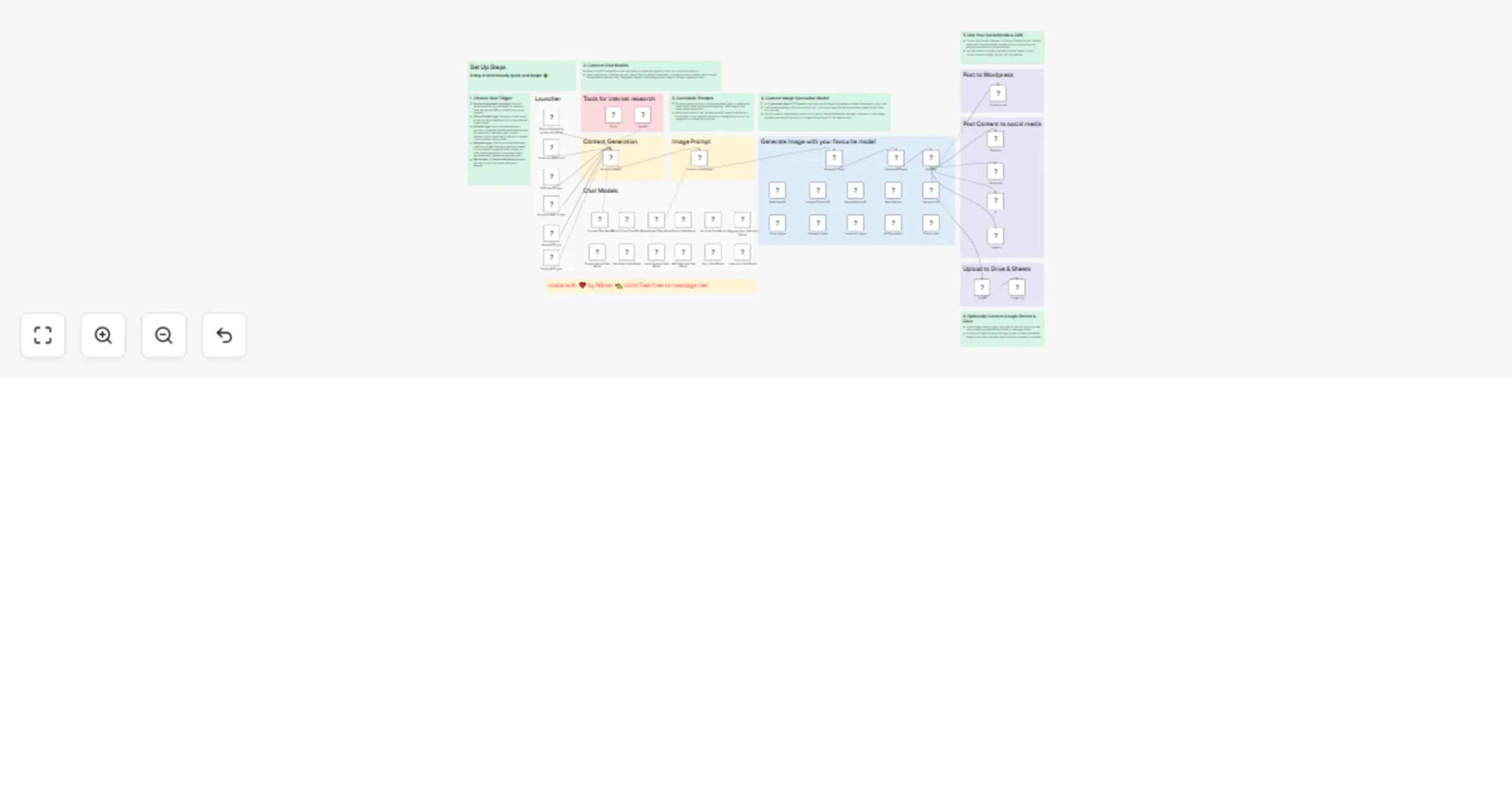
Workflow preview
100%
💾 Generate Blog Posts on Autopilot with GPT‐5, Tavily and WordPress preview
Open on n8n.io

1. Workflow Overview

Who Is This For? This workflow is designed for marketers, content creators, agencies, and solo founders who want to publish long‐form posts with visuals on autopilot using n8n and AI agents. ​ Whet...

Best for

  • Content Creation automation workflows
  • Multimodal AI automation workflows
  • advanced n8n builders looking for reusable templates

Tools used

@n8n/n8n-nodes-langchain.toolhttprequest, @n8n/n8n-nodes-langchain.agent, n8n-nodes-base.httprequest, n8n-nodes-base.converttofile, n8n-nodes-base.stickynote, n8n-nodes-base.executeworkflowtrigger, n8n-nodes-base.googlesheets, n8n-nodes-base.googledrive

Source and attribution

This workflow is cataloged by N8N Workflows and links back to its original n8n.io source page by N8ner.

Original n8n.io source

1.1 Workflow description

Title
💾 Generate Blog Posts on Autopilot with GPT‐5, Tavily and WordPress
Workflow name
💾 Generate Blog Posts on Autopilot with GPT‐5, Tavily and WordPress

Who Is This For?

This workflow is designed for marketers, content creators, agencies, and solo founders who want to publish long‐form posts with visuals on autopilot using n8n and AI agents. ​

Whether you run a blog, SaaS, personal brand, newsletter, or client accounts, this tool helps you keep a consistent content pipeline without manually writing every article, creating images, and posting to each platform one by one. ​ ​ 💪🏼 While the template is wired around classic blog + social media distribution, the underlying logic is universal. You can easily adapt it to any niche by editing prompts, swapping models, and re‐wiring nodes. You can plug in any LLM you like, from ChatGPT to Claude, Gemini, Mistral, DeepSeek, OpenRouter, or even local models through Ollama. ​

What Problem Is This Workflow Solving?

🤯 Most teams waste hours on the same repetitive loop: research a topic, gather links, write a blog post, craft social captions, generate visuals, upload everything to multiple platforms, and archive assets. ​ ​ 💎 This workflow solves that by automating the full content chain—from research and blog‐post generation to image creation, publishing across channels, and logging everything in your content database—so your feeds stay active while you focus on strategy, not busywork. ​

What This Workflow Does

✨ Generates in‐depth blog posts tailored to your topic and target audience, enriched with fresh references from the web via Tavily/SerpAPI search tools. ​ ✨ Creates an image prompt and title from the article, generates the visual with OpenAI Images (gpt-image-1), and converts it into a ready‐to‐use image file. ​ ✨ Automatically publishes content to your connected platforms (WordPress for blog posts, Telegram, X/Twitter, Facebook, LinkedIn) while saving images to Google Drive and logging each publication in Google Sheets for tracking. ​

How It Works?

Surprisingly simple ☺️

The workflow is triggered by another n8n workflow or by one of several triggers (Facebook, RSS, Google Sheets, Airtable, Postgres) that pass in the blogTopic, targetAudience, and Telegram chatID. ​ ​ The Blog Post Agent (LLM with access to Tavily/SerpAPI) researches the topic, writes a structured article for the specified audience, and sends its output to the Image Prompt Agent, which turns the content into a visual prompt and title. ​

🎯 The end result: you provide a topic, run the workflow, and receive a complete blog post, matching image, and ready‐made social posts shipped directly to your channels and archives—no manual copy‐paste. ​

How to Customize This Workflow to Your Needs

  • 🎨 Switch AI models and fine‐tune prompts so the agent can handle your exact formats: tutorials, case studies, listicles, product updates, thought‐leadership pieces, or campaign landing posts.
  • 🔍 Refine research sources inside Tavily/SerpAPI to prioritize the domains, blogs, and docs your audience trusts, keeping posts accurate and up to date.
  • ⏰ Adjust posting cadence and schedules to align with peak engagement for your audience, mixing automated slots with manual “launch” runs for special announcements.
  • 📱 Expand or trim channels as needed: keep just WordPress + LinkedIn, add Telegram as a content feed, or plug the workflow into additional automations like email campaigns or RSS feeds.
  • 📊 Use Google Sheets as your content hub to store ideas, angles, CTAs, references, and performance notes so you can double‐down on topics and formats that perform best.
  • 🎬 Swap images for video by replacing the image generation node with video tools (for example, Runway‐style APIs) if your strategy is video‐first while keeping the same prompt pipeline.
  • 💾 Build a reusable prompt library in Sheets, Notion, or Airtable so you can rotate proven prompt patterns each month and keep quality high without reinventing the wheel.

🤖 The system will continuously generate blog posts, visuals, and social updates and publish them across your selected platforms while archiving everything in Drive and Sheets—keeping your brand visible, consistent, and professional with minimal ongoing effort.

1.2 Logical Blocks

This catalog entry is organized from the workflow JSON. The node-level section below shows the executable blocks available for review before importing the template.

2. Block-by-Block Analysis

Block 1 - Tavily

Type / Role
@n8n/n8n-nodes-langchain.toolHttpRequest - toolHttpRequest
Config choices
Version 1.1

Block 2 - Image Prompt Agent

Type / Role
@n8n/n8n-nodes-langchain.agent - agent
Config choices
Version 1.9

Block 3 - Generate Image

Type / Role
n8n-nodes-base.httpRequest - httpRequest
Config choices
Version 4.2

Block 4 - Convert to Binary

Type / Role
n8n-nodes-base.convertToFile - convertToFile
Config choices
Version 1.1

Block 5 - Sticky Note

Type / Role
n8n-nodes-base.stickyNote - stickyNote
Config choices
Version 1

Block 6 - Sticky Note1

Type / Role
n8n-nodes-base.stickyNote - stickyNote
Config choices
Version 1

Block 7 - Sticky Note4

Type / Role
n8n-nodes-base.stickyNote - stickyNote
Config choices
Version 1

Block 8 - Sticky Note2

Type / Role
n8n-nodes-base.stickyNote - stickyNote
Config choices
Version 1

Block 9 - When Executed by Another Workflow

Type / Role
n8n-nodes-base.executeWorkflowTrigger - executeWorkflowTrigger
Config choices
Version 1.1

Block 10 - Blog Post Agent

Type / Role
@n8n/n8n-nodes-langchain.agent - agent
Config choices
Version 1.9

Block 11 - Image Log

Type / Role
n8n-nodes-base.googleSheets - googleSheets
Config choices
Version 4.5

Block 12 - Sticky Note5

Type / Role
n8n-nodes-base.stickyNote - stickyNote
Config choices
Version 1

Block 13 - Sticky Note6

Type / Role
n8n-nodes-base.stickyNote - stickyNote
Config choices
Version 1

Block 14 - Sticky Note7

Type / Role
n8n-nodes-base.stickyNote - stickyNote
Config choices
Version 1

Block 15 - Upload

Type / Role
n8n-nodes-base.googleDrive - googleDrive
Config choices
Version 3

Block 16 - Mistral Cloud Chat Model

Type / Role
@n8n/n8n-nodes-langchain.lmChatMistralCloud - lmChatMistralCloud
Config choices
Version 1

Block 17 - OpenRouter Chat Model

Type / Role
@n8n/n8n-nodes-langchain.lmChatOpenRouter - lmChatOpenRouter
Config choices
Version 1

Block 18 - Anthropic Chat Model

Type / Role
@n8n/n8n-nodes-langchain.lmChatAnthropic - lmChatAnthropic
Config choices
Version 1.3

Block 19 - Google Gemini Chat Model

Type / Role
@n8n/n8n-nodes-langchain.lmChatGoogleGemini - lmChatGoogleGemini
Config choices
Version 1

Block 20 - xAI Grok Chat Model

Type / Role
@n8n/n8n-nodes-langchain.lmChatXAiGrok - lmChatXAiGrok
Config choices
Version 1

Block 21 - DeepSeek Chat Model

Type / Role
@n8n/n8n-nodes-langchain.lmChatDeepSeek - lmChatDeepSeek
Config choices
Version 1

Block 22 - Hugging Face Inference Model

Type / Role
@n8n/n8n-nodes-langchain.lmOpenHuggingFaceInference - lmOpenHuggingFaceInference
Config choices
Version 1

Block 23 - Clipdrop API

Type / Role
n8n-nodes-base.httpRequest - httpRequest
Config choices
Version 4.2

Block 24 - Ollama Chat Model

Type / Role
@n8n/n8n-nodes-langchain.lmChatOllama - lmChatOllama
Config choices
Version 1

Showing the first 24 of 59 workflow blocks. Download the JSON for the full node graph.

3. Summary Table

Workflow 💾 Generate Blog Posts on Autopilot with GPT‐5, Tavily and WordPress
Complexity advanced
Nodes 59
Categories Content Creation, Multimodal AI
Author N8ner
Published 21 Jan 2026

4. Reproducing the Workflow from Scratch

  1. 1. Download the workflow JSON

    Use the JSON export at /data/workflows/12858/12858.json as the source template for this automation.

  2. 2. Import the template into n8n

    Open n8n, import the downloaded JSON, and review each node before activating the workflow.

  3. 3. Configure credentials and variables

    Replace placeholder credentials, API keys, webhook URLs, account IDs, and environment-specific values with your own settings.

  4. 4. Test with sample data

    Run the workflow manually or in a staging workspace, inspect node output, and confirm downstream systems receive the expected data.

  5. 5. Activate and monitor

    Enable the workflow only after testing, then monitor executions, errors, and rate limits during the first production runs.

5. General Notes & Resources

Review imported nodes carefully before activation. This catalog entry is intended to help you inspect the workflow structure, understand required services, and find related templates faster.

Node names, credentials, schedules, webhook paths, and external service limits may need adjustment for your workspace.

Frequently asked questions

What does 💾 Generate Blog Posts on Autopilot with GPT‐5, Tavily and WordPress do?

Who Is This For? This workflow is designed for marketers, content creators, agencies, and solo founders who want to publish long‐form posts with visuals on autopilot using n8n and AI agents. ​ Whet...

What do I need before importing this workflow?

Review the workflow JSON, configure any required credentials in n8n, and test the automation in a safe workspace before using it in production.

Can I customize this workflow?

Yes. Use the block-by-block analysis and the downloadable JSON to inspect each node, then adjust credentials, prompts, schedules, filters, or destinations for your Content Creation, Multimodal AI use case.



