Block 1 - When clicking ‘Test workflow’
- Type / Role
- n8n-nodes-base.manualTrigger - manualTrigger
- Config choices
- Version 1
This workflow is provided as-is. Please review and test before using in production.
How it works This workflow automatically extracts specific data from received emails and saves it into a Google Sheets document for easy tracking and analysis. It connects to a Gmail account, searc...
n8n-nodes-base.manualtrigger, n8n-nodes-base.gmail, n8n-nodes-base.html, n8n-nodes-base.httprequest, n8n-nodes-base.code, n8n-nodes-base.set, n8n-nodes-base.googlesheets, n8n-nodes-base.stickynote
This workflow is cataloged by N8N Workflows and links back to its original n8n.io source page by Renan Miller.
Original n8n.io sourceHow it works
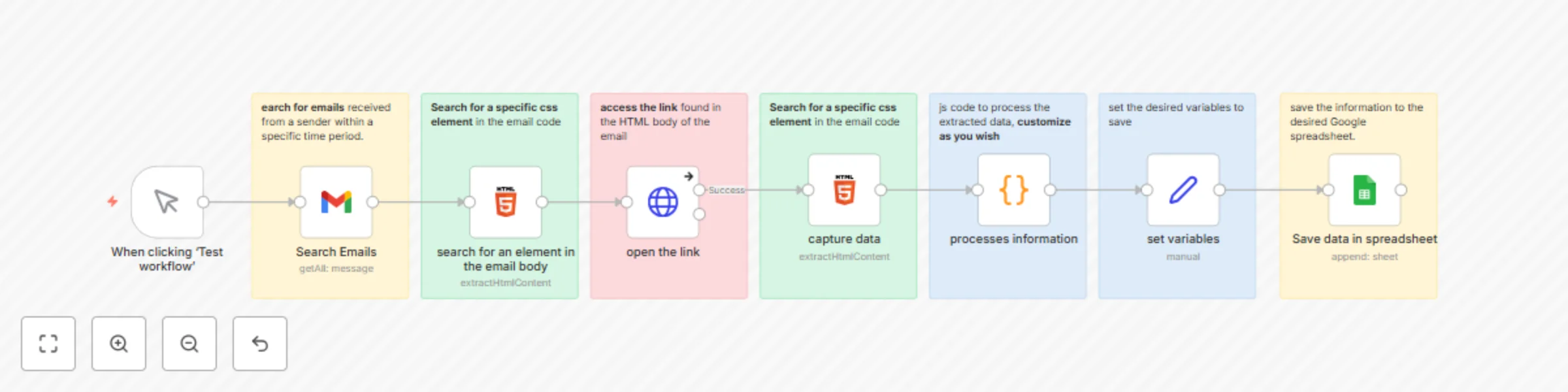
This workflow automatically extracts specific data from received emails and saves it into a Google Sheets document for easy tracking and analysis.
It connects to a Gmail account, searches for emails received within a defined date range from a specific sender, opens links inside those emails, extracts data from the linked pages (such as case ID, patient name, birth date, complaint, and location), processes and cleans the information using custom JavaScript logic, and finally saves the structured results into a Google Sheet.
Setup steps
Connect Gmail using OAuth2 credentials.
Adjust the date filters and sender email in the “Search Emails” node.
Customize the CSS selectors in the HTML extraction nodes to match the desired elements from your email or linked page.
Open the Code node and modify the logic if you need to calculate or transform additional fields.
Link your Google Sheets account and specify the spreadsheet and sheet name where the results will be appended.
This catalog entry is organized from the workflow JSON. The node-level section below shows the executable blocks available for review before importing the template.
| Workflow | Extract web page data from Gmail links and save to Google Sheets |
|---|---|
| Complexity | advanced |
| Nodes | 15 |
| Categories | Document Extraction |
| Author | Renan Miller |
| Published | 22 Oct 2025 |
Use the JSON export at /data/workflows/10006/10006.json as the source template for this automation.
Open n8n, import the downloaded JSON, and review each node before activating the workflow.
Replace placeholder credentials, API keys, webhook URLs, account IDs, and environment-specific values with your own settings.
Run the workflow manually or in a staging workspace, inspect node output, and confirm downstream systems receive the expected data.
Enable the workflow only after testing, then monitor executions, errors, and rate limits during the first production runs.
Review imported nodes carefully before activation. This catalog entry is intended to help you inspect the workflow structure, understand required services, and find related templates faster.
Node names, credentials, schedules, webhook paths, and external service limits may need adjustment for your workspace.
How it works This workflow automatically extracts specific data from received emails and saves it into a Google Sheets document for easy tracking and analysis. It connects to a Gmail account, searc...
Review the workflow JSON, configure any required credentials in n8n, and test the automation in a safe workspace before using it in production.
Yes. Use the block-by-block analysis and the downloadable JSON to inspect each node, then adjust credentials, prompts, schedules, filters, or destinations for your Document Extraction use case.