Deploy Docker InfluxDB, API backend for WHMCS/WISECP

Workflow preview

Workflow preview
100%
Deploy Docker InfluxDB, API backend for WHMCS/WISECP preview
Open on n8n.io

Important notice

This workflow is provided as-is. Please review and test before using in production.

1. Workflow Overview

The Docker InfluxDB WHMCS module uses a specially designed workflow for n8n to automate deployment processes. The workflow provides an API interface for the module, receives specific commands, and ...

Best for

  • DevOps automation workflows
  • advanced n8n builders looking for reusable templates

Tools used

n8n-nodes-base.if, n8n-nodes-base.set, n8n-nodes-base.webhook, n8n-nodes-base.respondtowebhook, n8n-nodes-base.code, n8n-nodes-base.ssh, n8n-nodes-base.switch, n8n-nodes-base.stickynote

Source and attribution

This workflow is cataloged by N8N Workflows and links back to its original n8n.io source page by PUQcloud.

Original n8n.io source

1.1 Workflow description

Title
Deploy Docker InfluxDB, API backend for WHMCS/WISECP
Workflow name
Deploy Docker InfluxDB, API backend for WHMCS/WISECP

Overview

The Docker InfluxDB WHMCS module uses a specially designed workflow for n8n to automate deployment processes. The workflow provides an API interface for the module, receives specific commands, and connects via SSH to a server with Docker installed to perform predefined actions.

Prerequisites

  • You must have your own n8n server.
  • Alternatively, you can use the official n8n cloud installations available at: n8n Official Site

Installation Steps

Install the Required Workflow on n8n

You have two options:

Option 1: Use the Latest Version from the n8n Marketplace
  • The latest workflow templates for our modules are available on the official n8n marketplace.
  • Visit our profile: PUQcloud on n8n
Option 2: Manual Installation
  • Each module version comes with a workflow template file.
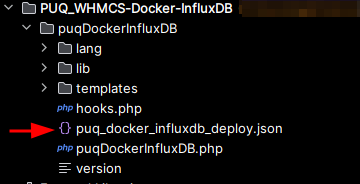
  • You need to manually import this template into your n8n server.
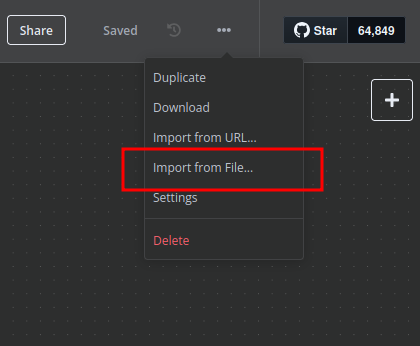
n8n Workflow API Backend Setup for WHMCS/WISECP

1. Configure API Webhook and SSH Access

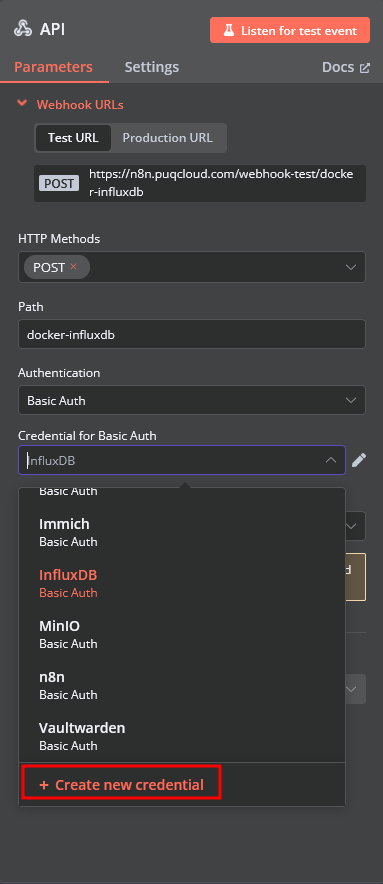
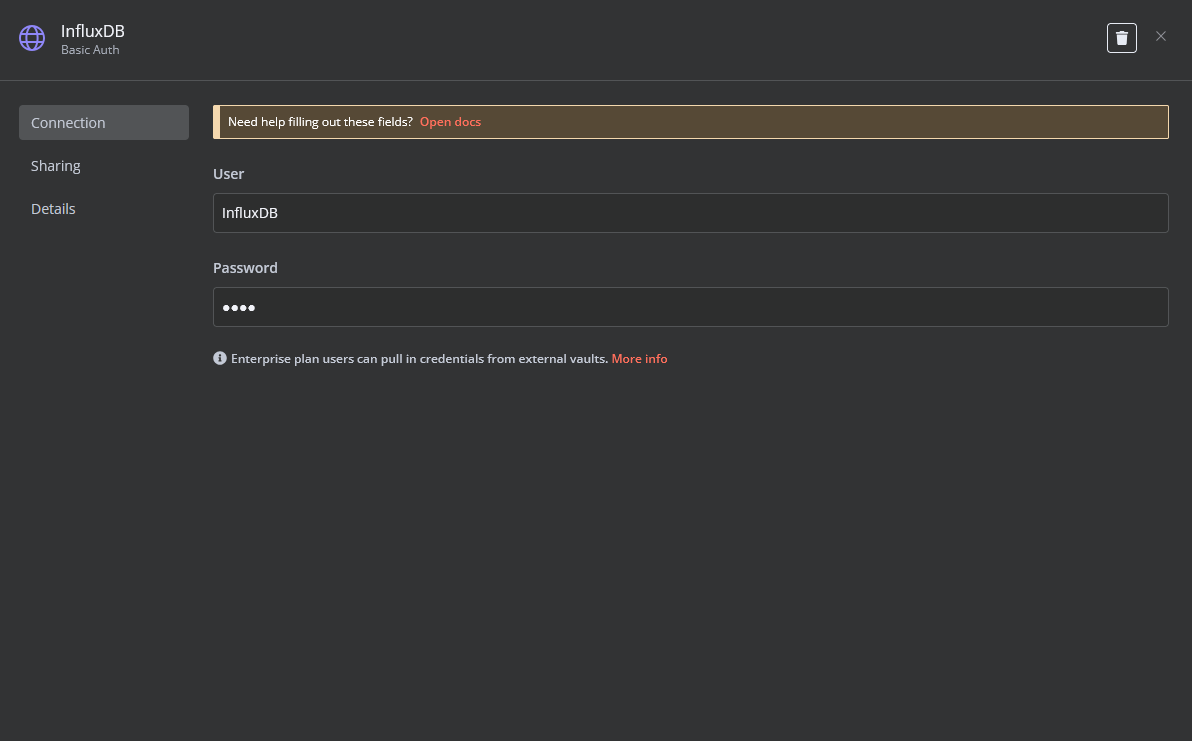
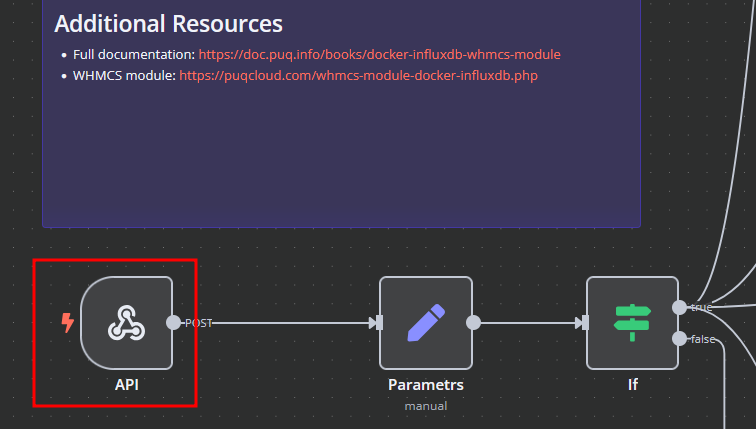
  • Create a Basic Auth Credential for the Webhook API block in n8n.

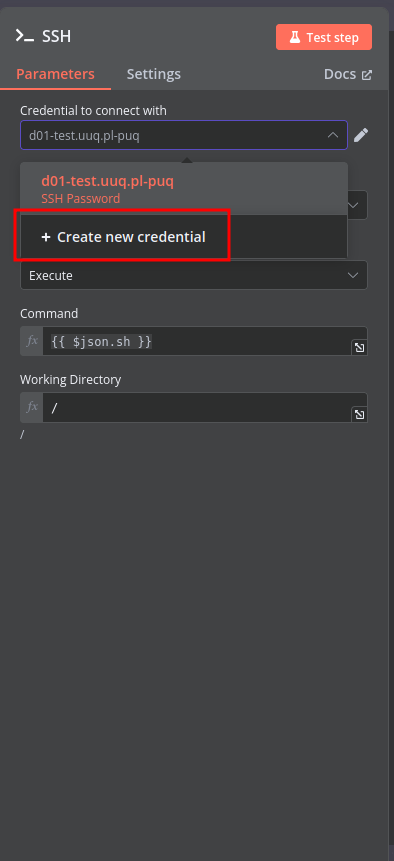
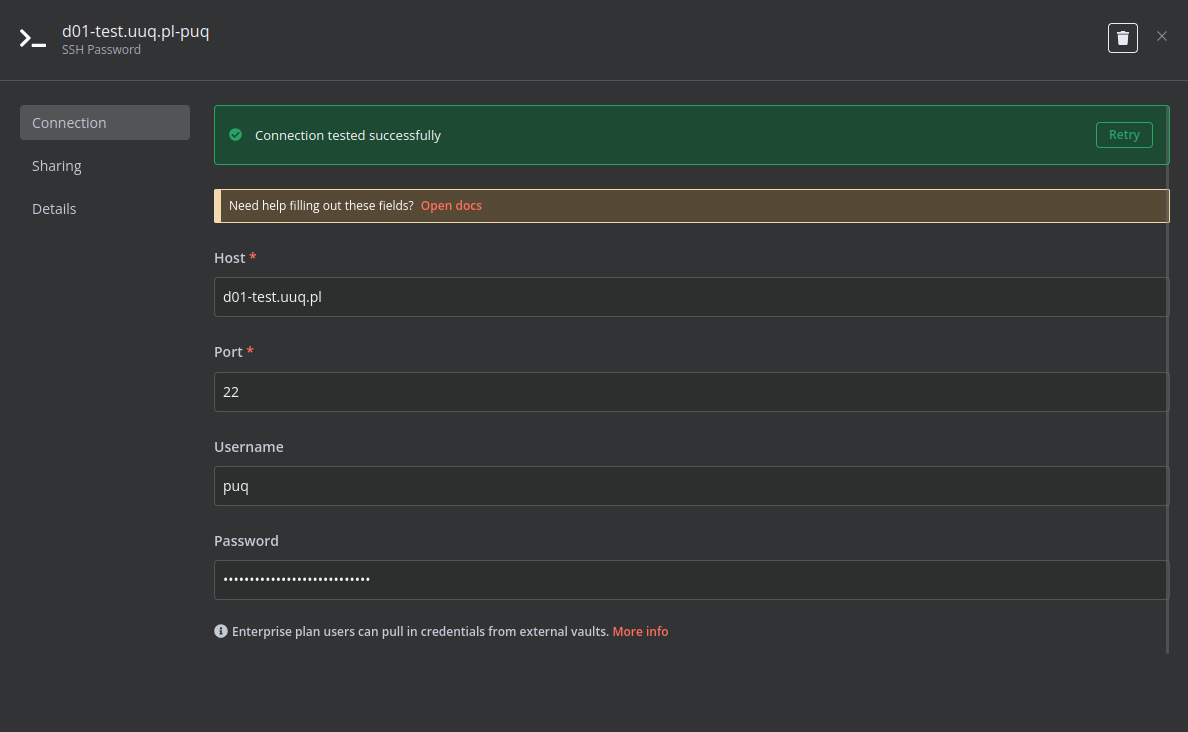
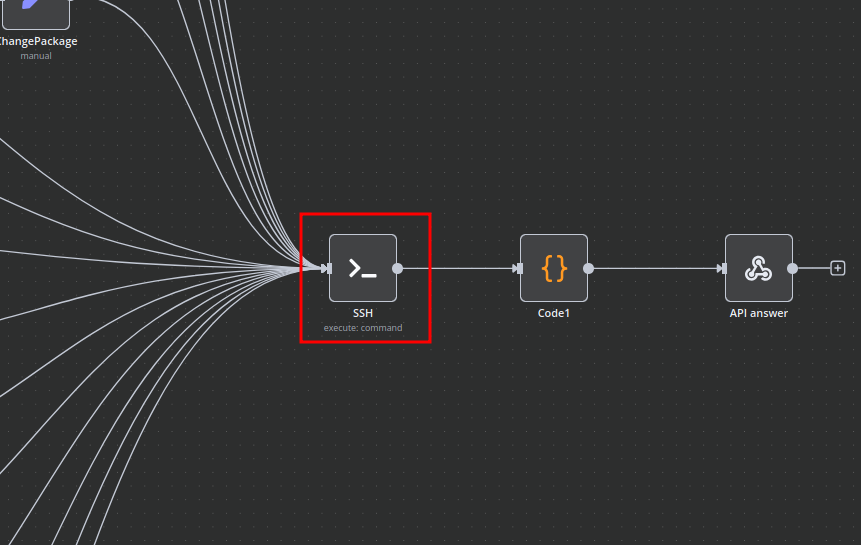
  • Create an SSH Credential for accessing a server with Docker installed.

2. Modify Template Parameters

In the Parameters block of the template, update the following settings:
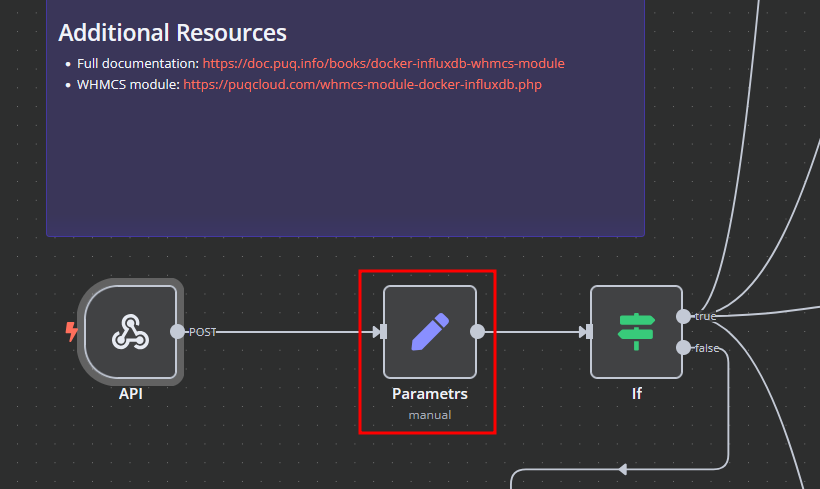
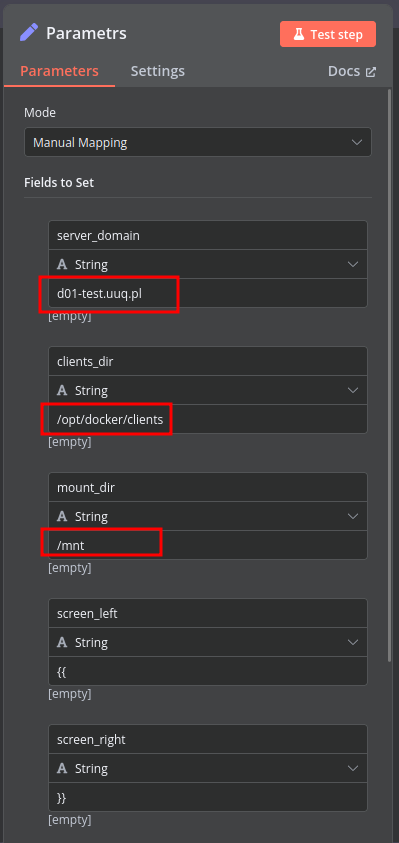
  • server_domain – Must match the domain of the WHMCS/WISECP Docker server.
  • clients_dir – Directory where user data related to Docker and disks will be stored.
  • mount_dir – Default mount point for the container disk (recommended not to change).

Do not modify the following technical parameters:

  • screen_left
  • screen_right

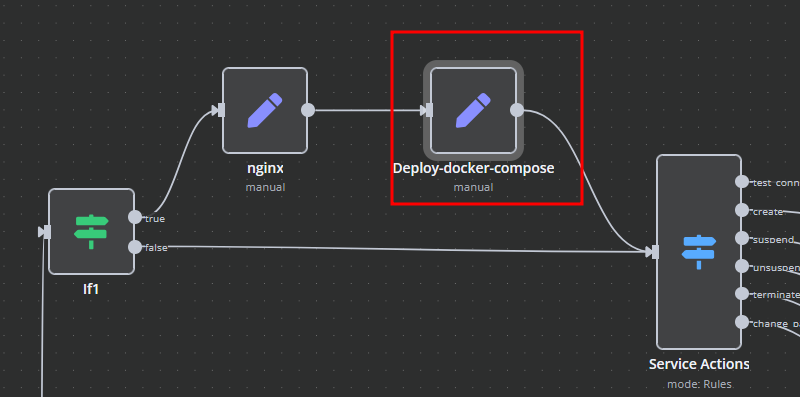
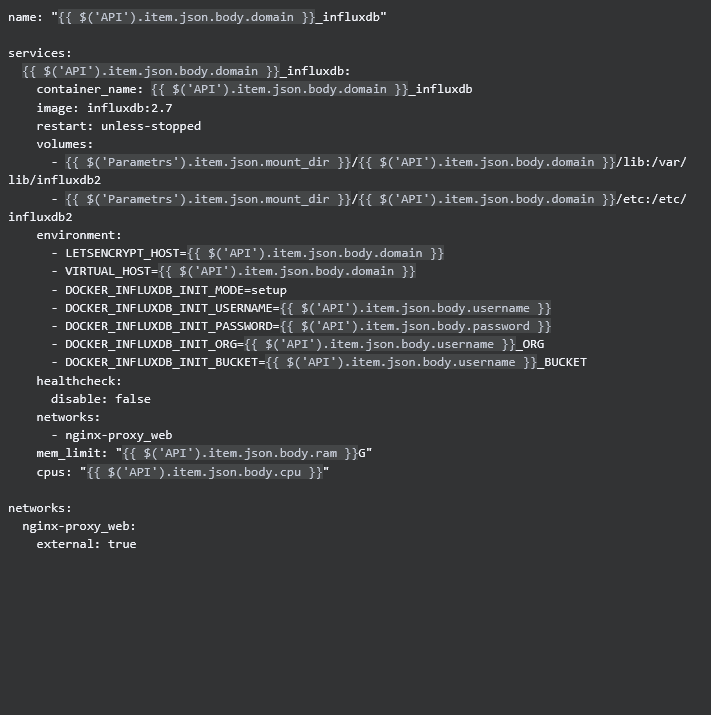
Deploy-docker-compose

In the Deploy-docker-compose element, you can modify the Docker Compose configuration. This is generated in the following scenarios:

  • When the service is created
  • When the service is unlocked
  • When the service is updated


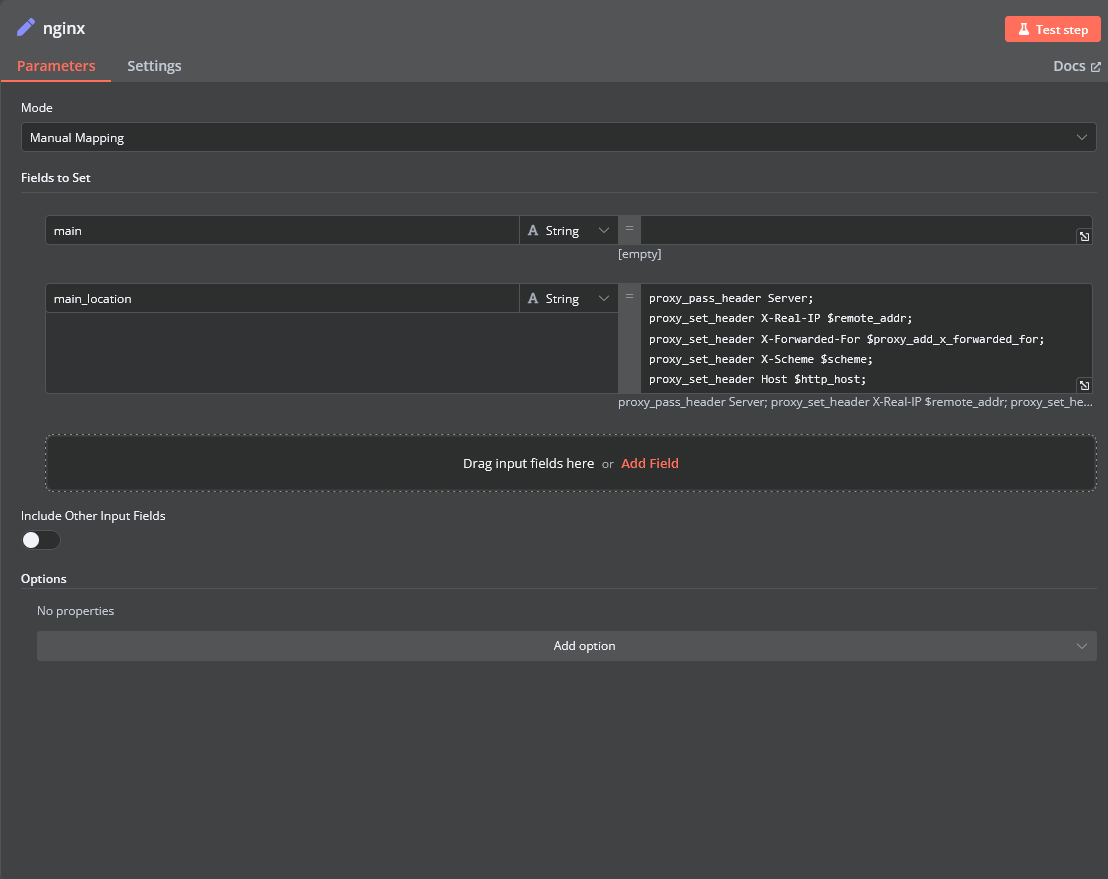
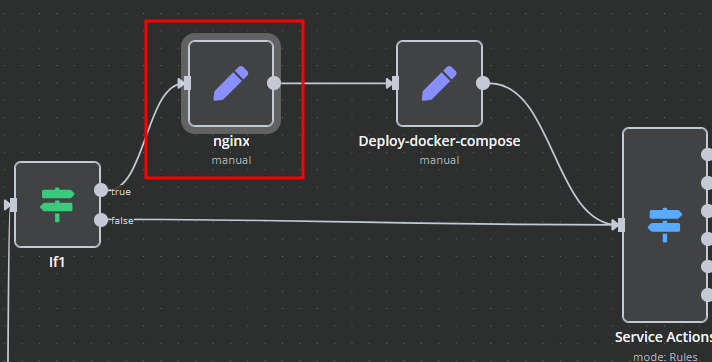
nginx

In the nginx element, you can modify configuration parameters of the web interface proxy server.

  • The main section allows you to add custom parameters to the server block in the proxy server configuration file.
  • The main_location section contains settings that will be added to the location / block of the configuration. Here, you can define custom headers and parameters.

Bash Scripts

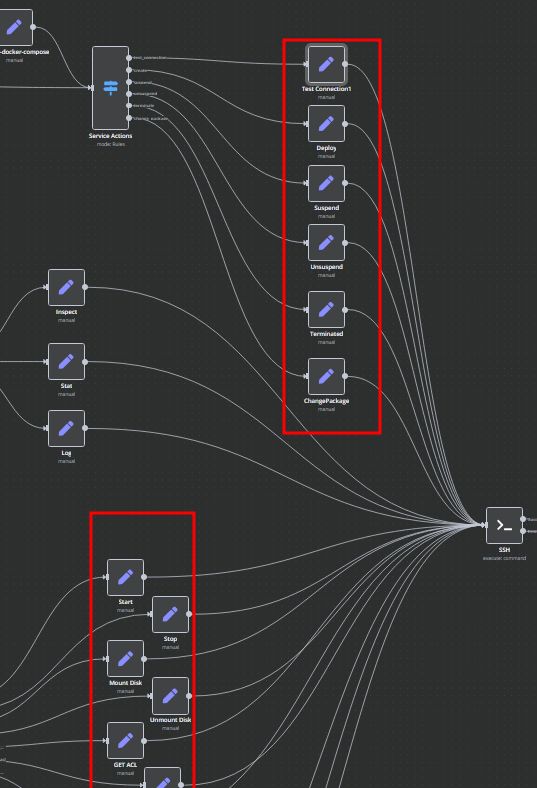
Management of Docker containers and related procedures is done by executing Bash scripts generated in n8n. These scripts return either JSON or plain strings.

  • All scripts are located in elements directly connected to the SSH element.
  • You have full control over any script and can modify or execute it as needed.
1.2 Logical Blocks

This catalog entry is organized from the workflow JSON. The node-level section below shows the executable blocks available for review before importing the template.

2. Block-by-Block Analysis

Block 1 - If

Type / Role
n8n-nodes-base.if - if
Config choices
Version 2.2

Block 2 - Parametrs

Type / Role
n8n-nodes-base.set - set
Config choices
Version 3.4

Block 3 - API

Type / Role
n8n-nodes-base.webhook - webhook
Config choices
Version 2

Block 4 - 422-Invalid server domain

Type / Role
n8n-nodes-base.respondToWebhook - respondToWebhook
Config choices
Version 1.1

Block 5 - Code1

Type / Role
n8n-nodes-base.code - code
Config choices
Version 2

Block 6 - SSH

Type / Role
n8n-nodes-base.ssh - ssh
Config choices
Version 1

Block 7 - Container Actions

Type / Role
n8n-nodes-base.switch - switch
Config choices
Version 3.2

Block 8 - Service Actions

Type / Role
n8n-nodes-base.switch - switch
Config choices
Version 3.2

Block 9 - API answer

Type / Role
n8n-nodes-base.respondToWebhook - respondToWebhook
Config choices
Version 1.1

Block 10 - Inspect

Type / Role
n8n-nodes-base.set - set
Config choices
Version 3.4

Block 11 - Stat

Type / Role
n8n-nodes-base.set - set
Config choices
Version 3.4

Block 12 - Start

Type / Role
n8n-nodes-base.set - set
Config choices
Version 3.4

Block 13 - Stop

Type / Role
n8n-nodes-base.set - set
Config choices
Version 3.4

Block 14 - Test Connection1

Type / Role
n8n-nodes-base.set - set
Config choices
Version 3.4

Block 15 - Deploy

Type / Role
n8n-nodes-base.set - set
Config choices
Version 3.4

Block 16 - Suspend

Type / Role
n8n-nodes-base.set - set
Config choices
Version 3.4

Block 17 - Terminated

Type / Role
n8n-nodes-base.set - set
Config choices
Version 3.4

Block 18 - Unsuspend

Type / Role
n8n-nodes-base.set - set
Config choices
Version 3.4

Block 19 - Mount Disk

Type / Role
n8n-nodes-base.set - set
Config choices
Version 3.4

Block 20 - Unmount Disk

Type / Role
n8n-nodes-base.set - set
Config choices
Version 3.4

Block 21 - Log

Type / Role
n8n-nodes-base.set - set
Config choices
Version 3.4

Block 22 - ChangePackage

Type / Role
n8n-nodes-base.set - set
Config choices
Version 3.4

Block 23 - Sticky Note

Type / Role
n8n-nodes-base.stickyNote - stickyNote
Config choices
Version 1

Block 24 - Deploy-docker-compose

Type / Role
n8n-nodes-base.set - set
Config choices
Version 3.4

Showing the first 24 of 33 workflow blocks. Download the JSON for the full node graph.

3. Summary Table

Workflow Deploy Docker InfluxDB, API backend for WHMCS/WISECP
Complexity advanced
Nodes 33
Categories DevOps
Author PUQcloud
Published 13 May 2025

4. Reproducing the Workflow from Scratch

  1. 1. Download the workflow JSON

    Use the JSON export at /data/workflows/4014/4014.json as the source template for this automation.

  2. 2. Import the template into n8n

    Open n8n, import the downloaded JSON, and review each node before activating the workflow.

  3. 3. Configure credentials and variables

    Replace placeholder credentials, API keys, webhook URLs, account IDs, and environment-specific values with your own settings.

  4. 4. Test with sample data

    Run the workflow manually or in a staging workspace, inspect node output, and confirm downstream systems receive the expected data.

  5. 5. Activate and monitor

    Enable the workflow only after testing, then monitor executions, errors, and rate limits during the first production runs.

5. General Notes & Resources

Review imported nodes carefully before activation. This catalog entry is intended to help you inspect the workflow structure, understand required services, and find related templates faster.

Node names, credentials, schedules, webhook paths, and external service limits may need adjustment for your workspace.

Frequently asked questions

What does Deploy Docker InfluxDB, API backend for WHMCS/WISECP do?

The Docker InfluxDB WHMCS module uses a specially designed workflow for n8n to automate deployment processes. The workflow provides an API interface for the module, receives specific commands, and ...

What do I need before importing this workflow?

Review the workflow JSON, configure any required credentials in n8n, and test the automation in a safe workspace before using it in production.

Can I customize this workflow?

Yes. Use the block-by-block analysis and the downloadable JSON to inspect each node, then adjust credentials, prompts, schedules, filters, or destinations for your DevOps use case.