Automate Microsoft Teams meeting analysis with GPT-4.1, Outlook & Mem.ai
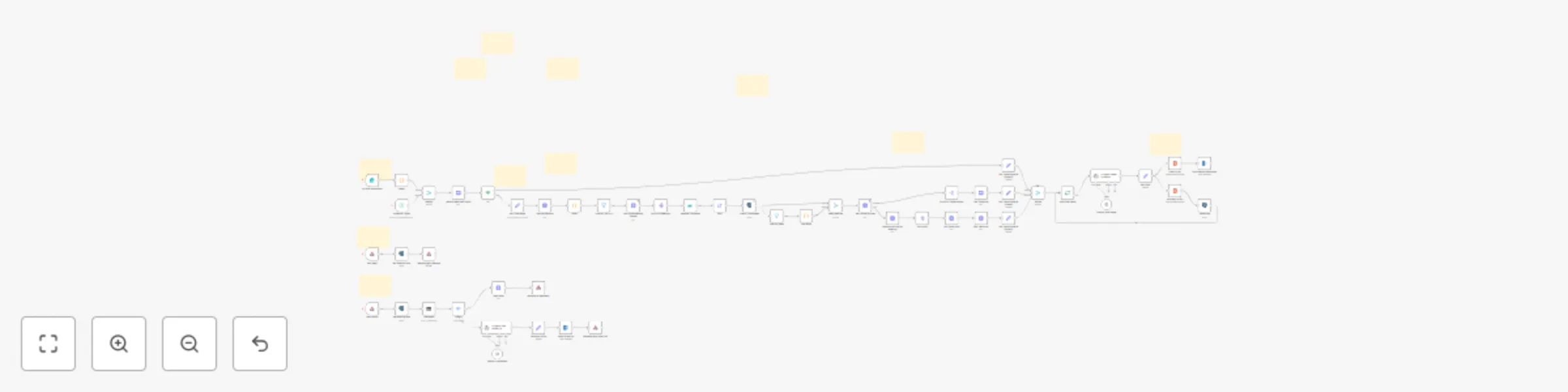
Workflow preview


 Early Deal
DISCOUNT 20%

Important notice
This workflow is provided as-is. Please review and test before using in production.
Overview
Automate Microsoft Teams Meeting Analysis with GPT-4.1, Outlook & Mem.ai
Template Overview
This advanced n8n template automates Microsoft Teams meeting analysis, knowledge base creation, and email drafting directly from meeting recordings and transcripts.
It provides end-to-end automation for the following use cases:
Meeting Analysis
- Connects to Microsoft Graph to retrieve meeting recordings, chat messages, and transcripts.
- Analyses meeting content using AI models.
- Extracts key points, action items, questions, and themes from meetings automatically.
AI-Powered Web App
Automatically creates a detailed report from past meetings.
Stores meeting summaries, metadata, and insights into an easy-to-browse frontend.
New meetings are added dynamically without manual work. ** Knowledge Base Indexing (via Mem.ai)**
Uploads extracted meeting data into a structured knowledge base.
Supports categorisation, search and chat functionality across meetings.
Draft Follow-Up Emails
- Draft personalised follow-up emails for meeting participants.
- Email drafts include:
- Meeting summary
- Key decisions
- Action items
- Emails can be sent manually with a human in the loop context via Microsoft Outlook integration.
Core Components
- Microsoft Graph API for accessing meetings, chats, files, and user profiles.
- SharePoint API for file storage and search.
- n8n Webhooks to trigger processes dynamically.
- Generic OAuth2 authentication for seamless Microsoft access.
- JavaScript Code Nodes for flexible, intelligent parsing and structuring of meeting data.
- AI/LLM nodes for summarisation and content creation.
Designed to be scalable, modular, and easily customisable for different organisation sizes and industries.
🛡️ Note
Failure to correctly configure Azure permissions will prevent the template from functioning. Ensure admin approval is fully completed during setup.
Important Prerequisites
⚠️ Administrator consent is required
This template requires a Microsoft 365 Global Administrator or Application Administrator to grant admin consent to a set of Microsoft Graph and SharePoint API scopes.
Basic Azure App Registration knowledge is required:
You need to set up an Azure App Registration manually, configure OAuth2 authentication, and assign specific API permissions.
A setup guide is included, but familiarity with:
- App registrations
- API permissions
- Client secrets
- OAuth2 flows
is highly recommended.
Knowledge of Postgres is required The template includes a SQL script to create the required Postgres table (see blog post).
You are responsible for hosting your own database (You can use Supabase with the Postgres connection string).